

The first time I heard about the Black Mambas, I assumed they were a paramilitary unit. Rifles, camo, tactics — the whole thing.
I was wrong on essentially every count. They’re young women. They walk unarmed. And in the area they patrol, rhino poaching has been almost entirely shut down.
This is their story. It’s also something I want you to know before you plan a trip to South Africa — because meeting them is possible, but it absolutely does not happen by accident.
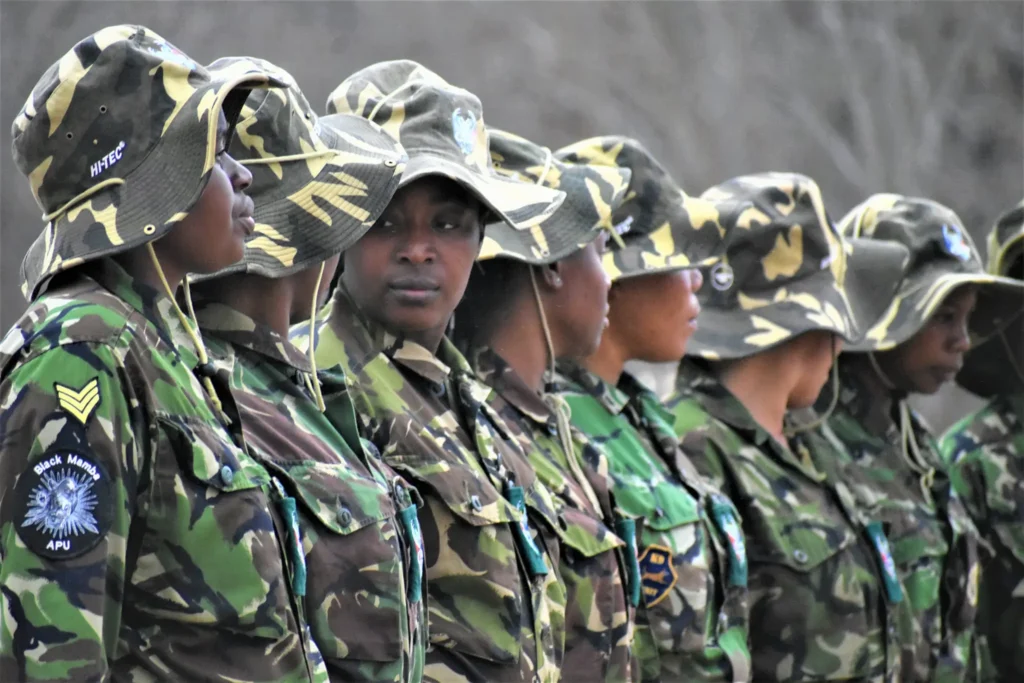
Who the Black Mambas Are
The Black Mambas are the world’s first all-female anti-poaching unit. They were founded in 2013 by the nonprofit Transfrontier Africa, together with Craig Spencer — the reserve’s head warden — and Amy Clark. They started with six women. Today there are more than thirty, and in 2026 the unit turns thirteen.
They patrol roughly 20,000 hectares across the Olifants West Nature Reserve and the Blyde-Olifants confluence area, inside Balule Nature Reserve, part of the Greater Kruger. Which is to say: quite possibly the exact region where you’d be going on safari anyway.
The name is not an accident. The black mamba is one of Africa’s most feared snakes — fast, quiet, impossible to ignore. That was precisely the reputation these women were going for.
Their Method: Why They Don't Carry Guns
This is the part that genuinely rearranged how I think about conservation.
The traditional approach to poaching has been militarized: armed men, force patrols, confrontation. The Black Mambas operate on completely different logic, and it’s deliberate. Their job isn’t to fight poachers. It’s to make entering the reserve not worth the trouble in the first place.
Every month, each Mamba patrols 21 consecutive days — four hours at dawn, four at dusk, on foot or by vehicle, looking for wire snares, human tracks, the sound of gunshots, any sign of incursion. When they find something, they don’t engage. They radio the operations room and an armed team is deployed. Their role is early detection and constant visible presence.
The reasoning behind keeping them unarmed is as pragmatic as it is uncomfortable to sit with: armed confrontation produces bodies, and bodies produce widows and orphans in the exact communities poachers come from. You cannot shoot your way out of this problem. You get out of it by changing the math on who wants to walk in, and why.
And it worked. In Olifants West, rhino poaching has dropped dramatically — through the Mambas’ presence combined with preventive dehorning of the area’s rhinos. In their first six years, they removed more than fourteen hundred wire snares.
The Other Half of the Job: Bush Babies
What convinces me most about this project isn’t what happens inside the reserve. It’s what happens outside it.
The Black Mambas run an environmental education program called Bush Babies, working in schools across the communities bordering Kruger. This isn’t a token gesture — the program has over 2,000 children enrolled. The premise is blunt and correct: if kids in those communities grow up understanding that a living rhino is worth more — economically, socially, culturally — than a dead one, the next generation of poachers simply doesn’t materialize.
The curriculum runs on community vegetable gardens, tree planting, social sciences, and sustainable environmental management. This is not a one-afternoon assembly. It’s a syllabus.
They also grow vegetables, package them, distribute them to neighboring communities, and sell them to lodges in the area. Conservation treated as a social problem, not just an ecological one.
And there’s one more layer, which I think is the most powerful: in their own communities, these women are the first generation with formal employment in conservation. They’re visible proof. Their daughters grow up knowing the job exists and that a woman can do it.
The International Recognition
In 2015 — two years in — the Black Mambas received the Champions of the Earth Award from the UN Environment Programme, the UN’s highest environmental honor. Between 2013 and 2022 they collected roughly ten international awards for their approach. National Geographic has documented them, the BBC has covered them, and their model has been replicated across the continent with units like Akashinga in Zimbabwe and Team Lioness in Kenya.
They’ve even experimented with technology, taking part in a pilot that livestreamed the reserve so volunteers around the world could watch for suspicious activity and flag it in real time. Thousands of people, in their pajamas, on rhino watch. It’s a very 21st-century detail in a very old fight.
Yes, You Can Meet Them. No, You Can't Wing It.
Here’s the practical part, and it’s where most people who read about the Black Mambas end up disappointed.
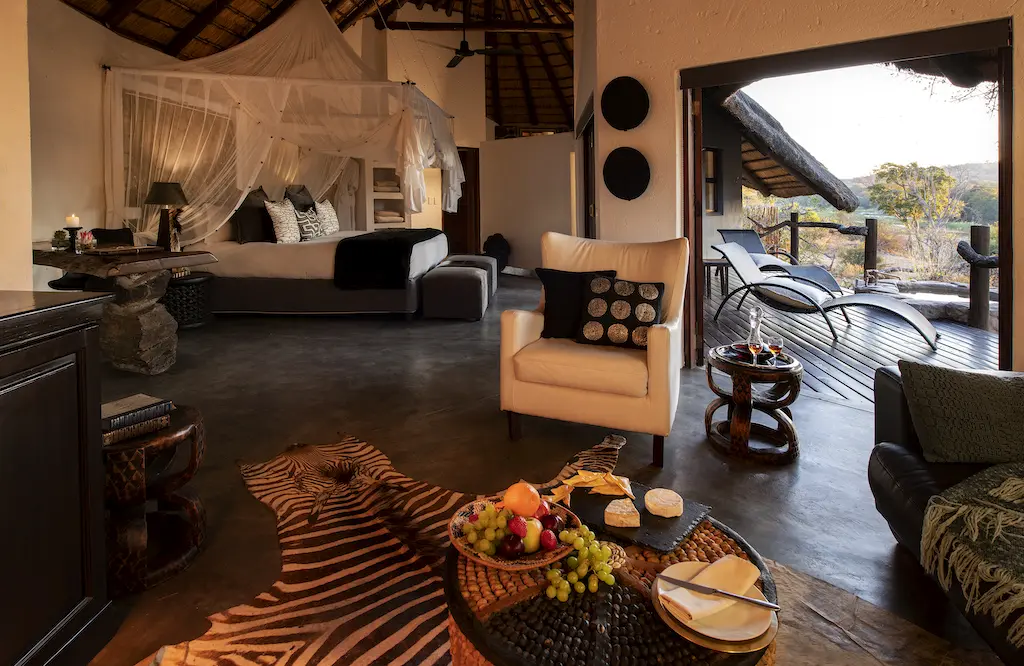
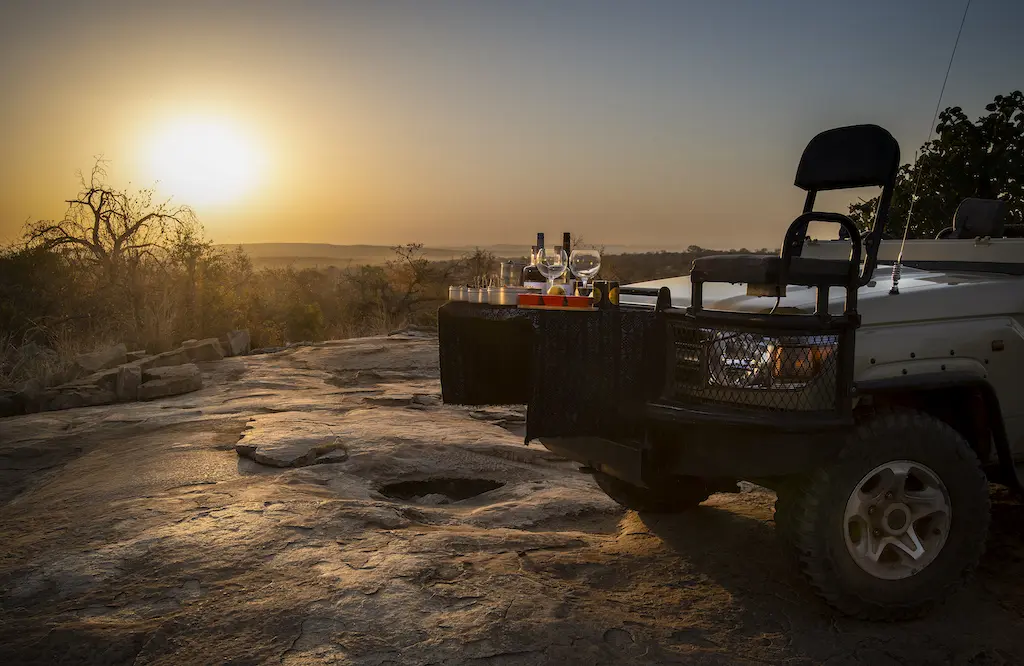
Pondoro Game Lodge, in the Olifants West Reserve, directly funds the unit and its guests can meet them. It runs a Black Mamba Anti-Poaching Tour that includes transfer by open game vehicle to the Nonwane research facility, a presentation by the Mambas themselves, and the chance to sit with them and ask questions. Proceeds go straight to the unit.
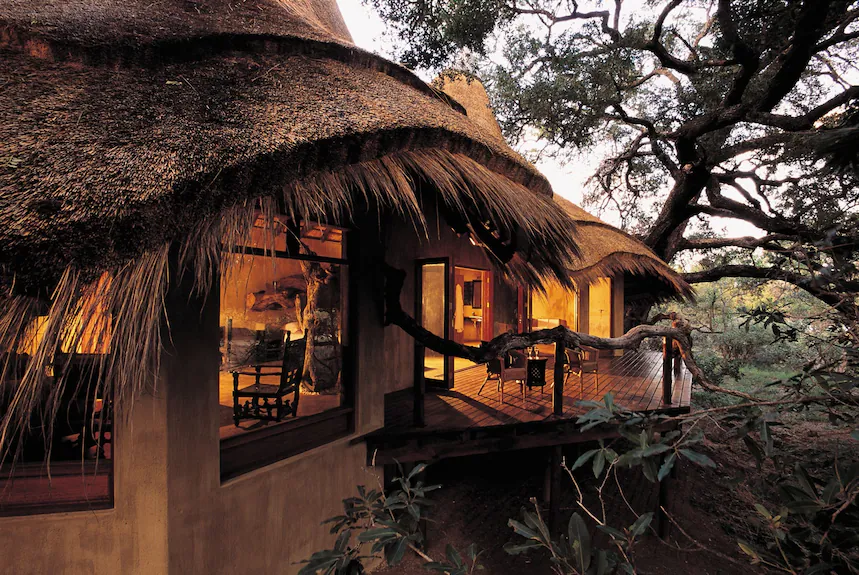
But three conditions completely reshape how you plan the trip:
- It runs Wednesdays and Saturdays only. This is not something you arrange the morning you arrive.
- It’s subject to the Mambas’ availability, because their actual job is patrolling, not hosting visitors.
- You need to be staying at the right property, in the right reserve.
Which means if you want this, your entire itinerary — flights, Cape Town nights, internal transfers, safari dates — has to be built backwards from a specific Wednesday or Saturday. That’s my job.
There are also deep-immersion formats: week-long programs that let you patrol alongside the Mambas by day and night, visit the Bush Babies schools, and explore the wider region properly.
One thing worth knowing before you fall in love with that idea: these programs generally run as fixed-date group departures — once or twice a year, limited spots, shared group. If that specific week doesn’t work because of school, work, or any other feature of actual adult life, there isn’t a second option that year.
I work the other way around. Tell me your dates and I’ll build the trip around them.
What Else Is Out There (Because You're Not Flying That Far for One Afternoon)
Let me be clear about something: the Mambas’ territory isn’t a single-attraction destination. It’s one of the richest regions in South Africa, and if you’re going to be there, it’s worth building several days around it.

The Blyde River Canyon is essentially next door. It’s the third-largest canyon in the world and the greenest — unlike the Grand Canyon, this one is carpeted in subtropical vegetation. You can take a boat trip between rock walls hundreds of meters high, with stops like Bourke’s Luck Potholes and the Three Rondavels along the way. It’s the perfect counterweight to safari: a full day of landscape with no 5 a.m. wake-up call.
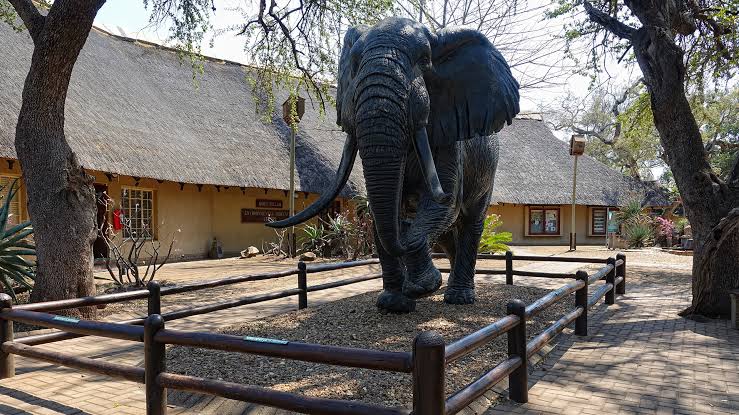
The Letaba Elephant Museum, inside Kruger, is a stop almost nobody includes and one of the most memorable ones I know. It documents elephant biology, behavior, and ecology, and displays the tusks of several of the park’s legendary “big tuskers.” Seeing that ivory — from animals that died of natural causes — after a morning spent listening to the Mambas talk about snares and poachers closes a loop that no amount of explaining can.
Add the safari itself and the Bush Babies community visits, and you’ve got a full week that never once feels repetitive.
Why This Matters Beyond the Anecdote
There’s a meaningful difference between a safari where you see animals and a safari where you understand what’s keeping those animals standing.
When a family — especially one with teenage daughters — sits across from these women and hears why they took this job, what their community said when they took it, and what it means to walk unarmed through lion country, something shifts. I’ve watched it happen. It stops being tourism somewhere around the second question.
And if you’re going to South Africa anyway, that’s one planning decision away.
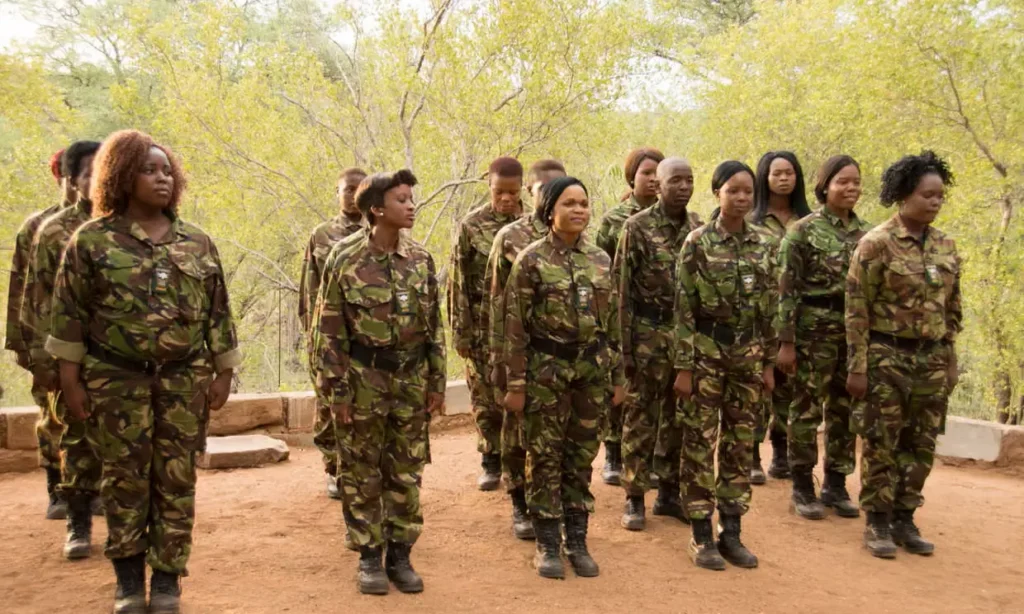
If this moved something, let’s talk. I can build your South Africa trip around this experience — coordinating dates, lodge, and logistics so meeting the Black Mambas is an actual part of your itinerary and not the thing you missed by one day.
Tell me your dates and who’s traveling. I’ll handle the rest.
Your Questions, Answered
Who are the Black Mambas?
The Black Mambas are the world’s first all-female anti-poaching unit, founded in 2013 by Transfrontier Africa in Balule Nature Reserve within South Africa’s Greater Kruger. They patrol roughly 20,000 hectares unarmed, and their work has dramatically reduced rhino poaching in their area.
Why are the Black Mambas unarmed?
Because their role is early detection, not confrontation. When they find snares or intruders, they report to an armed team rather than engaging. The strategy avoids lethal confrontations that would generate further conflict in neighboring communities, where poachers typically come from.
Can you meet the Black Mambas on safari?
Yes. Pondoro Game Lodge in the Olifants West Reserve runs a Black Mamba Anti-Poaching Tour on Wednesdays and Saturdays, subject to availability. It includes transfer to the Nonwane facility and a presentation by the rangers themselves. You need to be staying at the property and plan your itinerary around those days.
Where are the Black Mambas based?
They operate in the Olifants West Nature Reserve and the Blyde-Olifants area, within Balule Nature Reserve in South Africa’s Limpopo province, part of the Greater Kruger National Park.
What is the Bush Babies program?
Bush Babies is the Black Mambas’ environmental education program, run in schools across the communities bordering Kruger. It aims to raise a generation that understands the value of living wildlife, addressing the social root of poaching.
Have the Black Mambas won any awards?
Yes. In 2015 they received the Champions of the Earth Award from the UN Environment Programme, and between 2013 and 2022 they collected roughly ten international awards for their innovative approach to conservation.





Deja un comentario