

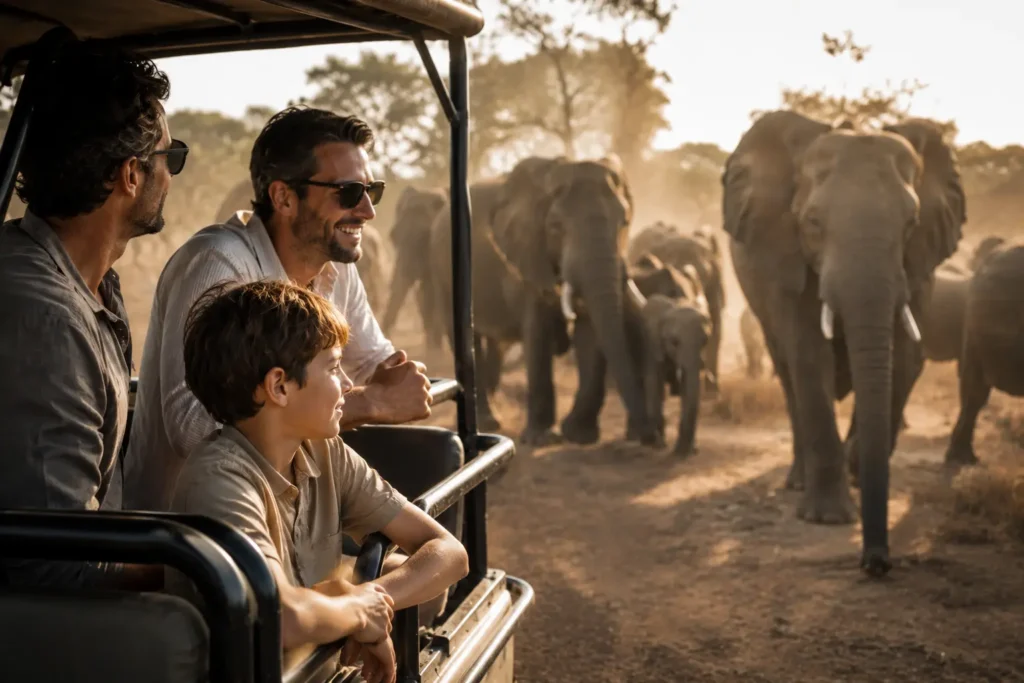
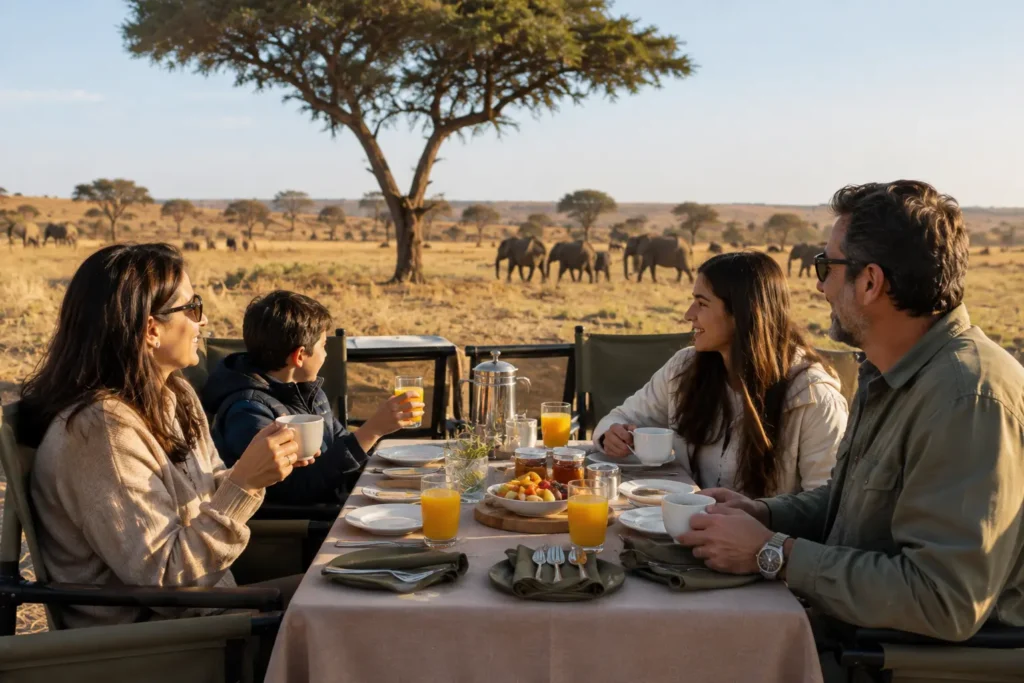
There’s a very specific moment that happens to almost every family I bring to South Africa: the first elephant.
Doesn’t matter if the kid is six or sixteen. Doesn’t matter if dad has already been to forty countries and has opinions about airport lounges. That first elephant walking past the vehicle — close enough that you can hear it breathe — resets everyone. Phones go down. Nobody asks about the wifi. For about ninety seconds, a family of four is completely, unanimously quiet, which if you have kids you know is roughly a once-a-decade event.
That’s the reason I recommend South Africa to families more than anywhere else in Africa.
But let’s be honest with each other: a safari is not a beach resort. There are real decisions to make here — ages, lodges, malaria, logistics — and I’d rather walk you through them the same way I do with every family who sits down with me.
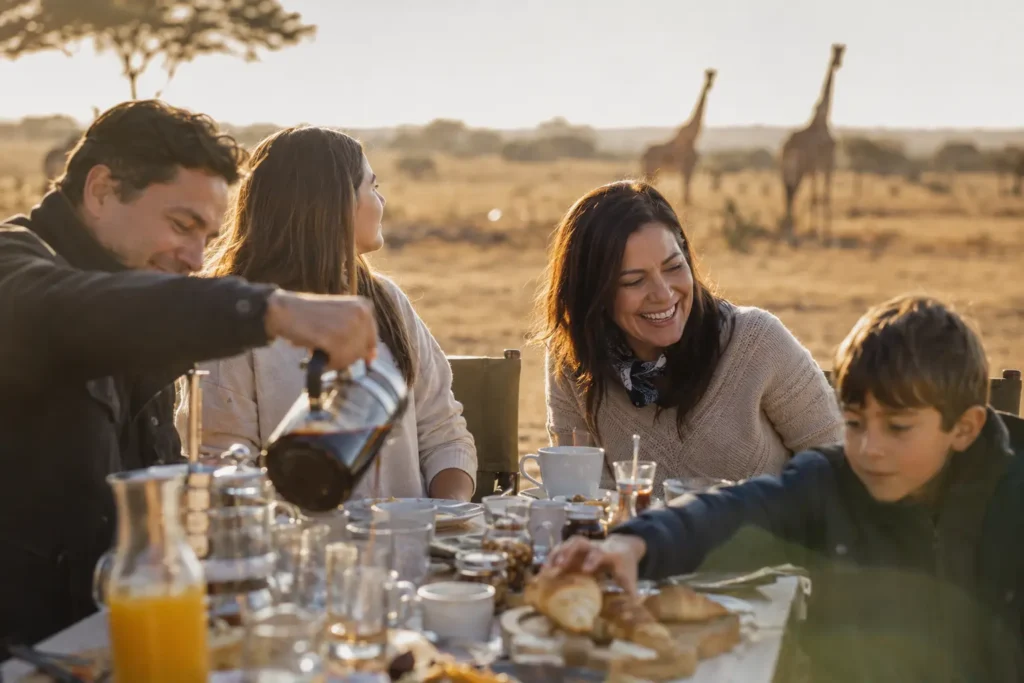
Why South Africa (and Not Somewhere Else in Africa)
I design trips to fifteen African countries. South Africa is the one I put in front of families first, for three unglamorous but very practical reasons:
- Malaria-free reserves actually exist here. Places like Madikwe, Pilanesberg, and the Eastern Cape reserves let you do a genuine Big Five safari without putting a six-year-old on antimalarials. For a lot of parents, this is the whole ballgame.
- The infrastructure is real. International-standard hospitals in Cape Town and Johannesburg, good roads, reliable connectivity. You will probably never need any of this. You will sleep much better knowing it’s there.
- You get everything in one country. Safari, beaches, a world-class city, wine country, penguins. No four-hour connections between highlights, which matters enormously when the smallest member of your group has a hard limit on travel days.
The Destinations That Build Your Route
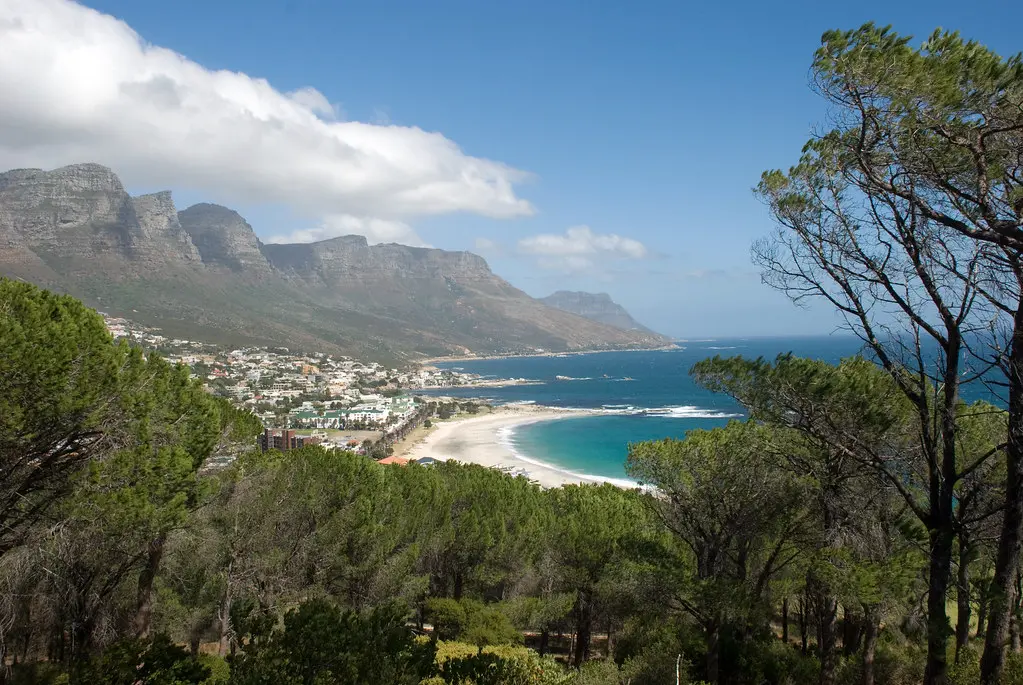
Cape Town: The Soft Landing
Land here. Always. Cape Town gives everyone a couple of days to shake off the flight before the bush.
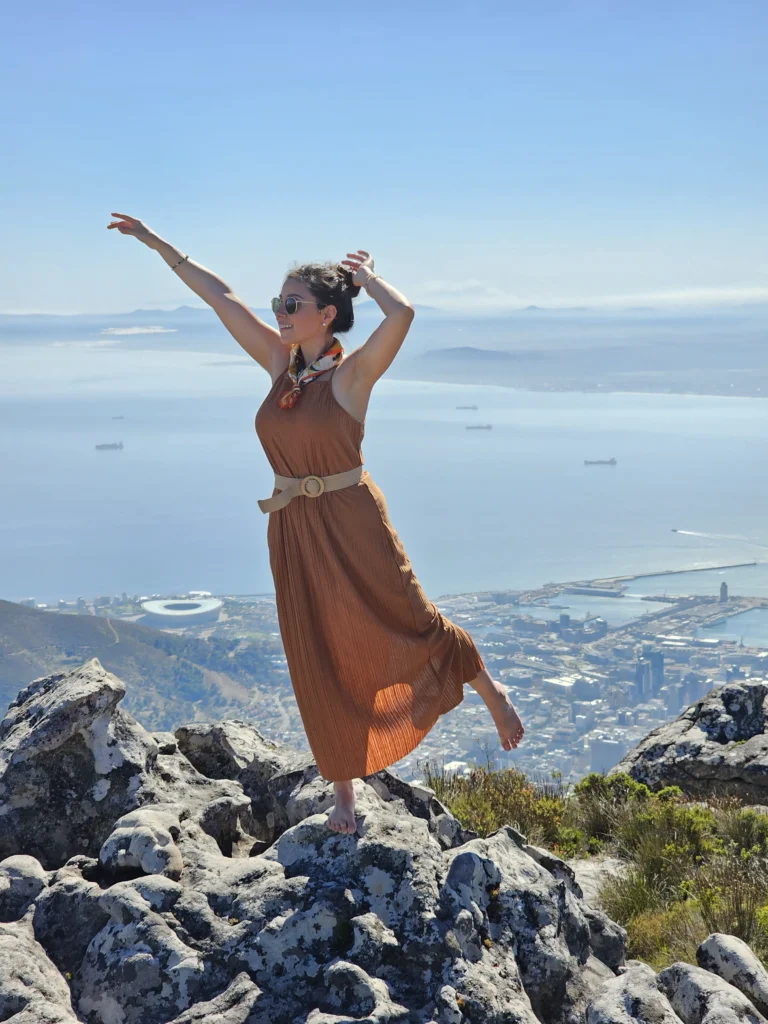
Table Mountain has a cable car (a huge relief when someone announces they are “too tired to walk” at 9 a.m.). Boulders Beach has actual wild African penguins waddling past your kids on a boardwalk, close enough that the photos look staged. The V&A Waterfront has an aquarium and enough food options that even a picky eater will find something.
The Cape Winelands: A Day to Breathe
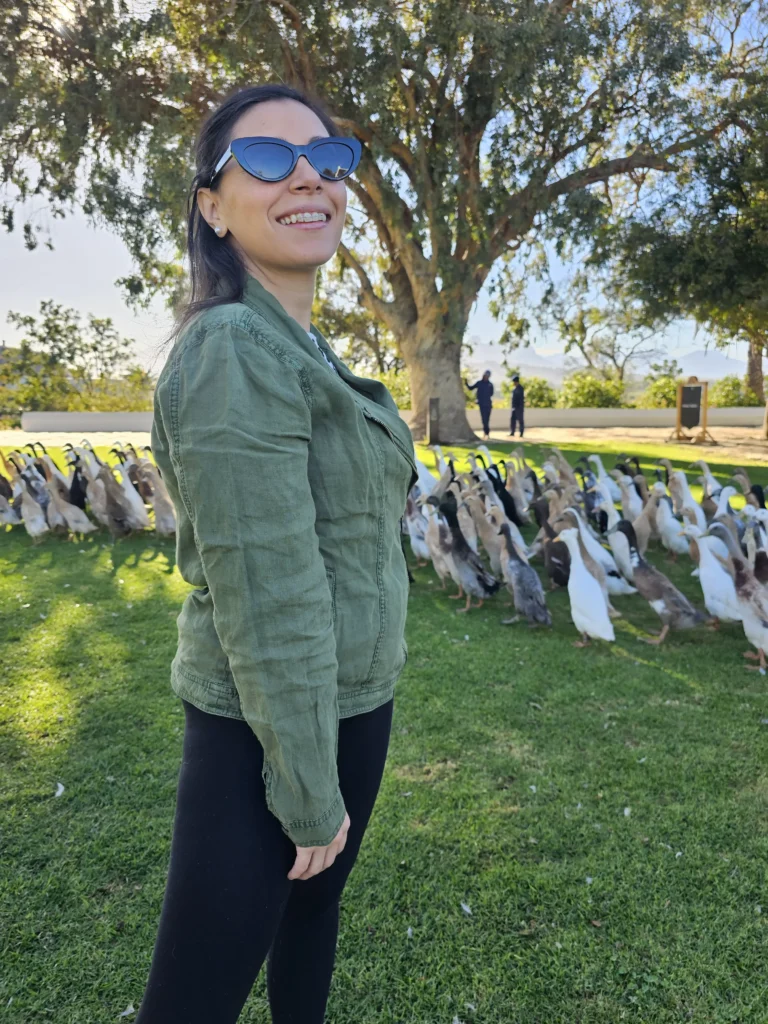
Forty-five minutes from Cape Town, Stellenbosch and Franschhoek are full of estates with enormous lawns, farm animals, and kids’ menus. The kids run. The parents sit down. Everyone wins.
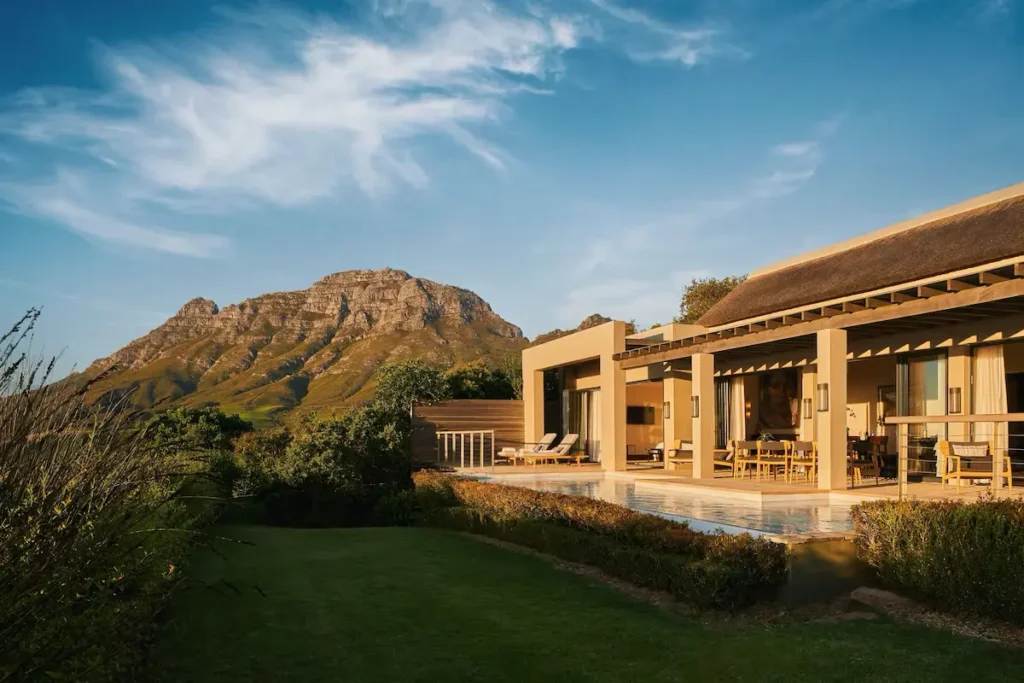
If you want to stay the night, Delaire Graff Lodge & Spa is one of my favorites — private lodges with your own plunge pool, tucked between vineyards and mountains.
Kruger and the Private Reserves: The Safari
This is the most important decision of the entire trip, so I’ll be direct.
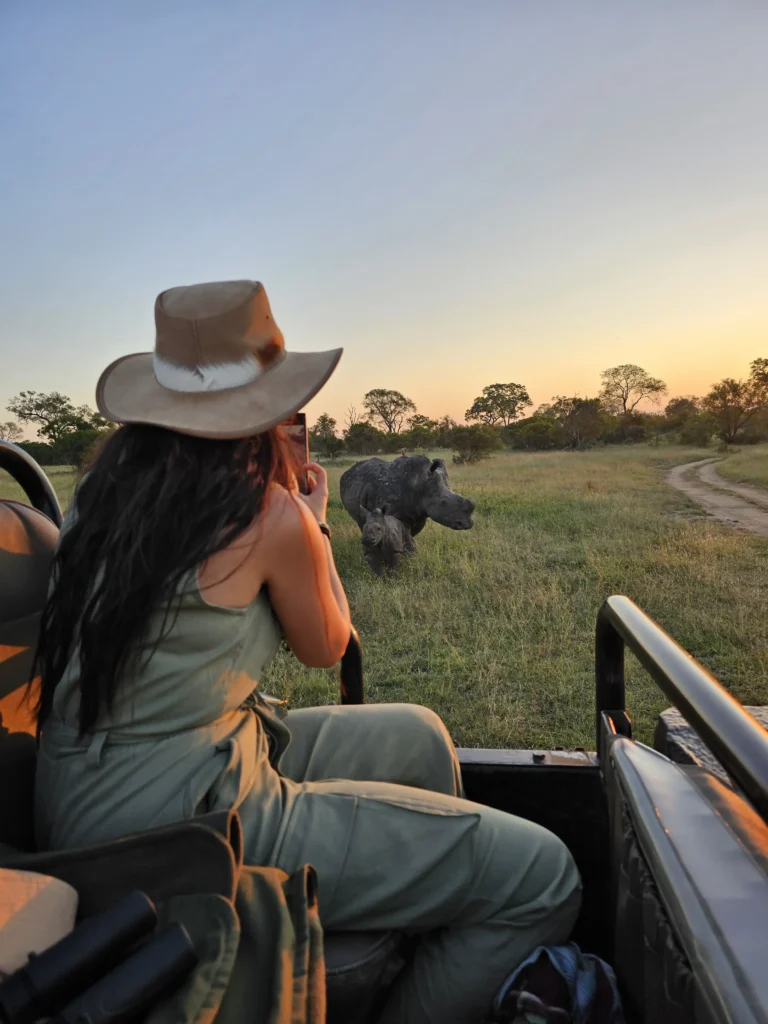
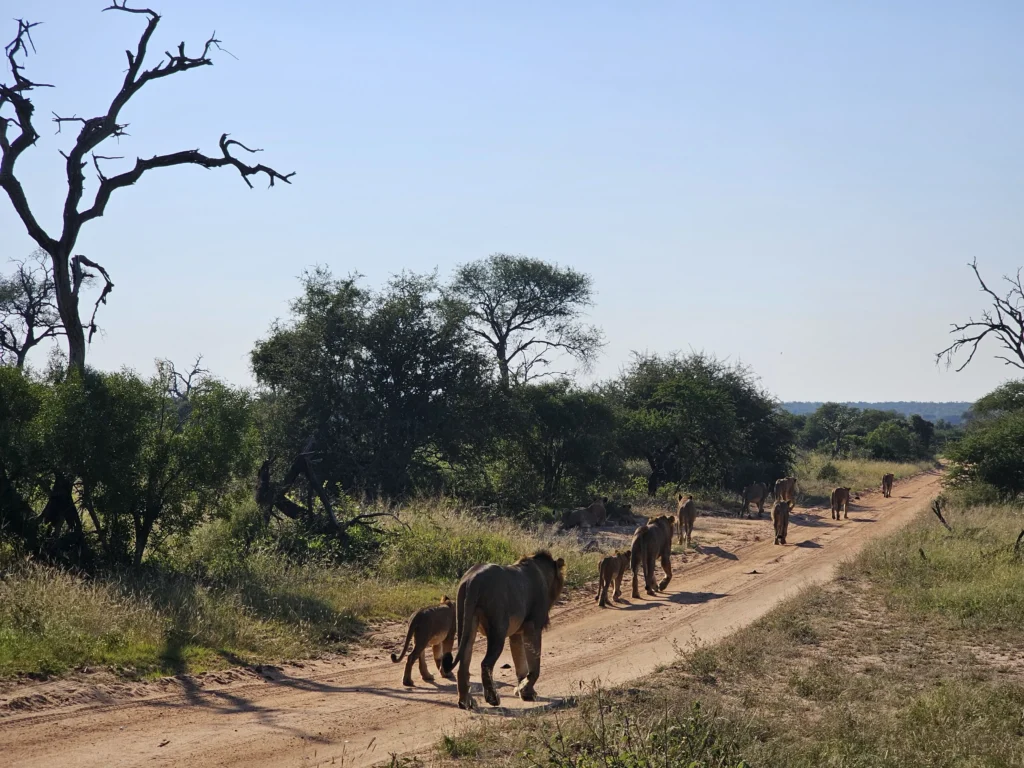
Kruger National Park itself is public — you drive your own car, you stay on the roads. It works. But for families I almost always recommend the private reserves bordering it — Sabi Sands, Timbavati, Manyeleti, or malaria-free Madikwe — because game drives happen in open vehicles with a ranger and tracker dedicated to your group, off-road, without twelve other cars idling at the same leopard.
Real reference points: in Madikwe (malaria-free), Jaci’s Safari Lodge, Madikwe Safari Lodge, and Jamala Madikwe are built around family suites and kids’ programs. In Sabi Sands and Greater Kruger (where malaria is a real consideration to discuss with your doctor), Londolozi, Sabi Sabi, and Lion Sands run excellent Junior Ranger programs — best for kids eight and up. And Pilanesberg, an ancient volcanic crater two hours from Johannesburg, is malaria-free with no age restrictions and a self-drive option — a great first taste of the bush with very small children.
The Garden Route: For Families Who Want to Do Things
If you’ve got extra days, the coastal stretch between Cape Town and Port Elizabeth delivers beaches, forests, canopy tours, and wildlife sanctuaries. Perfect for older kids who’ve hit the age where watching is not enough and they need to be doing something.
The Extension That Steals the Show: Victoria Falls
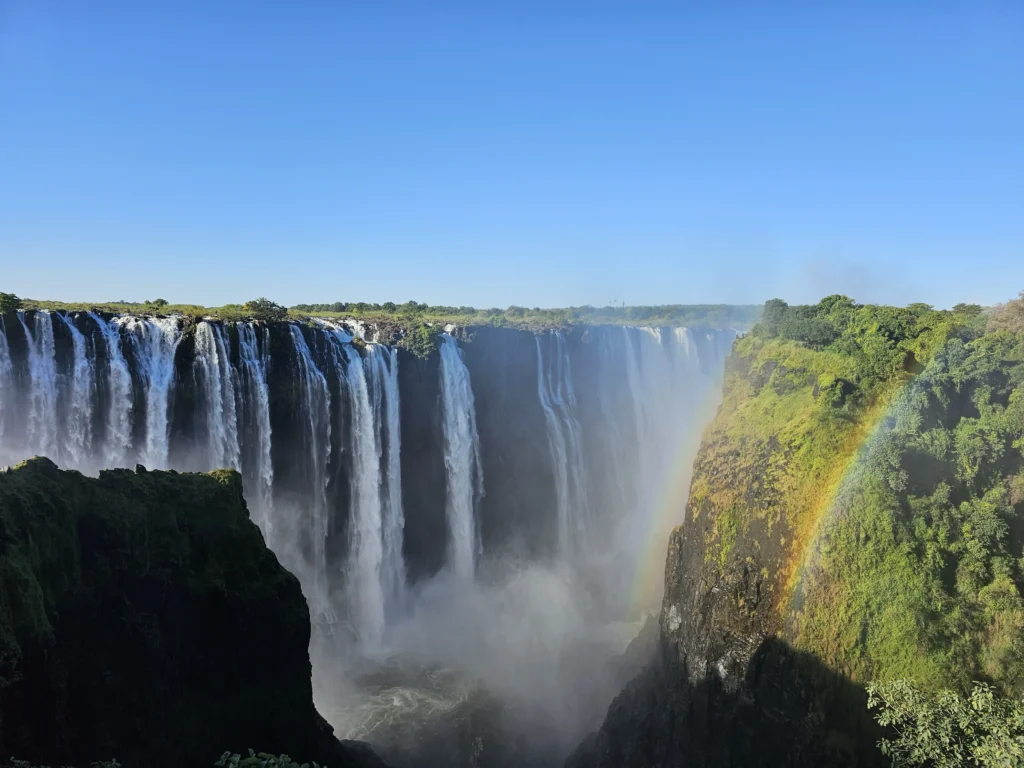
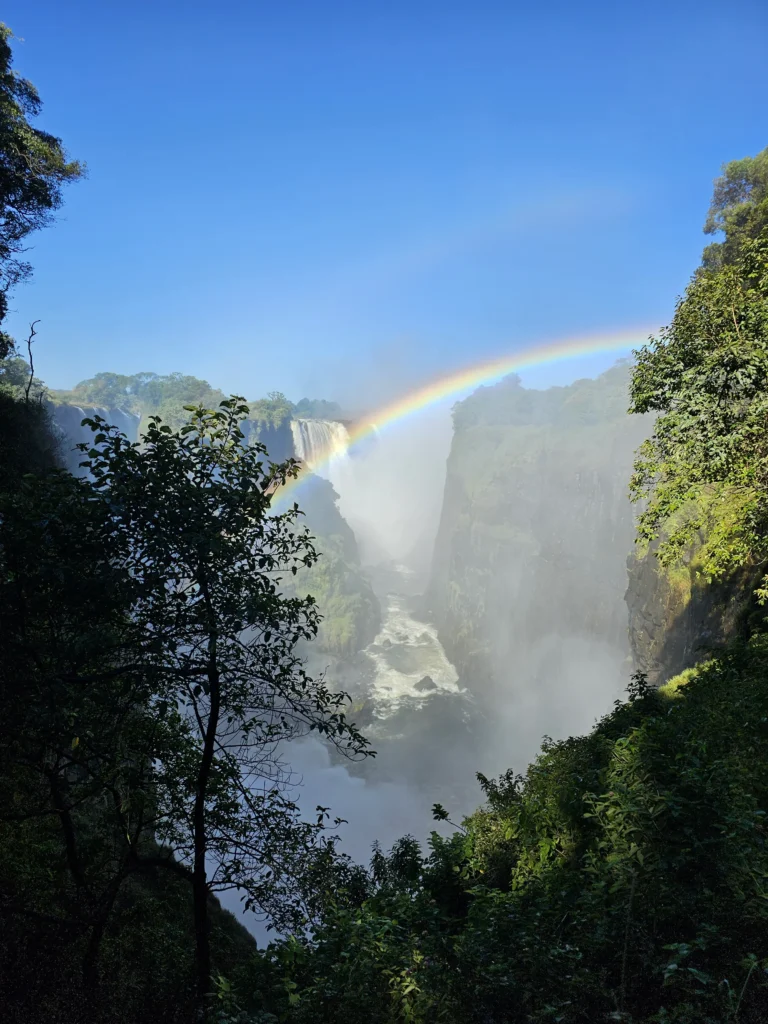
One of my favorite ways to close a family trip is a short flight from Johannesburg to Victoria Falls, on the Zimbabwe–Zambia border. For kids, this is one of the Seven Natural Wonders of the World in person — the locals call it “the smoke that thunders,” and once you’re standing in the spray you understand why that’s not marketing copy.
The Zimbabwe side (Victoria Falls town) has more developed family infrastructure and gentler activities like sunset river cruises. The Zambia side is more intimate and wilder. Both work beautifully as a finale; the choice comes down to how much extra adventure your family wants — rafting, helicopters, the bridge — versus how much you just want to stand there and look at it.
Visas: What Changed, and What Nobody Tells You
Good news depending on which passport is in your hand:
U.S. passport holders don’t need a visa for tourist stays of up to 90 days. You’ll get a visitor’s stamp on arrival. Two things trip people up: your passport needs at least 30 days of validity beyond your departure date, and you need at least two consecutive blank visa pages — endorsement pages don’t count. People have genuinely been turned around at the airport for this.
Now, the three things that catch families off guard regardless of passport:
- Traveling with only one parent? South Africa has historically been strict about this. Bring the child’s unabridged birth certificate and, in many cases, a notarized consent letter from the other parent. This requirement is about the child, not the visa, so changing visa rules didn’t change it.
- Different last names between parent and child? Extremely common, occasionally confusing at immigration. The birth certificate solves it in about eight seconds.
- Connecting through another country? Check that country’s transit rules for minors too. Not a South Africa issue, but it’s the kind of thing that ruins a morning.
None of this should stop your trip. It’s just the checklist we run together before you fly. And since immigration policy does change, always confirm current requirements before you book.
South Africa and LGBTQ+ Families: The Conversation Nobody Has
Here’s a topic almost no travel agency brings up in a family guide, and I’d like to just say it plainly: South Africa is by a wide margin the safest African destination for LGBTQ+ families.
That’s not an opinion — it’s law. South Africa was the first country in Africa and the fifth in the world to legalize same-sex marriage, back in 2006, and its post-apartheid Constitution was the first in the world to explicitly prohibit discrimination based on sexual orientation. It’s one of only a handful of countries on the continent where that protection is constitutional rather than just statutory. Cape Town is widely known as Africa’s most LGBTQ+-friendly city, with an established scene in De Waterkant and a genuinely open urban culture.
The practical advice is the same I’d give in a lot of countries: cities and upper-tier safari lodges are broadly welcoming, while rural, traditional communities call for the same discretion you’d use in conservative areas anywhere. Knowing the difference is what informed travel looks like — and we go country by country in our post LGBTQ Safari in Africa: Safety, Risk, and a Guide to Discretion.
LGBTQ+-Friendly Lodges Worth Knowing
Properties the LGBTQ+ travel industry consistently points to in South Africa, several affiliated with IGLTA (the International LGBTQ+ Travel Association):
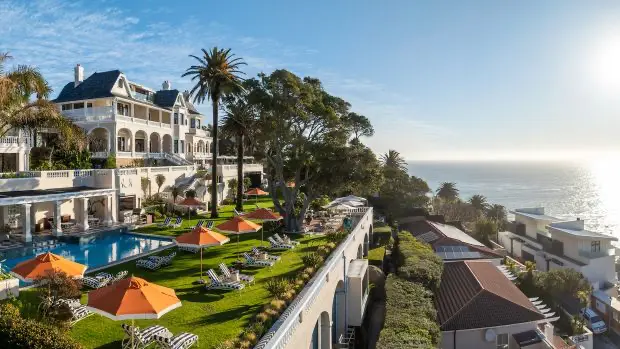
Ellerman House (Cape Town)
IGLTA-affiliated boutique villa, a beautiful base before or after safari.
Delaire Graff Lodge & Spa (Stellenbosch)
IGLTA-affiliated, private plunge pools, ideal for that Winelands pause day.
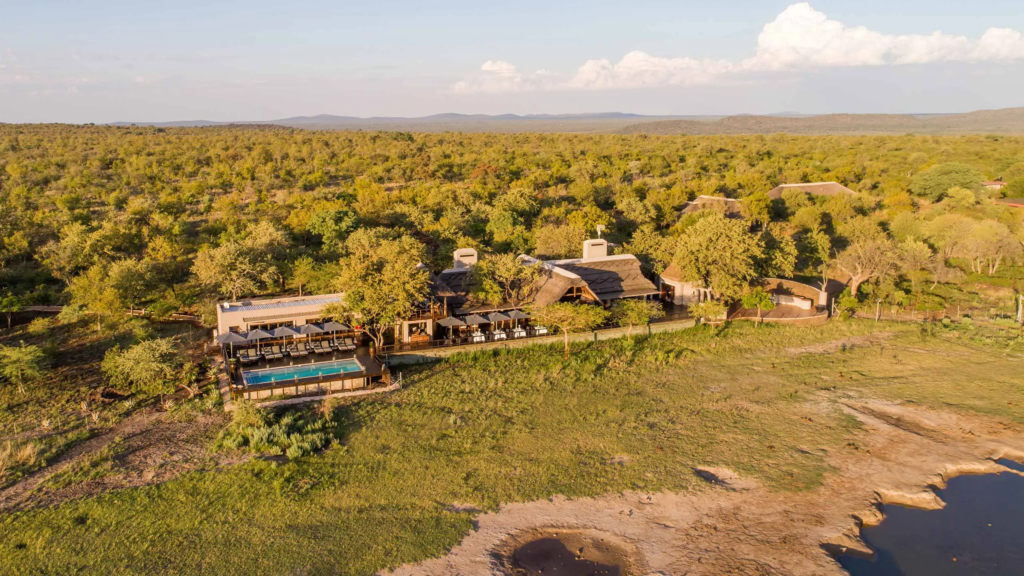
Jamala Madikwe Royal Safari Lodge (Madikwe, malaria-free)
LGBTQ+-owned and operated, capped at ten guests, intimate Big Five safari.
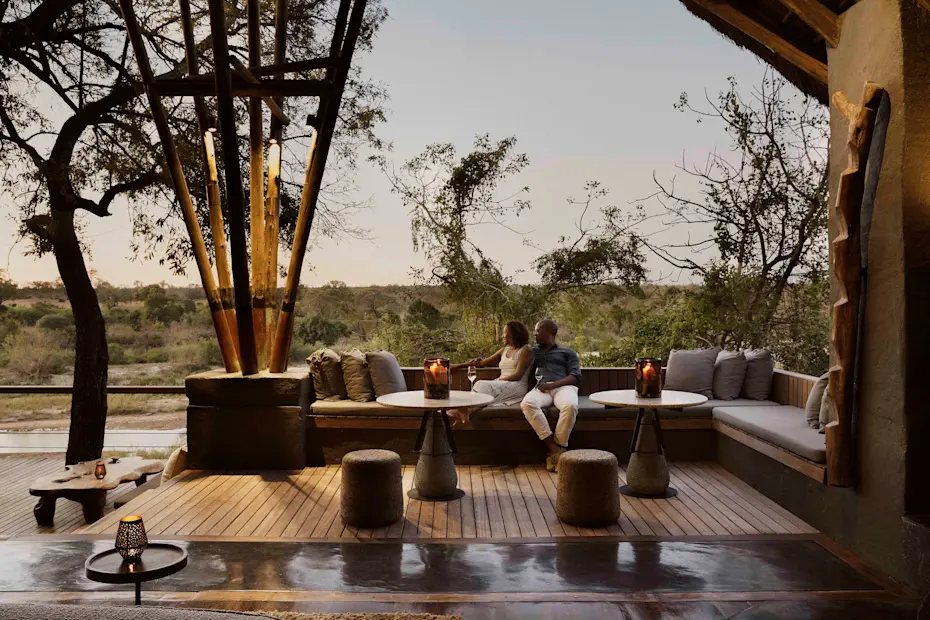
andBeyond and Singita properties (Sabi Sands, Phinda)
Widely regarded in the industry for inclusive hospitality and an international guest base.
Not an exhaustive list — a starting point. When I design for an LGBTQ+ family, the final selection comes down to the same variables as any family (ages, budget, pace), just with the added peace of mind that inclusivity is already baked into the property’s culture.
How Much Does a Family Safari in South Africa Cost?
Every family is different here, and I’m not going to pretend otherwise. Cost depends on how many kids, how old they are (some lodges don’t charge full rate for children sharing a room with parents), the lodge tier, and the season.
As a general benchmark: a well-designed family trip — Cape Town, a private-reserve safari, and a few days of coast or Garden Route — usually starts around $500–$800 USD per person per night at upper-mid-range lodges with family programs, and can climb past $1,200 per person per night at ultra-luxury properties with private villas.
The only way to know your number is to run your family’s numbers. That’s what our budget calculator is for — a couple of minutes, a realistic range, before we ever get on a call.
The First Question Every Family Should Ask: How Old Are the Kids?
Honestly, this is the most important conversation I have with every family, because age drives every other decision.
Under 6
Most private safari reserves set a minimum age of 6 for standard game drives, for safety reasons — kids need to be able to stay seated and quiet for long stretches when there’s serious wildlife nearby. This doesn’t mean don’t go. It means South Africa broadly (Cape Town, beaches, family lodges with alternative activities for little ones while parents take a drive) is a much better plan than an intensive multi-day safari. Pilanesberg, with no age limit and self-drive flexibility, is also a good workaround.
Ages 6–11
This is the sweet spot, where safari genuinely clicks. They can handle shorter game drives, they love the educational layer — tracking prints, identifying birds — and family-friendly lodges have rangers specifically trained to hold the attention of this age group.
12 and Up
Basically everything opens up: long game drives, guided walking safaris, even fly fishing or horseback safaris at certain reserves. It’s also the best age to layer in deeper cultural experiences like community visits.
My honest recommendation:
if your kids are under six, don’t cancel the trip — redesign it. More Cape Town, more coast, a shorter safari at a lodge with programs for little ones. That beats forcing a five-day traditional safari that nobody enjoys and they won’t remember.
Traveling With Autistic Children or Kids With Sensory Needs
I get asked this more often than people imagine, and the short answer is: yes, it’s possible, and it can be genuinely wonderful — with the right level of planning detail.
What I actually change when designing these trips:
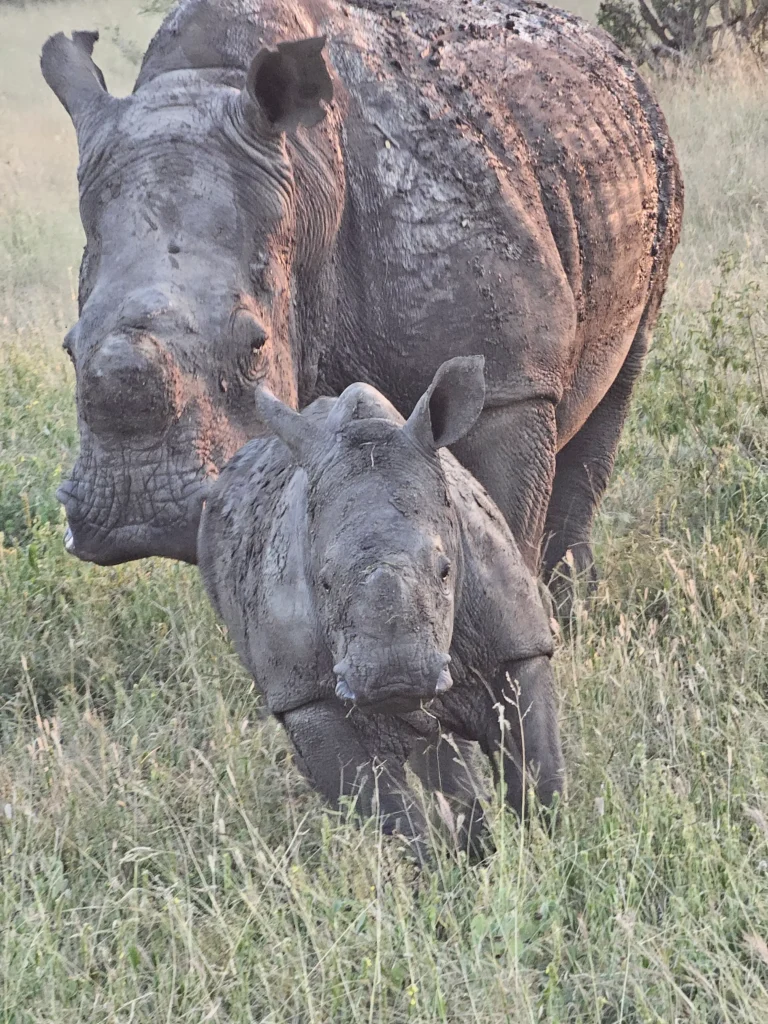
- Small private reserves over busy parks. Fewer vehicles, less noise, fewer unpredictable inputs than a public park with tourist traffic.
- Accommodation with private space. A villa or suite with its own area — rather than a room off a very active common space — gives a child somewhere safe to regulate when they need it.
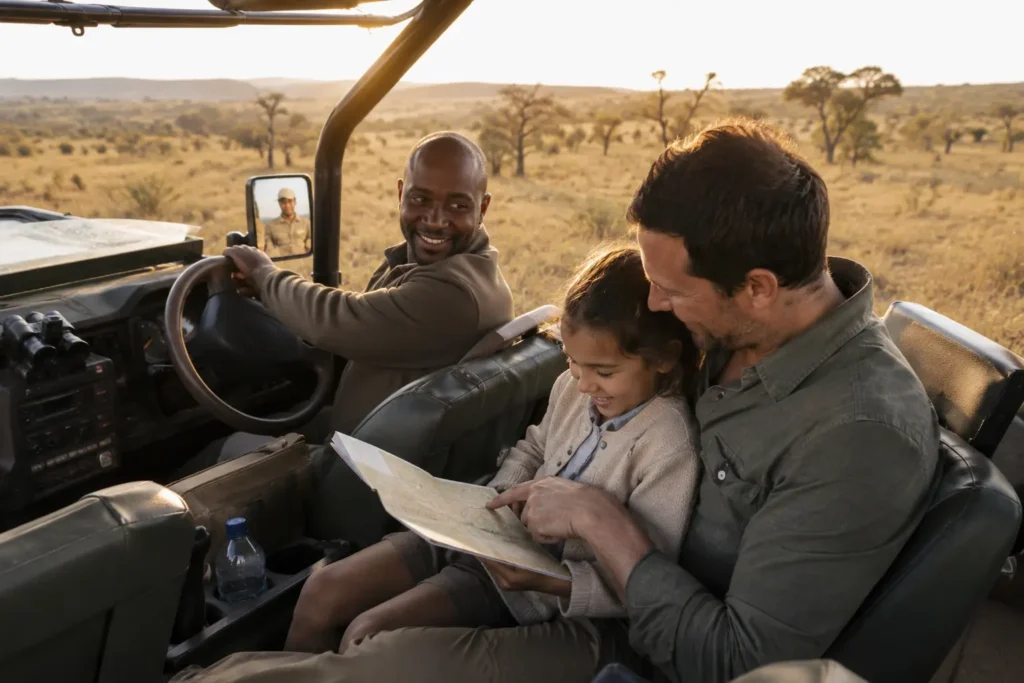
- Private, flexible game drives instead of shared ones, so we can adjust length and pace to how the day is actually going, rather than to a group’s schedule.
- Briefing the lodge team ahead of time. Good safari lodges host travelers with diverse needs regularly, and given notice they can adapt meal times, lighting, and activities.
- Bringing familiar sensory tools — noise-canceling headphones, comfort objects, known snacks. The travel days and routine disruption are usually heavier than the safari itself.
Family Lodges: The Differences That Actually Matter
Not every lodge is built for families, and getting this wrong can quietly ruin a trip.
| Lodge type | Features | Best for | Examples |
|---|---|---|---|
| Traditional adults-only or quiet lodge | Rooms close together, shared meals, silence as part of the experience. | Families with teenagers seeking total immersion. | Singita (Sabi Sands) |
| Standard family-friendly lodge | Family suites or interconnecting rooms, kids' menu, rangers experienced with children. | Most families with children aged 6–12. | Jaci's Safari Lodge, Kwandwe (malaria-free) |
| Lodge with a kids' club program | Supervised activities for children; lets parents enjoy a longer game drive or a romantic dinner. | Families with young children whose parents also want their own space. | andBeyond Phinda, Sabi Sabi, Ngala |
| Private villa / exclusive camp | The entire property is reserved for your family, dedicated staff, 100% flexible schedules. | Large families, special needs, or anyone seeking total privacy. | Jamala Madikwe, Tswalu Kalahari |
When I’m shortlisting for a family, I’m not looking for the most photogenic lodge on Instagram. I’m looking for the one that matches the kids’ ages, the pace this family needs, and the flexibility that separates a good trip from an unforgettable one.
What a Family Itinerary Actually Looks Like
- Days 1–3: Cape Town — Table Mountain, Boulders Beach, the Waterfront
- Day 4: Cape Winelands — farm animals, vineyards, lawns (e.g. Delaire Graff)
- Days 5–8: Malaria-free private reserve safari — game drives built around your kids’ ages (e.g. Madikwe: Jaci’s or Jamala)
- Days 9–11: Victoria Falls extension — the falls, a sunset river cruise
- Day 12: Fly home, argue about which day was the best one
A starting point, not a template. Every route I design shifts around the kids’ ages, the days you have, and what your family actually wants out of this.
Your Questions, Answered
What age can kids go on safari in South Africa?
Most private reserves allow children from age 6 on standard game drives. For younger kids, we prioritize Cape Town, the coast, and lodges with alternative activities, while designing a shorter, adapted safari. Pilanesberg has no age restriction and is malaria-free.
Do Americans need a visa for South Africa?
No. U.S. passport holders can visit visa-free for up to 90 days for tourism. Your passport needs at least 30 days validity beyond departure and at least two consecutive blank visa pages. Mexican passport holders now use the online Electronic Travel Authorization (ETA) instead of a consular visa.
How much does a family safari in South Africa cost?
A well-designed upper-mid-range family trip typically starts around $500–$800 USD per person per night, depending on ages, season, and destinations. Ultra-luxury properties with private villas can exceed $1,200 per person per night.
Is South Africa safe for LGBTQ+ families?
Yes. South Africa is the only African country with marriage equality and constitutional protection against discrimination based on sexual orientation. Cape Town is widely recognized as the continent’s most inclusive city, and there are LGBTQ+-owned safari lodges such as Jamala Madikwe as well as IGLTA-affiliated properties like Ellerman House and Delaire Graff.
Can you take an autistic child on safari?
Yes. It works best with a small private reserve, accommodation with private space, and flexible private game drives built around the child’s pace rather than a group schedule. Briefing the lodge team in advance makes a significant difference.
Which South African reserves are malaria-free?
Madikwe, Pilanesberg, and the Eastern Cape reserves including Shamwari, Kwandwe, and Addo Elephant National Park are all malaria-free with genuine Big Five viewing — no antimalarials required.
Is Victoria Falls worth adding with kids?
Yes. It’s one of the Seven Natural Wonders of the World and a memorable finale, with lower-intensity activities like sunset river cruises suitable for all ages. It’s a short flight from Johannesburg.



Deja un comentario