



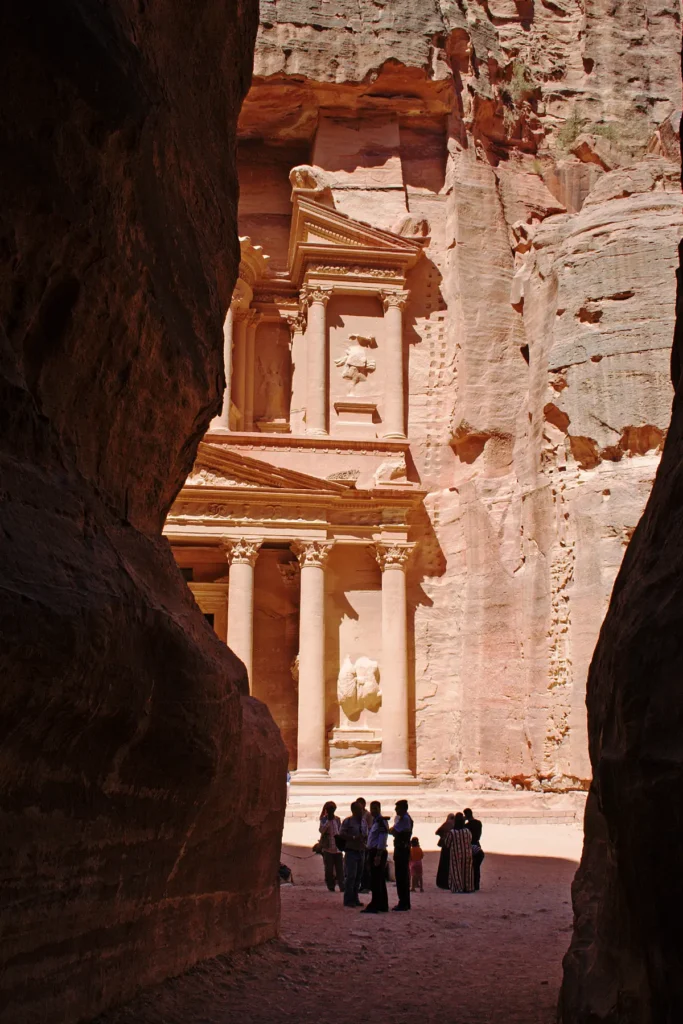
Some cities announce themselves with a gate of stone. In Jordan, a narrow canyon of pink rock leads you, step by step, to the Treasury of Petra, one of the seven wonders of the modern world. Then come the red desert of Wadi Rum, the Dead Sea and a hospitality remembered as much as the monuments.
A custom trip to Jordan is designed with care. The country is small, but Petra is best enjoyed with time, Wadi Rum asks for a night under the stars and the heat or the cold change each season. Those who plan it well combine history, desert and rest at a good pace.
This guide goes beyond the postcard. Besides the sites, the hotels and the activities, I tell you what almost nobody explains: what it really costs, what paperwork you need as a U.S. traveler, what is rude, what is illegal and what you can bring.


Some cities announce themselves with a gate of stone. In Jordan, a narrow canyon of pink rock leads you, step by step, to the Treasury of Petra, one of the seven wonders of the modern world. Then come the red desert of Wadi Rum, the Dead Sea and a hospitality remembered as much as the monuments.
A custom trip to Jordan is designed with care. The country is small, but Petra is best enjoyed with time, Wadi Rum asks for a night under the stars and the heat or the cold change each season. Those who plan it well combine history, desert and rest at a good pace.

This guide goes beyond the postcard. Besides the sites, the hotels and the activities, I tell you what almost nobody explains: what it really costs, what paperwork you need as a U.S. traveler, what is rude, what is illegal and what you can bring.

Why Jordan Is Unlike Any Other Destination
Jordan is one of the few places in the world where you can:
- Enter Petra through the Siq, a canyon over a kilometer long, all the way to the Treasury.
- Sleep under a starry sky in a luxury camp in Wadi Rum, the desert of Lawrence of Arabia.
- Float in the Dead Sea, the lowest point on Earth.
- Walk through Jerash, one of the best-preserved Roman cities in the world.
What makes it unique is the combination of history and landscape in a small, calm country. Nabataeans, Romans, Crusaders and Bedouins all blend here. It is also a country with legendary hospitality, where you are offered tea before you ask for it.
It is a destination you enjoy far more with good logistics. There are schedules that avoid the heat and the crowds, seasons that change the weather and rules worth knowing. That is why below you will find sections on budget, etiquette, laws, customs and visa.

Be a traveler. Not a Tourist.
Ready to design your next adventure?
Best Time to Visit Jordan

Jordan has four distinct seasons. The best time depends on what you want to do, and my advice is to avoid the summer heat and the cold winter nights.
| Season | Months | The best | Keep in mind |
|---|---|---|---|
| Spring | March to May | Ideal weather for Petra and Wadi Rum, with wildflowers in the countryside and long days. It is the best time for hiking. | It is high season. Book ahead, and at Easter prices rise. |
| Summer | June to August | Clear skies, warm desert nights and fewer visitors. | It is very hot in Petra and Wadi Rum, sometimes above 100 °F (38 °C). It is wise to start early. |
| Fall | September to November | Pleasant weather, fewer crowds and excellent rates. It is my second favorite time. | Nights start to get cool in the desert. |
| Winter | December to February | Fewer visitors and calm prices. The Dead Sea and Aqaba are pleasant. | It is cold and rainy in Petra, with a risk of flash floods. Desert nights are very cold. |
If it is your first time, March to May and September to November are my recommendation. If you travel in summer, plan visits at sunrise or sunset. During Ramadan, some restaurants open later, and the pace changes.


Real Budget: How Much Does a Trip to Jordan Cost?
I’ll be straight with you: Jordan offers a lot of value, with excellent hotels and a generous table. These figures are market estimates from November 2026, per person and in U.S. dollars.
Flights from the U.S.
There are nonstop flights from New York (JFK) to Amman, of about 11 hours. From other cities, the usual route is a connection in Europe or the Middle East. The ticket typically costs about $900 to $2,000 per person in economy, depending on your departure city and the season.
Lodging per Night
| Level | Per person per night | What to expect |
|---|---|---|
| Essential | $70 to $150 | Good small hotels and simple desert camps. |
| Intermediate | $150 to $320 | Design hotels, boutique hotels and luxury camps in Wadi Rum. |
| Premium | $320 to $700 | Hotels by the Dead Sea and near Petra, and luxury camps with private tents. |
| Ultra-luxury | $700 to $1,500 or more | The most exclusive properties, with private service and custom experiences. |
Nightly rates usually include lodging and breakfast. Meals, excursions and transfers are usually added on top. In spring and at Easter, prices rise considerably.
Jordan Pass and Entrance Fees
The Jordan Pass costs between 70 and 80 dinars (JOD), depending on the days in Petra, and includes entry to more than 40 sites. It also covers the visa fee if you stay a minimum number of consecutive nights (the minimum has been reported as 2 or 3, so confirm it). Without the pass, one-day entry to Petra costs 50 dinars. It is bought before arriving.
Estimated Total Budget (per person, 7 to 9 days, with Petra, Wadi Rum and the Dead Sea)
| Level | Estimated total, with flights from the U.S. | What the trip looks like |
|---|---|---|
| Essential | $3,200 to $5,400 | Good small hotels, Petra, Wadi Rum and the Dead Sea with a guide. |
| Intermediate | $5,000 to $8,300 | Design hotels, a luxury camp in Wadi Rum and a full day in Petra. |
| Premium | From $9,100, and over $15,000 at the very top | Luxury hotels, camps with private tents, private guides and custom experiences. |
These ranges include flights, lodging, transfers, guides and the main activities. They include the design and full management of the trip: bookings, transfers, guides and support. They do not include all meals, tips, personal shopping or travel insurance. The nightly rates are market reference rates. The investment is protected by designing the trip well: I help you decide where it is worth spending and where not.
Where to Stay in Jordan
In Jordan, lodging is part of the experience. The usual approach is to combine a city, a camp in the desert and a hotel by the Dead Sea.
Petra
Hotels a few steps from the entrance let you visit the site at sunrise, when it is almost empty. Some have terraces with mountain views.

Wadi Rum
Camps with private tents, a private bathroom and dinners under the stars. There are simple camps and luxury properties, with “bubble” tents for watching the sky.
Dead Sea
Resorts with a private beach, spa and pools, ideal for resting at the end of the trip. Some are less than an hour from the airport.
Amman
Design hotels and historic houses in a city built on hills. A night in Amman lets you rest after the flight.
Aqaba and the Red Sea
Beach and diving hotels, perfect to close the trip with snorkeling among corals.
What to Expect on Your Trip Through Jordan
Language. Arabic is spoken. English is understood very well in tourism. A few words open smiles: shukran (thank you) and marhaba (hello).
Currency and cash. The currency is the Jordanian dinar (JOD), which is worth more than the dollar. Visa and Mastercard are accepted at hotels and restaurants, and ATMs are plentiful in cities. Carry cash in dinars for markets, taxis and tips.
Getting there. There are nonstop flights from New York; from other cities, total travel time usually exceeds 15 hours, with connections. Jordan is 7 to 8 hours ahead of the U.S. East Coast, depending on the season.
Transportation. The most comfortable choice is a private driver-guide. Distances are short, although with desert stretches. In Wadi Rum you travel by jeep with a Bedouin guide.
Connectivity and adapters. Outlets are types C, D, F, G and J, at 230 V. Bring a universal adapter. An eSIM works well across almost the whole country.

Weather and clothing. It is hot by day and cool at night in the desert. Bring light cotton clothing, a sweater or jacket, a hat, sunglasses, sunscreen and comfortable shoes for walking on stone. For mosques and religious sites, clothing that covers shoulders and knees.
Health. There are no special risks. Drink plenty of water, especially in Petra and Wadi Rum. Get travel insurance with medical and evacuation coverage.
Safety. Jordan is a stable, hospitable destination. The region has tensions, so check the current U.S. State Department advisory close to your dates. In cities I recommend private transfers and keeping valuables out of sight.
Culture. Jordan is an Arab and Muslim country, with a strong Bedouin tradition. Hospitality is sacred: you will be offered tea or coffee and it is impolite to refuse. There are Christian minorities, and the country combines biblical and Roman sites.
Food. Try mansaf (lamb with yogurt and rice, the national dish), maqluba, zarb (meat cooked in an underground oven by the Bedouin), mezze, hummus, falafel and knafeh. Cardamom coffee and mint tea are part of the conversation.
My basic guide for any trip
Petra and Wadi Rum: The Reality Behind the Magic
Petra is not just the Treasury.
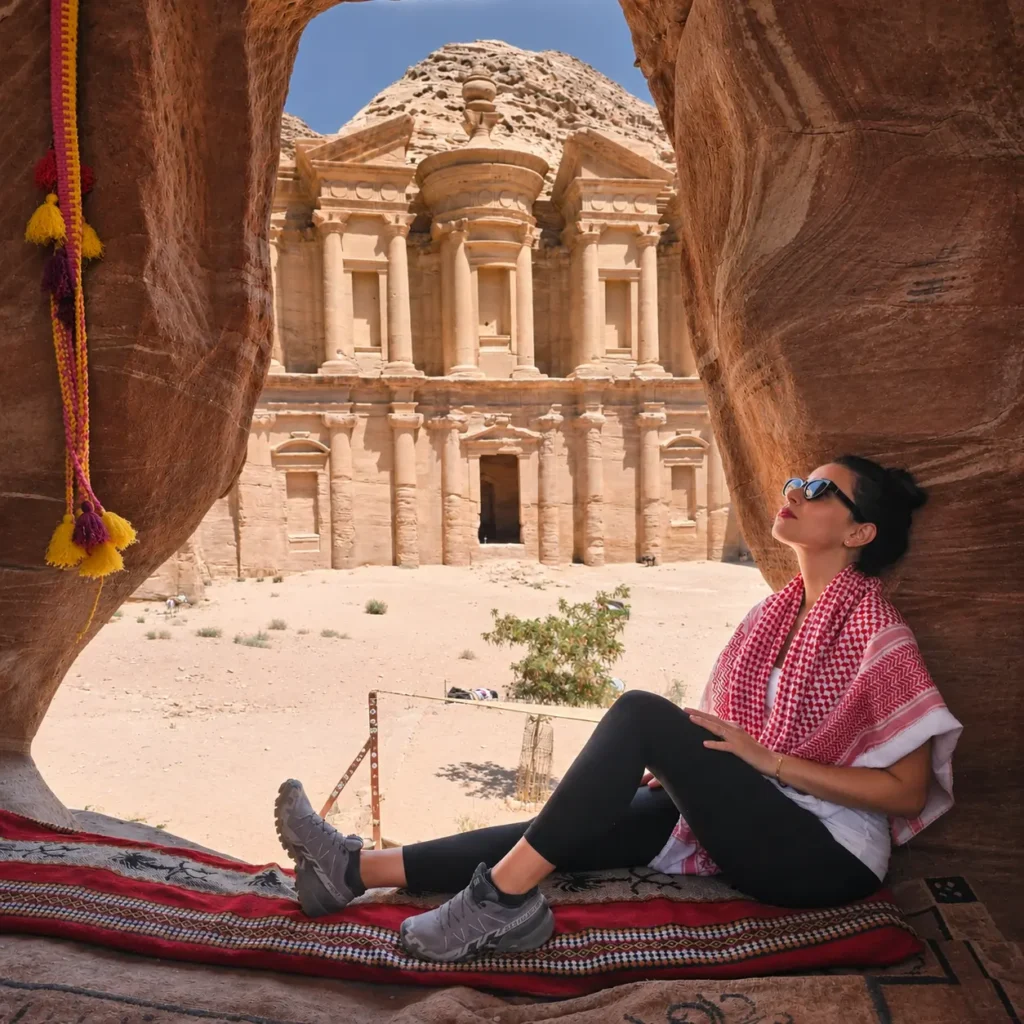
The site is huge, with more than eight hundred steps up to the Monastery and lots of heat in summer. The Treasury fills up between 9 and 11 in the morning, and the camel, donkey and souvenir vendors are insistent. In Wadi Rum, camps vary a lot in quality, and the wind and the cold at night come as a surprise.
That is why I design the trip with time for Petra: two days, a sunrise entry, a local guide, a hike to the Monastery and a night in the desert at a quality camp. I also help you decide whether the Jordan Pass is right for you.
The key is comfortable shoes, realistic expectations and a good guide.
Etiquette: Dos and Don'ts in Jordan
Jordanians are hospitable, courteous and very attentive to respect. These customs help you travel respectfully and avoid misunderstandings.
| Topic | Avoid | Instead |
|---|---|---|
| Hospitality | Abruptly refusing the tea or coffee you are offered. | Accept with a smile. If you don't want more, gently shake the cup. |
| Left hand | Giving, receiving or eating with the left hand. | Use the right hand, or both hands, to hand over objects and money. |
| Dress | Short or tight clothing, especially in villages and mosques. | Cover shoulders and knees. In mosques, women cover their heads. |
| Mosques | Entering with shoes on, talking loudly or photographing during prayer. | Take off your shoes, speak softly and ask before photographing. |
| Photography | Photographing women or families without permission. | Ask first. Almost everyone agrees gladly, especially the Bedouin. |
| Greetings | Shaking hands with a person of the opposite sex without waiting for them to extend a hand. | Wait for the other person to extend a hand, and place your hand on your chest as a greeting. |
| Ramadan | Eating, drinking or smoking in public during the day. | Be discreet. Some restaurants open later. |
| Tipping | Tipping as in other countries without checking the bill. | Check whether service is already included. Tip guides and drivers, in dinars or dollars. |
At small hotels and camps, the staff become familiar. Greeting someone by name and a sincere “shukran” are remembered more than any grand gesture.
Laws to Know Before Traveling to Jordan
Not knowing the law is no defense in any country. These are the rules that surprise travelers most in Jordan.
| Topic | What the rule says | Consequence |
|---|---|---|
| Drugs | Possession, use and trafficking, including cannabis, are serious crimes. | Detention and prison sentences. Don't bring or take any. |
| Drones | Drones are heavily restricted and require a permit. | Fines and confiscation. Don't bring them. |
| Photography | Photographing military installations, airports, government buildings and police is prohibited. | Detention and confiscation of equipment. Ask first. |
| Insulting the king or religion | Criticizing the monarchy or insulting religion is a crime. | Detention. Avoid political and religious comments in public. |
| Alcohol | It is sold at authorized hotels, restaurants and stores, but drinking in the street is prohibited. | Fines. Drink only at authorized places. |
| Unmarried couples | Couples may share a room at tourist hotels, although discretion is expected. | Avoid public displays of affection. |
| Antiquities | Taking archaeological objects out of the country is prohibited. | Criminal charges. Buy only replicas with a receipt. |
Customs: What You Can and Can't Bring Into Jordan
Jordan is relatively straightforward at customs, but it helps to have these rules clear before packing.
| Item | Rule | Notes |
|---|---|---|
| Cash | Large amounts of cash are declared when entering or leaving. | Check the current limit with your operator before traveling. |
| Medications | Allowed in original packaging with a doctor's letter. | Keep your prescriptions. |
| Drugs and narcotics | Banned. | They can lead to detention. |
| Alcohol | A limited amount is allowed for personal use. | Check the current limit with your operator. |
| Antiquities | Taking archaeological objects out is prohibited. | Buy only replicas with a receipt. |
| Professional equipment | Professional-use and film cameras may require a permit. | If you work with them, tell me beforehand. |
| Drones | They require a permit and are usually confiscated. | Don't bring them. |
Activities That Define the Jordanian Experience (and Where to Eat Nearby)
In Jordan, the table and the landscape go together: every place has its own flavors. That is why each activity comes with what is worth eating nearby.

Petra by Day and by Night
Enter through the Siq, reach the Treasury and continue to the Royal Tombs and the Monastery. At night, “Petra by Night” lights the Siq with candles, and costs extra.
Where to eat nearby: a Jordanian lunch at a restaurant at the entrance, with hummus, falafel and fresh bread.
Wadi Rum by Jeep and Camel
A tour with Bedouin guides among stone arches, red dunes and canyons. The night in the desert, with a zarb dinner and a starry sky, is unforgettable.
Where to eat nearby: a zarb dinner, with lamb, chicken and vegetables cooked underground.

Dead Sea
Float in water with an extremely high salt content and give yourself a mineral mud treatment. Don’t go in with open wounds or get the water in your eyes.
Where to eat nearby: a mezze dinner by the sea, with sunset views.

Jerash and Amman
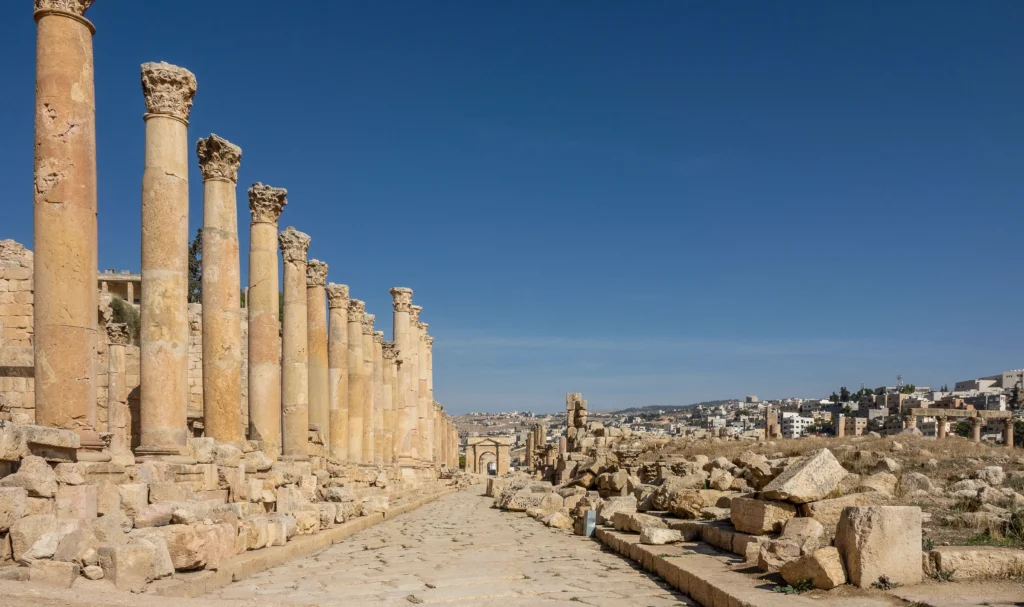
Jerash is a Roman city with colonnaded streets and an amphitheater. Amman combines the Roman theater, the Citadel and the cafés of the Rainbow Street neighborhood.
Where to eat nearby: knafeh at Nablus Sweets in Amman, and mansaf at a traditional restaurant.
Madaba and Mount Nebo
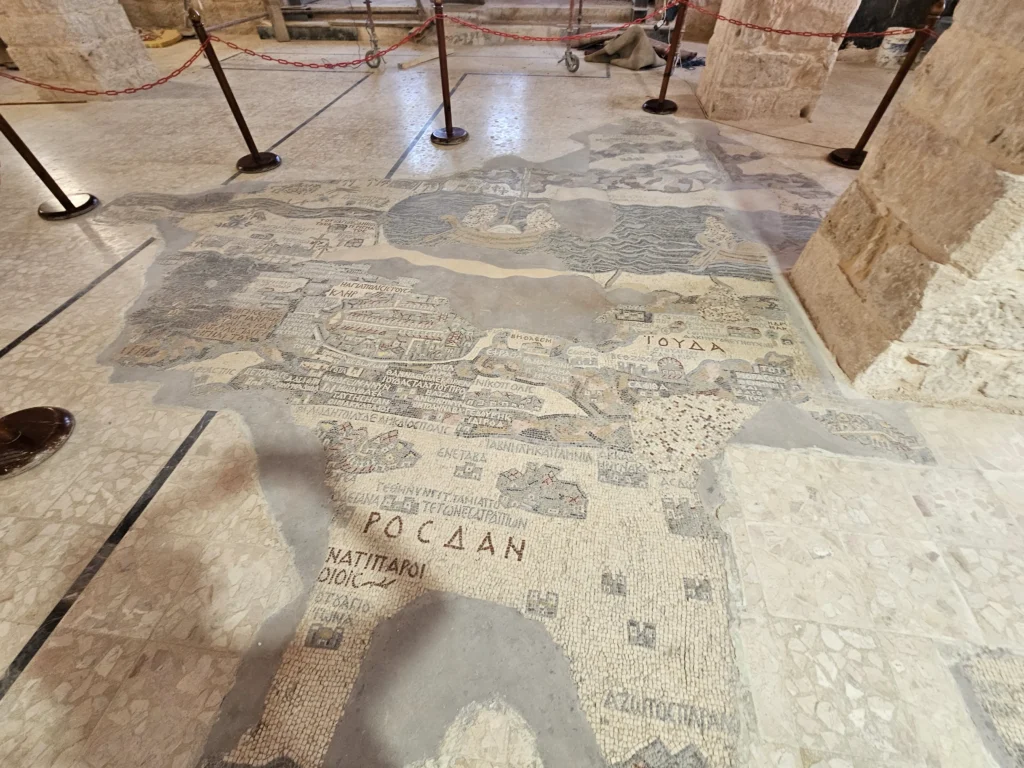
Madaba holds the oldest mosaic map of the Holy Land. Mount Nebo offers a view of the Jordan Valley.
Where to eat nearby: a simple lunch at a local restaurant in Madaba.
Dana and Aqaba
The Dana reserve offers hikes among valleys and stone villages. Aqaba has beaches and diving in the Red Sea.
Visa and Paperwork Before Your Trip to Jordan
U.S. citizens can get a visa on arrival or apply for an e-visa for Jordan. If you buy the Jordan Pass before arriving, the visa fee is covered.
| Procedure | What to know | When |
|---|---|---|
| Tourist visa | It is obtained on arrival at most borders, or online. It costs about 40 dinars and allows up to 30 days. The Jordan Pass covers this fee if bought before arriving and you stay the minimum number of consecutive nights (reported as 2 or 3, so confirm it). | Before arriving |
| Jordan Pass | It costs about 70 to 80 dinars, depending on the days in Petra. It includes entry to more than 40 sites and the visa fee. It is bought online before arriving. | Before the trip |
| Passport | It should be valid for at least 6 months from your arrival and have blank pages. | Before buying the ticket |
| Onward ticket | Airlines and immigration may ask for a return or onward ticket. | At boarding and on arrival |
| Yellow fever | The certificate is requested if you arrive from a risk country. From the U.S. it is not usually required. | If you combine with Africa or South America |
| Minors | Each child needs their own passport and, if traveling with only one parent or with third parties, a notarized consent letter. | Before traveling |
| Travel insurance | Get one with international medical and evacuation coverage. | Before traveling |
How to Get Your Entry Step by Step
- Check the current requirements on the official portal of Jordan’s Ministry of Interior, and beware of intermediaries that overcharge.
- Decide whether to buy the Jordan Pass before arriving.
- Carry your valid passport and an onward ticket.
- Pay the visa fee, if the pass does not cover it.
- Save the confirmation on your phone and carry a printed copy.
Immigration rules can change at short notice. That is why I prepare each procedure with my clients and review the conditions close to the travel date.
Frequently asked questions about traveling to Jordan
Do I need a visa to travel to Jordan from the U.S.?
Yes. U.S. citizens can get the visa on arrival or apply for an e-visa. It costs about 40 dinars and allows up to 30 days. The Jordan Pass covers this fee if bought before arriving. Your passport should be valid for at least 6 months.
What is the Jordan Pass and is it worth it?
It is a pass that includes entry to more than 40 sites, including Petra, and the visa fee. It costs about 70 to 80 dinars. It is usually worth it if you stay the minimum number of nights and visit Petra and several other sites.
What is the best time to travel to Jordan?
From March to May and from September to November. Summer is very hot in Petra and Wadi Rum, and winter is cold and rainy. During Ramadan, the pace of life changes.
How many days do I need for a trip to Jordan?
Between 6 and 9 days lets you combine Amman, Jerash, Petra, Wadi Rum and the Dead Sea. With less time, the trip comes down to Petra and Wadi Rum.
Is it safe to travel to Jordan?
Yes, it is a stable and hospitable country. The region has tensions, so check the current U.S. State Department advisory close to your dates. In cities I recommend private transfers and keeping valuables safe.
Do you tip in Jordan?
Yes. You tip guides, drivers and hotel staff, in dinars or dollars. At many restaurants service is already included on the bill, so it is worth checking.
What clothes should I bring to Jordan?
Light cotton clothing that covers shoulders and knees, a sweater for desert nights, a hat, sunglasses and comfortable shoes for walking on stone. Women carry a scarf to enter mosques.
Can I combine Jordan with other destinations?
Yes. Jordan combines very well with Egypt, Turkey or the United Arab Emirates. Check the requirements of each destination, and crossing by land to other countries takes planning.
How much does a trip to Jordan cost?
It depends on the level and the hotels. As a reference, a 7 to 9 day trip with flights from the U.S. costs $3,200 to $5,400 per person at an essential level, $5,000 to $8,300 at an intermediate one and from $9,100 at a premium one, with trip design and management included. These are estimates from November 2026.
Let's Design Your Trip to Jordan Together
Jordan is enjoyed far more when Petra, the desert, the hotels and the transfers are planned as a single trip. Tell me what you are looking for, whether history, desert or rest, and we will design it around you.

Combine Jordan With Other Destinations
If you are traveling as a couple, discover my honeymoon trips. If you prefer to share the experience, explore the group trips.

Ari Garduno
Passionate traveler of the authentic, the unexpected and what leaves a mark.


Leave a comment