



Some places are seen and others are heard. Tanzania is the second kind: the roar of a lion before dawn in the Serengeti, the thunder of thousands of hooves crossing a river and the enormous silence of Ngorongoro Crater when the mist lifts.
That is why a custom safari in Tanzania is designed with great care. The Great Migration, the northern parks, the southern ones and the beaches of Zanzibar each have their own seasons, distances and reservations. Those who arrive prepared live the trip of a lifetime. Those who don’t spend hours on a dirt track looking at the wrong place in the wrong month.
This guide goes beyond the postcard. Besides the regions, the camps and the activities, I tell you what almost nobody explains: what it really costs, what paperwork you need as a U.S. traveler, what is rude, what is illegal, what you can and can’t bring, and what to do so the Great Migration doesn’t become a broken promise.


Some places are seen and others are heard. Tanzania is the second kind: the roar of a lion before dawn in the Serengeti, the thunder of thousands of hooves crossing a river and the enormous silence of Ngorongoro Crater when the mist lifts.
That is why a custom safari in Tanzania is designed with great care. The Great Migration, the northern parks, the southern ones and the beaches of Zanzibar each have their own seasons, distances and reservations. Those who arrive prepared live the trip of a lifetime. Those who don’t spend hours on a dirt track looking at the wrong place in the wrong month.

This guide goes beyond the postcard. Besides the regions, the camps and the activities, I tell you what almost nobody explains: what it really costs, what paperwork you need as a U.S. traveler, what is rude, what is illegal, what you can and can’t bring, and what to do so the Great Migration doesn’t become a broken promise.
Why Tanzania Is Unlike Any Other Destination
Tanzania is one of the few places in the world where you can:
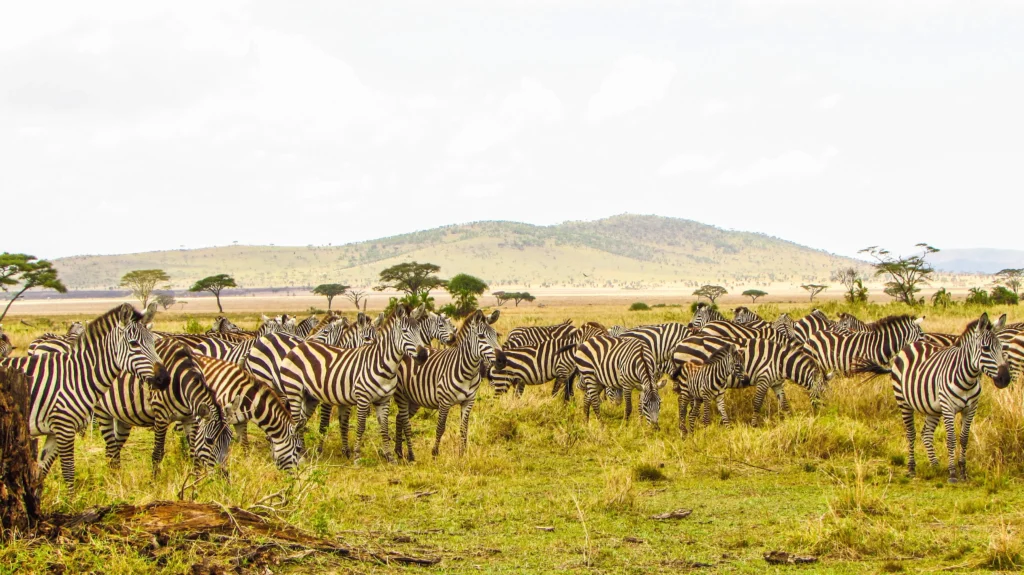
- See more than a million wildebeest and zebras on the move within the Serengeti ecosystem.
- Descend into Ngorongoro Crater, a volcanic caldera with lions, black rhinos and elephants in a single valley.
- Sleep in a luxury tented camp just yards from the open savanna.
- End the trip with your feet in the white sand of Zanzibar, among spices, mosques and turquoise sea.
What makes it unique is the scale. The parks are enormous and barely fenced, so wildlife moves the way it always has. It is also a country with a living culture: the Maasai, the Swahili of the coast and centuries of trade across the Indian Ocean are present in every region.
It is a destination you enjoy far more with good logistics. There are long distances, seasons that change where the migration is and rules worth knowing. That is why below you will find sections on budget, etiquette, laws, customs and visa.
Be a traveler. Not a Tourist.
Ready to design your next adventure?
Best Time to Visit Tanzania

Tanzania is close to the equator, so it doesn’t have four seasons but dry and rainy ones. The best time depends on what you want to see, and my recommendation is not to pick the date before deciding which part of the Great Migration you want to experience.
| Season | Months | The best | Keep in mind |
|---|---|---|---|
| Dry season | June to October | The best overall safari season. Vegetation is low, animals concentrate near the water and days are sunny. From July to September, the migration crosses the Mara River in the northern Serengeti. | It is the busiest and most expensive season. Book many months ahead. Mornings are cold. |
| Short rains | November and December | Green landscapes, fewer visitors and good photography. The herds return to the southern Serengeti. | Brief afternoon rains. Some roads become difficult. |
| Calving season | January to February | Hundreds of thousands of young are born in the southern Serengeti and the Ndutu area, which draws lions, hyenas and cheetahs. It is one of my favorite times. | The herds depend on the rains and move around. It pays to choose the camp well. |
| Long rains | March to May | Lower rates, quiet parks and very green countryside. | Heavy, frequent rain. Some camps close. Zanzibar has its wettest season. |
If you dream of seeing the river crossings, travel between July and September. If you prefer young animals and fewer vehicles, January and February are magnificent. Many of my clients combine the safari with Zanzibar, and when they do, I design the order of the trip according to the weather in each region.



Real Budget: How Much Does a Safari in Tanzania Cost?
I’ll be straight with you: in Tanzania almost the whole budget is decided by the safari. Park fees are high and luxury camps cost as much per night as a good hotel in a European city. These figures are market estimates from November 2026, per person and in U.S. dollars.
Flights from the U.S.
There are no nonstop flights from the U.S. to Tanzania. The usual route is a connection in Europe or the Middle East to Kilimanjaro, Arusha or Dar es Salaam. The ticket typically costs about $1,500 to $2,600 per person in economy, depending on your departure city and the season. On top of that come the internal bush-plane flights between parks, which are best included from the start.
Safari: Lodging per Night
| Level | Per person per night | What to expect |
|---|---|---|
| Essential | $250 to $450 | Comfortable lodges and tented camps, with all meals and daily safaris. |
| Intermediate | $450 to $800 | Carefully designed camps, very strong guides and better positioning for the migration. |
| Premium | $800 to $1,500 | Signature cuisine, privileged views, mobile camps and very personalized attention. |
| Ultra-luxury | $1,500 to $3,000 or more | The most exclusive brands, with few tents and private guides. |
Nightly rates usually include lodging, meals, safaris, park fees and basic drinks, although each camp explains it differently. The hot-air balloon flight over the Serengeti, around $600 per person, and premium wines are paid separately. From July to October and at Christmas, prices rise considerably.
Zanzibar and Other Activities
Zanzibar offers everything from mid-range beachfront hotels to private villas. It is the flexible part of the budget, and my recommendation is to leave it for the last three or four days of the trip.
Estimated Total Budget (per person, 10 to 12 days, with 6 or 7 safari nights and 3 beach nights)
| Level | Estimated total, with flights from the U.S. | What the trip looks like |
|---|---|---|
| Essential | $7,700 to $10,700 | Comfortable camps, northern circuit parks, Ngorongoro and a few beach days. |
| Intermediate | $11,700 to $16,700 | Designer camps, well positioned for the migration, internal flights and a boutique hotel in Zanzibar. |
| Premium | From $19,500, and over $33,000 at the very top | Exclusive or mobile camps, balloon, private guides and villas on the coast. |
These ranges include flights, lodging, safari meals, park fees, transfers and the main activities. They include the design and full management of the trip: bookings, transfers, guides and support. They do not include tips, personal shopping or travel insurance. The nightly rates are market reference rates. The investment is protected by designing the trip well: I help you decide where it is worth spending and where not.
Where to Stay in Tanzania
In Tanzania, lodging is part of the safari. The usual approach is to combine lodges in different areas with a beach hotel at the end.
Luxury Tented Camps
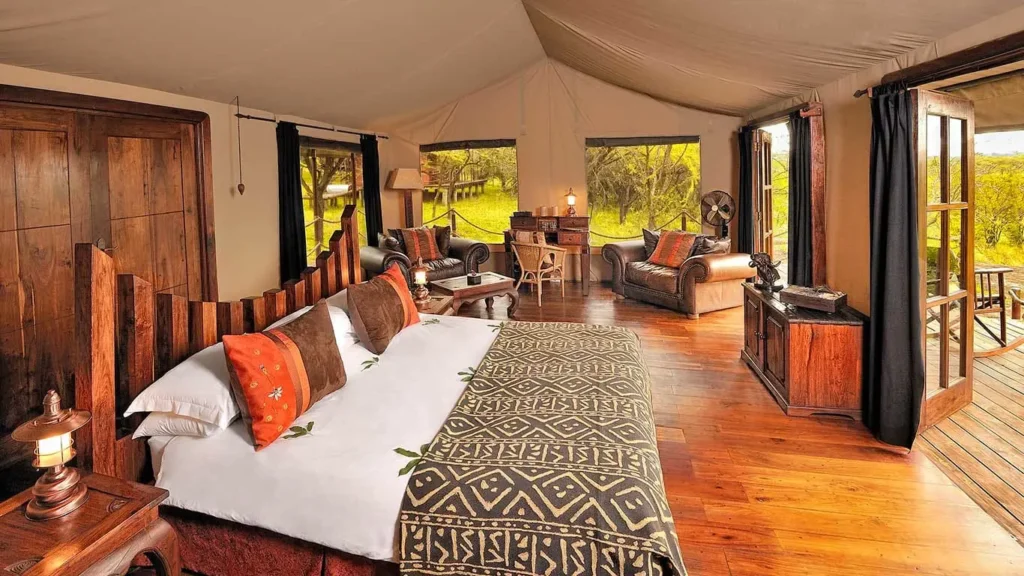
These are spacious tents with a private bathroom, real beds and views of the savanna. You sleep to the sounds of the bush. There are fixed and mobile ones; the latter follow the migration through the year.
Lodges on the Ngorongoro Rim
Several lodges sit on the crater rim, at over 6,500 feet (2,000 m), with sunrise views and cold nights. They are a memorable stop, although you stay only a night or two.
Serengeti: Central, North and South
Location defines what you will see. The north is ideal from July to October for the Mara River crossings, and the south and Ndutu from December to March for the young animals. Choosing the right area matters more than the name of the camp.
Tarangire and Lake Manyara
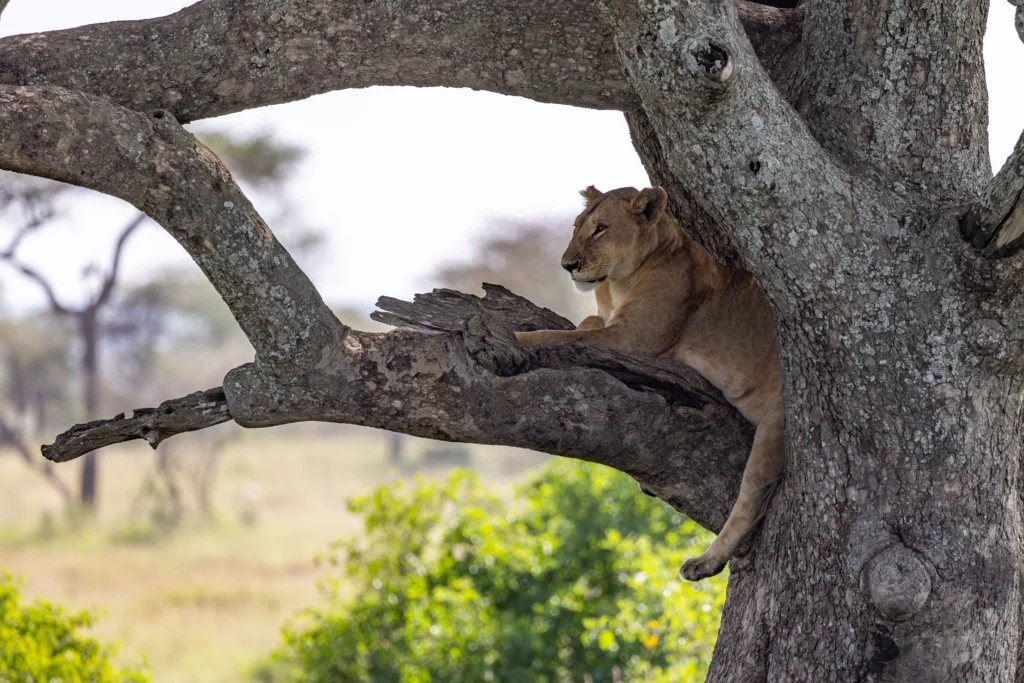
Tarangire stands out for its elephant herds and baobabs, especially from June to October. Manyara is a quiet one-night stop, with tree-climbing lions if you’re lucky.
Zanzibar
Between the hotels on the east and north coasts and the historic houses of Stone Town, there are styles for every traveler. Some have a beach and reef, and those on the east coast change with the tides.
What to Expect on Your Trip Through Tanzania
Language. Swahili and English are spoken, and English is widely understood in tourism. A few words open smiles: karibu (welcome), asante (thank you) and pole pole (slowly, take it easy).
Currency and cash. The currency is the Tanzanian shilling (TZS). In tourism, U.S. dollars are accepted, as long as the bills are recent and in good condition. Visa and Mastercard cards are accepted at lodges and large hotels, and ATMs only work well in cities. Bring cash in dollars for tips and markets.
Getting there. There are no nonstop flights from the U.S. Total travel time usually exceeds 24 hours, with connections. Tanzania is 7 to 11 hours ahead of the U.S., depending on the coast and the season.
Transportation. Between parks you fly on small bush planes, with a baggage limit of about 33 pounds (15 kg) in a soft bag. Ground transfers are long and on dirt roads. On safari you always travel with a guide.
Connectivity and adapters. Outlets are type D and G, at 230 V and 50 Hz. Bring a universal adapter. An eSIM helps in cities, but coverage in the parks is limited.
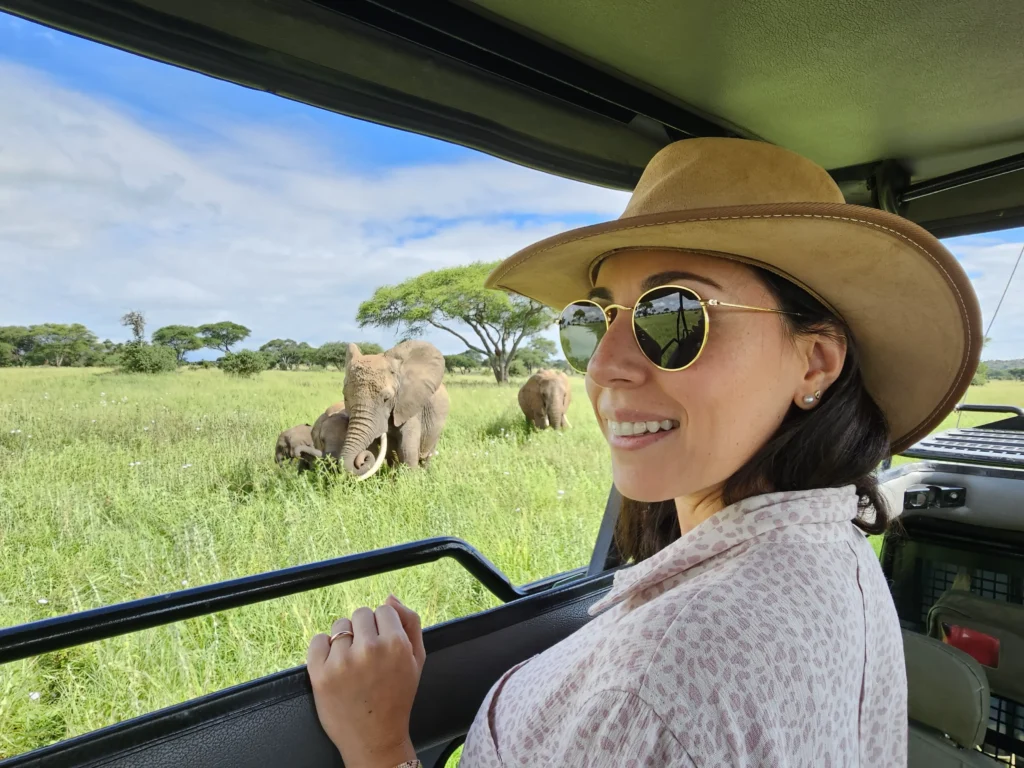
Weather and clothing. Travel in layers. Mornings in Ngorongoro and the Serengeti are cold and midday is hot. Bring neutral colors, a hat, sunscreen and comfortable shoes. Avoid dark blue and black, which attract tsetse flies in some areas.
Health. There is malaria risk in almost the whole country, including Zanzibar. Talk to your doctor or a travel clinic well in advance about prophylaxis, and use repellent. Get travel insurance with medical and evacuation coverage.
Safety. Tanzania is a calm destination for tourism. In cities like Arusha and Dar es Salaam, I recommend private transfers, not walking at night and keeping valuables out of sight. In the parks, following your guide’s instructions is what matters most.
Culture. Tanzania has more than 120 ethnic groups and is held together by Swahili. The Maasai, herders of the northern plains, preserve their traditions. The culture of the coast and Zanzibar, of Arab, Indian and African heritage, is very different from that of the interior. Hospitality is genuine, and the greeting is part of courtesy.
Food. Try ugali (firm cornmeal), nyama choma (grilled meat), pilau (spiced rice), Zanzibar urojo and coastal seafood with coconut. Coffee from the slopes of Kilimanjaro is excellent, and Zanzibar spices, such as clove, cinnamon and vanilla, make good gifts.
My basic guide for any trip
The Great Migration: The Reality Behind the Magic
The Great Migration is not guaranteed. It is worked for.
The herds follow the rain and the grass, not a calendar. A Mara River crossing can happen in the morning, wait three hours or not happen that day at all. What does change the odds is choosing the right area for the date, staying enough nights (at least three in each area) and having a guide who reads the bush and coordinates with others.
That is why I design each trip around the expected movement of the herds, and not the other way around. If the crossing doesn’t happen, the Serengeti still offers big cats, elephants, hyenas and landscapes worth the trip. I also work with mobile camps that move with the migration.
The key is realistic expectations, preparation, patience and a good guide.
Etiquette: Dos and Don'ts in Tanzania
Tanzanians are warm, patient and very courteous. These customs help you travel respectfully and avoid misunderstandings.
| Topic | Avoid | Instead |
|---|---|---|
| Greetings | Jumping into a conversation without greeting or asking for something right away. | Always greet with "jambo" or "habari" and ask how the person is. It is part of courtesy. |
| Tipping | Leaving without a tip or giving everyone the same amount. | Tip the guide and camp staff separately, in cash dollars. Ask your operator for a reference based on your group. |
| Photography | Photographing people, and especially the Maasai, without permission. | Ask first. Many ask for a small payment and it is an accepted practice. |
| Safari | Speaking loudly, standing up in the vehicle or trying to approach an animal. | Follow the guide's instructions, stay seated and keep quiet when asked. |
| Dress | Short or tight clothing in villages and in Zanzibar. Camouflage clothing. | Cover shoulders and knees in Stone Town and in villages. Wear neutral tones that are not camouflage. |
| Left hand | Giving, receiving or eating with the left hand. | Use the right hand, or both hands, to hand over objects and money. |
| Pace | Expecting the strict punctuality of other countries. | Arrive on time, with patience. "Pole pole" is a way of life. |
| Ramadan | Eating or drinking in public in Zanzibar during the day. | Be discreet. Some businesses open for fewer hours. |
At the camps, the staff are like a small family. Greeting someone by name and a sincere “asante” are remembered more than any grand gesture.
Laws to Know Before Traveling to Tanzania
Not knowing the law is no defense in any country. These are the rules that surprise travelers most in Tanzania.
| Topic | What the rule says | Consequence |
|---|---|---|
| Drugs | Possession, use and trafficking, including cannabis, are serious crimes. | Detention and prison sentences. Don't bring or take any. |
| Camouflage clothing | Civilians cannot wear military-style or camouflage clothing; it is for the armed forces only. | Confiscation and trouble with the police. Choose plain neutral tones. |
| Plastic bags | Single-use plastic bags have been banned since 2019. Travelers must leave them at the airport or avoid them. | Fines. Bring cloth bags and don't pack with loose plastic bags. |
| Photography | Photographing airports, government buildings, military installations and police is prohibited. | Detention and confiscation of equipment. Ask first. |
| Drones | Drones require a permit and can be confiscated at customs. | Fines and confiscation. Don't bring them unless you have authorization. |
| Wildlife | It is prohibited to get out of the vehicle outside authorized areas, feed animals or approach them. | Fines, expulsion from the park and a real risk to your safety. |
| Wildlife products | Ivory, rhino horn and products from wild animals are prohibited. | Criminal charges. Don't buy them or try to take them out of the country. |
| Same-sex relationships | They are criminalized by law. | I recommend discretion in public and no displays of affection. Talk to me if you travel as a couple. |
Customs: What You Can and Can't Bring Into Tanzania
Tanzania is relatively straightforward at customs, but it helps to have these rules clear before packing.
| Item | Rule | Notes |
|---|---|---|
| Cash | You can enter or leave with up to $10,000 without declaring it. | Above that amount, it must be declared. |
| Local currency | Non-residents cannot import or export Tanzanian shillings. | You may take out the equivalent of about $100 without a permit. |
| Medications | Allowed in original packaging with a doctor's letter. | Keep your prescriptions. |
| Drugs and narcotics | Banned. | They can lead to detention. |
| Weapons and ammunition | Banned without special authorization. | If you buy knives as souvenirs, they travel in checked luggage. |
| Wildlife products | Ivory, rhino horn and exotic skins are banned. | Also applies to souvenirs made from those materials. |
| Professional equipment | Professional-use and film cameras may require a permit. | If you work with them, tell me beforehand. |
| Plastic bags | Single-use bags are banned. | See the laws section. |
Activities That Define the Tanzanian Experience (and Where to Eat Nearby)
In Tanzania, the table and the landscape go together: every region has its own flavors. That is why each activity comes with what is worth eating nearby.
Serengeti: Safari and the Great Migration
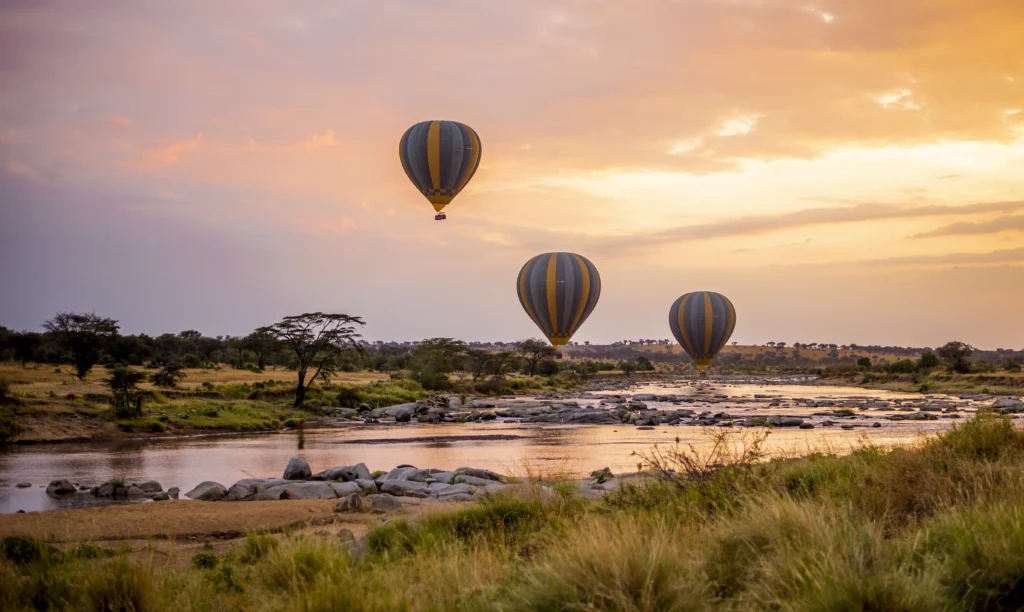
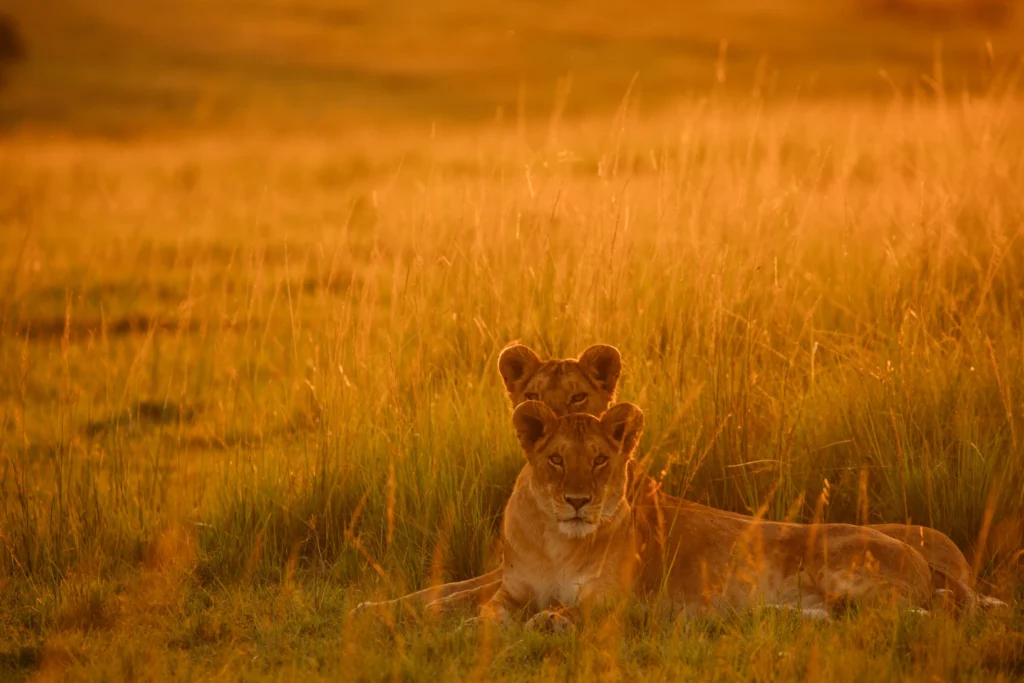
The Serengeti is the heart of the trip. Travel its plains in an open vehicle, looking for lions, leopards, cheetahs and the migration according to the season. Consider a sunrise balloon flight, with breakfast on the savanna.
Where to eat nearby: dinner by the fire at camp, with grilled meats and local vegetables, and a bush breakfast after the safari.
Ngorongoro Crater
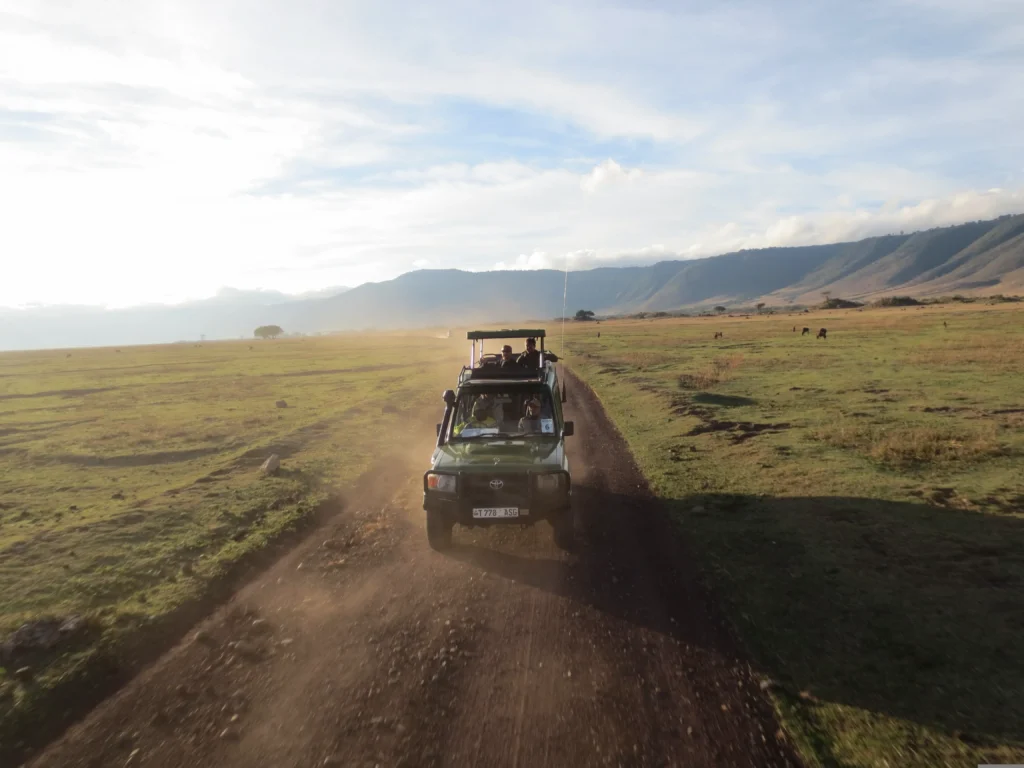
Descending into the crater means seeing a volcanic caldera with abundant wildlife in just a few hours. It is one of the best places in Africa to see black rhinos. Go early, before the vehicles arrive.
Where to eat nearby: a picnic at a crater lake, with hippos in the background, and a hot dinner at the rim lodge.
Tarangire: Elephants and Baobabs
From June to October, Tarangire concentrates herds of elephants along the river. The giant baobabs give it an unforgettable landscape.
Where to eat nearby: lunch under a tree on the riverbank, and dinner at the lodge overlooking the valley.

Meeting the Maasai and the Hadza
A guided, respectful visit to a Maasai community or to the Hadza hunter-gatherers, near Lake Eyasi, helps you understand the region. Do it with a local guide and ask what share of the payment reaches the community.
Where to eat nearby: a home-cooked meal in a community home, if the guide arranges it.
Southern Safaris: Nyerere and Ruaha
Nyerere (formerly Selous) and Ruaha receive far fewer people than the north. They offer boat, walking and vehicle safaris, with wild dogs and large herds of elephants. They are an excellent option for a return trip to Tanzania.

Zanzibar: Stone Town and Beach
Stone Town, a World Heritage Site, blends alleys, carved doors and spice markets. Afterward, the beaches of the east and north coasts offer snorkeling, kitesurfing and rest.
Where to eat nearby: the Forodhani night market in Stone Town, with grilled seafood and sugarcane juice, and rooftop restaurants overlooking the harbor. Be careful with water and street-stall food if you have a sensitive stomach.

Kilimanjaro
Climbing Kilimanjaro, the roof of Africa, is a multi-day challenge that requires physical preparation and licensed guides. If you won’t climb, the view of the peak from Amboseli National Park in Kenya, or from Arusha on a clear day, is worth it.
Visa and Paperwork Before Your Trip to Tanzania
U.S. citizens need a visa to enter Tanzania. The good news is that you can apply online before traveling or get it on arrival at the main airports.

| Procedure | What to know | When |
|---|---|---|
| Tourist visa | Apply on the official portal, visa.immigration.go.tz. For U.S. citizens it costs around $100 (multiple entry, valid for up to a year, with stays of up to 90 days per visit); amounts are approximate and sources differ, so confirm on the portal. The answer takes 1 to 3 business days. | At least 2 weeks before the trip |
| Visa on arrival | It is also issued at the main airports. Bring cash dollars as a backup. | On arrival |
| Passport | It must be valid for at least 6 months after your departure and have at least one blank page. | Before buying the ticket |
| Onward ticket | Airlines and immigration may ask for a return or onward ticket. | At boarding and on arrival |
| Yellow fever | The international certificate is required if you arrive from a risk country, or after a transit of more than 12 hours in one. From the U.S. it is not usually mandatory, but if you combine with Kenya, Uganda or Rwanda, bring it. | Get vaccinated at least 10 days ahead |
| Malaria | There is a risk in almost the whole country. Talk to your doctor about prophylaxis. | 4 to 6 weeks ahead |
| Minors | Each child needs their own passport and, if traveling with only one parent or with third parties, a notarized consent letter. | Before traveling |
| Travel insurance | Get one with international medical and evacuation coverage. | Before traveling |
How to Get Your Visa Step by Step
- Go to the official portal, visa.immigration.go.tz, and beware of intermediaries who charge extra.
- Upload a photo of your passport’s data page.
- Fill in your personal and trip details.
- Pay the fee by card.
- Receive the approval, save it on your phone and carry a printed copy.
- Check the yellow fever rule if you combine countries.
Immigration rules can change at short notice. That is why I prepare each procedure with my clients and review the conditions close to the travel date.

Beyond the Postcard: Reads That Reveal the Soul of Tanzania
Before your feet touch its soil, let your mind travel. Here are my literary recommendations so you can soak up the essence of Tanzania and experience every corner from another perspective.


Travel insurance is a smart and vital investment
Frequently asked questions about traveling to Tanzania
Do I need a visa to travel to Tanzania from the U.S.?
Yes. U.S. citizens need a visa, which is applied for online at visa.immigration.go.tz or obtained on arrival at the main airports. For U.S. citizens it costs around $100 (multiple entry, stays of up to 90 days per visit); confirm the current fee on the official portal. Your passport must be valid for at least 6 months.
What is the best time for a safari in Tanzania?
From June to October, which is the dry season. Vegetation is low and animals gather near the water. For the Mara River crossings, travel from July to September; to see young animals, from January to February in the southern Serengeti.
How many days do I need for a safari in Tanzania?
Between 7 and 10 days lets you combine the Serengeti, Ngorongoro and Tarangire. With a few more days, you can add Zanzibar. With less time, the trip is reduced to a single area.
Is it safe to travel to Tanzania?
Yes, with precautions. In cities like Arusha and Dar es Salaam it is best to use private transfers, not walk at night and keep valuables secure. At the camps and on safari, the main care is following your guide’s instructions.
Do you tip in Tanzania?
Yes. You tip the guide and camp staff separately, in cash dollars. Amounts vary by camp and group size, and your operator will give you a reference.
Is there malaria on safaris in Tanzania?
Yes, there is risk in almost the whole country, including Zanzibar. Talk to your doctor or a travel clinic about prophylaxis 4 to 6 weeks ahead, and use repellent and long sleeves at dusk.
What can't I bring to Tanzania?
You can’t bring drugs, weapons or camouflage clothing. Single-use plastic bags are banned, drones require a permit and wildlife products such as ivory are prohibited. Medications must be in their original packaging, with a prescription.
Can I combine Tanzania with other destinations in Africa?
Yes. Tanzania combines very well with Kenya for the Masai Mara, with Rwanda or Uganda for gorillas and with Zanzibar for the beach. If you pass through a yellow-fever-risk country, bring your vaccination certificate.
How much does a safari in Tanzania cost?
It depends on the level and the area. As a reference, a 10 to 12 day trip with flights from the U.S. costs $7,700 to $10,700 per person at an essential level, $11,700 to $16,700 at an intermediate one and from $19,500 at a premium one, with trip design and management included. These are estimates from November 2026.
Let's Design Your Trip to Tanzania Together
Tanzania is enjoyed far more when the migration, the camps, the flights and the transfers are planned as a single trip. Tell me what you are looking for, whether the Great Migration, the big cats, the culture or the beach, and we will design it around you.
Combine Tanzania With Other Destinations in Africa
If you are traveling as a couple, discover my honeymoon trips. If you prefer to share the experience, explore the group trips.

Ari Garduno
Passionate traveler of the authentic, the unexpected and what leaves a mark.


Leave a comment