



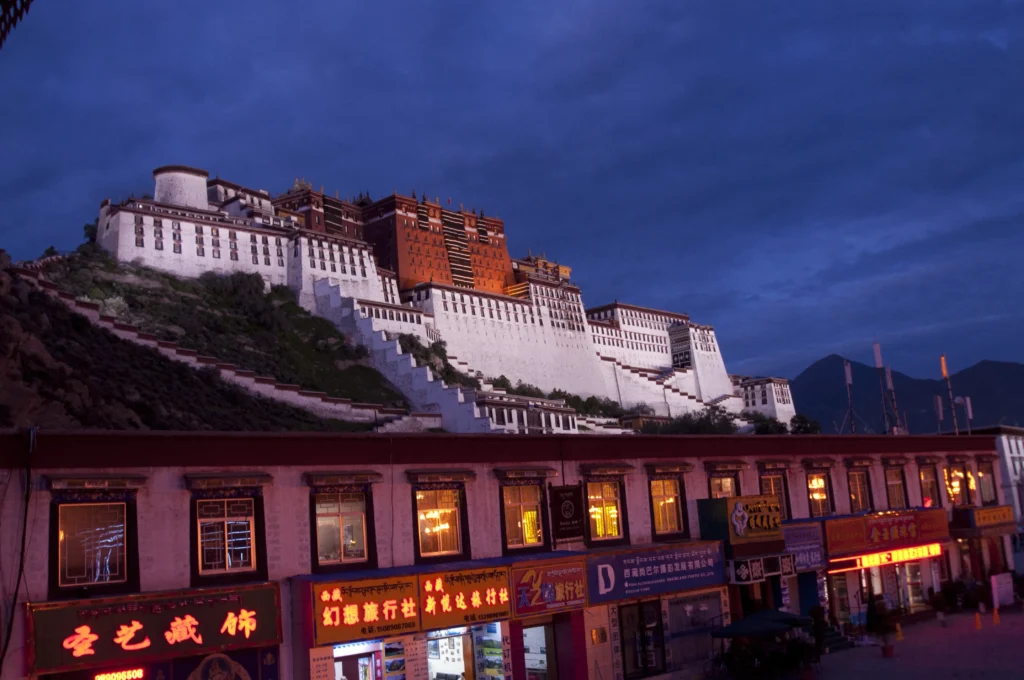
Tibet is the roof of the world and it feels like it. The Potala Palace above Lhasa, white monasteries hanging from the hillsides, lakes of an unreal blue at more than 14,700 feet and, in the distance, Everest seen from its north face. It is one of the most intense and spiritual trips there is.
An exclusive, custom trip to Tibet is designed with a lot of preparation. There are mandatory permits, a Chinese visa, a guide assigned throughout the trip, an altitude that demands acclimatization and rules that change at short notice. Those who plan it well live something extraordinary. Those who don’t are left without a permit or without energy.
This guide goes beyond the postcard. Besides the routes, the hotels and the activities, I tell you what almost nobody explains: what it really costs, what paperwork you need as a U.S. traveler, what is rude, what is illegal and what to expect from altitude.


Tibet is the roof of the world and it feels like it. The Potala Palace above Lhasa, white monasteries hanging from the hillsides, lakes of an unreal blue at more than 14,700 feet and, in the distance, Everest seen from its north face. It is one of the most intense and spiritual trips there is.
An exclusive, custom trip to Tibet is designed with a lot of preparation. There are mandatory permits, a Chinese visa, a guide assigned throughout the trip, an altitude that demands acclimatization and rules that change at short notice. Those who plan it well live something extraordinary. Those who don’t are left without a permit or without energy.

This guide goes beyond the postcard. Besides the routes, the hotels and the activities, I tell you what almost nobody explains: what it really costs, what paperwork you need as a U.S. traveler, what is rude, what is illegal and what to expect from altitude.
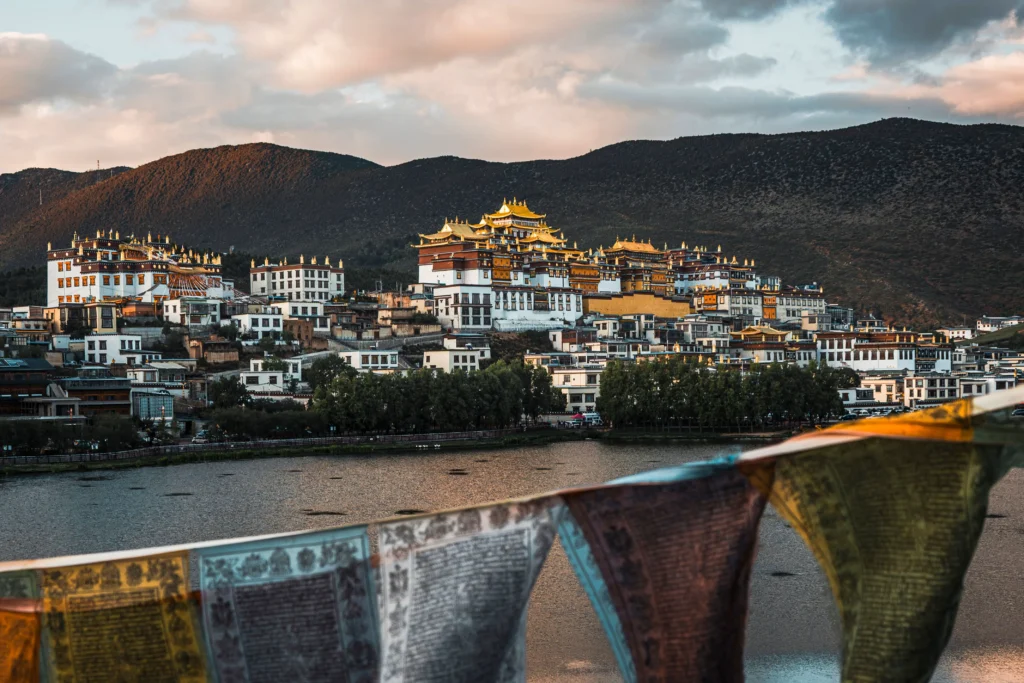
Why Tibet Is Unlike Any Other Destination
Tibet is one of the few places in the world where you can:
- Enter the Potala Palace, the historic residence of the Dalai Lamas, above the city of Lhasa.
- Watch monks debate in the courtyards of Sera Monastery, amid claps and gestures.
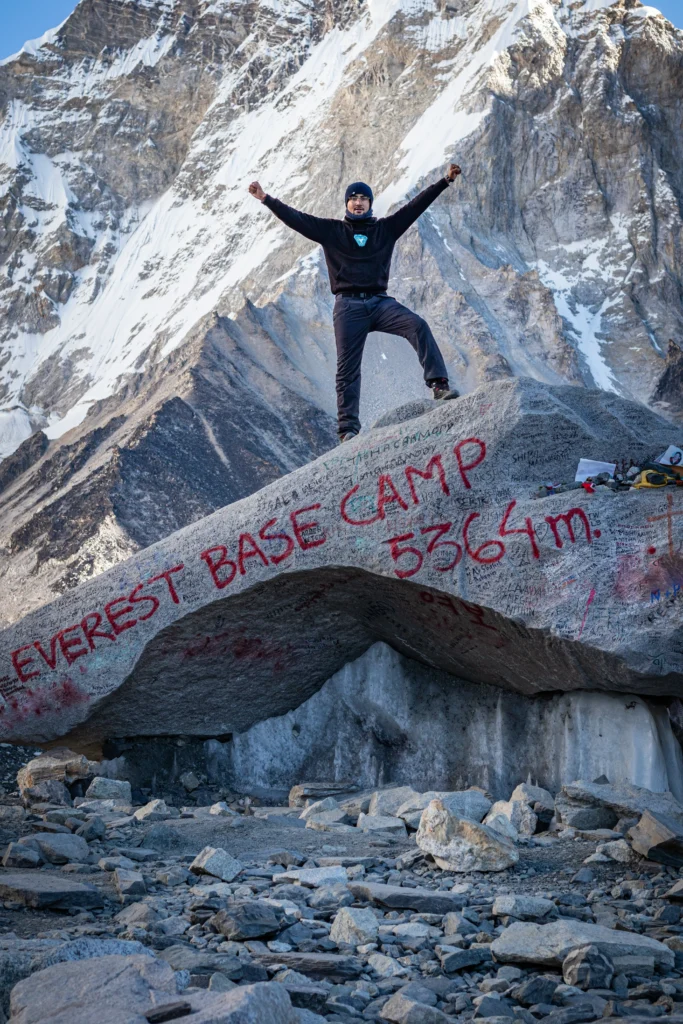
- See Everest from the north base camp, at more than 16,400 feet.
- Tour sacred lakes such as Yamdrok and Namtso, surrounded by snow-capped peaks.
What makes it unique is the devotion. Pilgrims circling temples with prayer wheels, flags that flutter on mountain passes and a spirituality lived in the street.
It is also a destination with strict rules. There are permits, a mandatory guide, checkpoints and altitude. That is why below you will find sections on budget, etiquette, laws, customs and visa.
Be a traveler. Not a Tourist.
Ready to design your next adventure?
Best Time to Visit Tibet

Tibet has a high-altitude climate, with cold nights all year. The best time depends on the views and how much cold you can handle.
| Season | Months | The best | Keep in mind |
|---|---|---|---|
| Spring | April to May | Clear skies, mild days and good visibility of Everest. It is one of the best times. | Nights are cold, and the road to Everest base camp opens from late April. |
| Summer | June to August | Green landscapes, high-altitude flowers and festivals such as the Shoton, between July and August. | Rain, lots of crowds in Lhasa and clouds that hide the mountains in the afternoons. |
| Fall | September to October | Clear skies, extraordinary Himalayan views and less rain. It is the best time for photography. | It is high season. Permits, hotels and flights are booked ahead. |
| Winter | November to March | Very few visitors, clean skies and good rates. | It is very cold, some hotels close and base camp may be closed. |
If you want good weather and views of Everest, travel in April and May or from September to October. If you prefer calm and don’t mind the cold, winter offers a silent version of Lhasa.



Real Budget: How Much Does a Trip to Tibet Cost?
I’ll be straight with you: Tibet is not toured on your own. Everything is done with a guide, driver and private vehicle, and that logistics is part of the price. These figures are market estimates from November 2026, per person and in U.S. dollars.
Flights from the U.S.
There are no nonstop flights from the U.S. to Lhasa. The usual route is a connection in Asia to Chengdu, Beijing or Shanghai, and then a flight or the train to Lhasa. The ticket typically costs about $1,300 to $2,700 per person in economy, depending on your departure city and the season. On top of that comes the flight or train to Lhasa.
Lodging per Night
| Level | Per person per night | What to expect |
|---|---|---|
| Essential | $60 to $130 | Comfortable hotels and Tibetan houses, often with breakfast included. |
| Intermediate | $130 to $300 | Boutique and international-chain hotels, with good service and oxygen in the rooms. |
| Premium | $300 to $700 | Luxury hotels in Lhasa and lodges with views, with personalized service. |
| Ultra-luxury | $700 to $1,500 or more | The most exclusive properties, with private service and custom experiences. |
Nightly rates usually include lodging and breakfast. Meals, excursions and transfers are usually added on top. In high season, prices rise considerably.
Permits, Guide and Vehicle
The Tibet travel permit has no cost in itself, but it is handled by an authorized agency, and the guide, driver and private vehicle are mandatory. That component adds an important part of the budget and is included in the figures below.
Estimated Total Budget (per person, 8 to 10 days, with Lhasa, Shigatse and Everest base camp)
| Level | Estimated total, with flights from the U.S. | What the trip looks like |
|---|---|---|
| Essential | $5,000 to $7,800 | Quality hotels, a private guide and vehicle, and the main sites of Lhasa. |
| Intermediate | $6,600 to $10,500 | Boutique hotels, Everest base camp, a sacred lake and a private guide. |
| Premium | From $10,300, and over $17,000 at the very top | Luxury hotels, private experiences with monks and custom routes. |
These ranges include flights, lodging, transfers, a guide, permits and the main activities. They include the design and full management of the trip: bookings, transfers, guides and support. They do not include the Chinese visa, all meals, tips, personal shopping or travel insurance. The nightly rates are market reference rates. The investment is protected by designing the trip well: I help you decide where it is worth spending and where not.
Where to Stay in Tibet
In Tibet, lodging is part of the experience. The usual approach is to combine hotels in different cities, each with its own style.
Lhasa
Luxury and boutique hotels near the Barkhor neighborhood, with views of the Potala in some cases. The first nights are devoted to acclimatizing.
Gyantse
Simple, comfortable hotels near the Kumbum and the dzong, in a quiet town on the way to Shigatse.
Shigatse
Quality hotels near Tashilhunpo monastery, one of the most important in Tibet.
Everest Base Camp
Tibetan tents and simple lodges, with views of the north face of Everest. The altitude demands rest and good preparation.
Sacred Lakes
Hotels and houses beside Lake Namtso or Yamdrok, for unforgettable sunrises. Nights are very cold.
What to Expect on Your Trip Through Tibet
Language. Tibetan and Mandarin are spoken. English is understood little outside hotels, so the guide is essential. A few words open smiles: tashi delek (hello) and thuk-je-che (thank you).
Currency and cash. The currency is the Chinese yuan (CNY). Mobile payments, such as Alipay and WeChat Pay, are the most used and work with foreign cards. Carry some cash in yuan and install the apps before traveling.
Getting there. There are no nonstop flights from the U.S. Total travel time usually exceeds 24 hours, with connections. Tibet is 12 to 13 hours ahead of the U.S. East Coast, depending on the season.
Transportation. You reach Lhasa by plane from Chengdu or Beijing, or on the Qinghai-Tibet train, a high-altitude journey. Inland, you travel with a driver and private vehicle on mountain roads. Road trips are long.
Connectivity and adapters. Outlets are types A, C and I, at 220 V. Bring a universal adapter, and check that your devices support 220 V. Google, WhatsApp and Instagram do not work in China without an access solution, so it is wise to get an eSIM with roaming before traveling.
Weather and clothing. Travel in layers. It is strong sun by day and cold at night, even in summer. Bring a down jacket, a hat, gloves, hiking boots, sunglasses, sunscreen and lip balm with SPF.
Health. Lhasa is at about 12,000 feet (3,650 meters) and base camp at more than 16,400 feet. Altitude can cause altitude sickness. Ascend slowly, drink water, avoid alcohol the first days and talk to your doctor before traveling. Get travel insurance with medical and evacuation coverage, essential at altitude. Hotels offer oxygen.
Safety. Tibet is safe for tourism, but there are frequent checkpoints and restricted areas. It is important to follow the guide and always carry your passport and permits. Check the current U.S. State Department travel advisory for China before you go.
Culture. Tibet is a Buddhist world. Pilgrims circling temples (kora), prayer wheels, colored flags and yak-butter offerings are part of daily life. Monasteries are living places of worship, not museums.
Food. Try tsampa (roasted barley flour), momos, thukpa (noodle soup), yak butter tea and Tibetan yogurt. Your guide can take you to sweet tea houses, where thermoses and conversation are shared.
My basic guide for any trip
Tibet: The Reality Behind the Magic
A sacred place also has rules.
The whole trip is done with a guide and permits, and there is no room for improvisation. Altitude affects even those in excellent shape. There are security checkpoints and restrictions on photographing and speaking about certain topics. The Potala and the monasteries have daily quotas and fixed hours. And the internet is limited.
That is why I design the trip months ahead, with a prudent acclimatization in the first days, hotels with oxygen and an experienced guide. I also recommend traveling in the best seasons for the views.
The key is realistic expectations, respect and patience.
Etiquette: Dos and Don'ts in Tibet
Tibetans are kind, devout and very attentive to respect. These customs help you travel respectfully and avoid misunderstandings.
| Topic | Avoid | Instead |
|---|---|---|
| Greetings | Shaking hands firmly or hugging strangers. | Greet with a slight bow and a "tashi delek". |
| Monasteries | Entering with shoes on, a hat or short clothing, or touching sacred images. | Take off your shoes where asked, take off your hat and cover shoulders and knees. |
| Direction of circling | Walking counterclockwise around a temple. | Always circle clockwise, like the pilgrims. |
| Photography | Photographing the interior of monasteries, or monks and pilgrims without permission. | Ask first. In many temples it is not allowed. |
| Head and feet | Touching a person's head, or pointing with your feet. | Avoid contact with the head and sit with your feet to one side. |
| Offerings | Touching yak butter or offerings, or leaving bills without guidance. | Follow your guide's indication and leave a small offering if desired. |
| Politics | Talking about politics, the Dalai Lama or the situation in Tibet in public. | Avoid the topic. It can cause problems for your guide and for you. |
| Tipping | Tipping everyone as in other countries. | Tip the guide and the driver separately, in yuan. Ask your operator for a reference. |
You will spend many hours with the guide and the driver. Greeting someone by name and a sincere “thuk-je-che” are remembered more than any grand gesture.
Laws to Know Before Traveling to Tibet
Not knowing the law is no defense in any country. These are the rules that surprise travelers most in Tibet.
| Topic | What the rule says | Consequence |
|---|---|---|
| Tibet travel permit | It is mandatory for all foreigners and is only handled by an authorized agency. | Not being able to enter or being deported. I handle it with my operator. |
| Independent travel | Foreigners cannot travel on their own: they need a guide and vehicle. | Fines and expulsion. The whole trip goes with a guide. |
| Drugs | Possession, use and trafficking are serious crimes. | Detention and prison sentences. Don't bring or take any. |
| Images of the Dalai Lama and religious materials | Possessing or distributing them is prohibited or restricted. | Confiscation and trouble with the authorities. Don't bring them. |
| Drones | They are prohibited in most areas. | Fines and confiscation. Don't bring them. |
| Photography | Photographing police, military, bridges, airports and government buildings is prohibited. | Detention and confiscation of equipment. Ask first. |
| Restricted areas | There are areas where additional permits are required. | Fines and expulsion. Follow the guide's instructions. |
Customs: What You Can and Can't Bring Into Tibet
China has strict customs controls. It helps to have these rules clear before packing.
| Item | Rule | Notes |
|---|---|---|
| Cash | Large amounts of cash are declared when entering or leaving. | Check the current limit with your operator before traveling. |
| Medications | Allowed in original packaging with a doctor's letter. | Keep your prescriptions. |
| Drugs and narcotics | Banned. | They can lead to detention. |
| Religious and political materials | Books, images and materials about the Dalai Lama or religion can be confiscated. | Don't bring them. |
| Professional equipment | Professional-use and film cameras may require a permit. | If you work with them, tell me beforehand. |
| Drones | They require a permit and are prohibited in Tibet. | They are confiscated at customs. |
| Antiquities | Taking out ancient objects requires a certificate. | Buy only pieces with a receipt. |
Activities That Define the Tibetan Experience (and Where to Eat Nearby)
In Tibet, the table and spirituality go together: every region has its own flavors. That is why each activity comes with what is worth eating nearby.
Potala Palace
The visit is made for a limited time and with a prior ticket, with a daily quota. You climb slowly because of the altitude, and the interior holds halls, tombs and viewpoints over Lhasa.
Where to eat nearby: butter tea and bread at a tea house near the Barkhor.

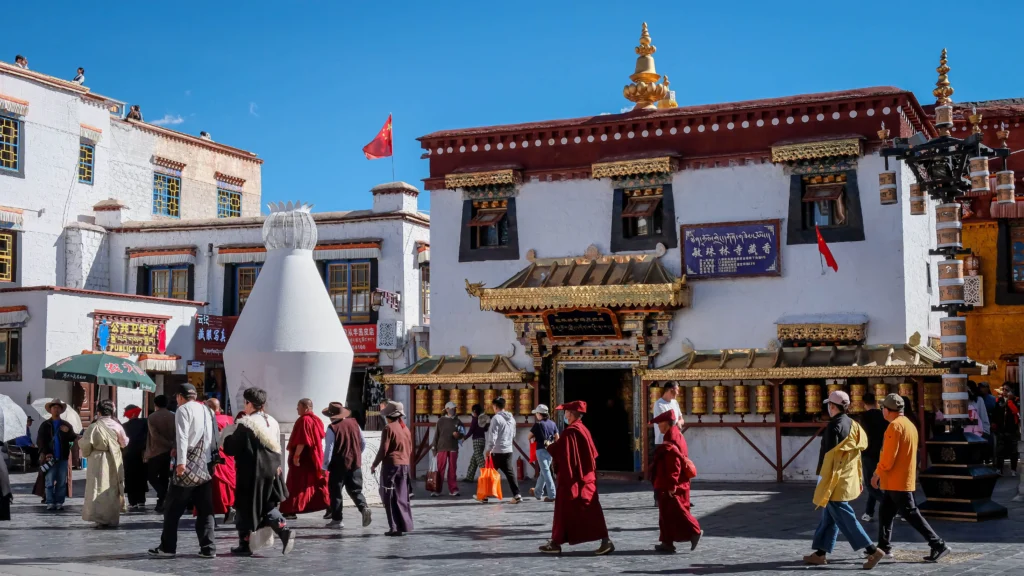
Jokhang Temple and the Barkhor Neighborhood
The most sacred temple in Tibet, where pilgrims prostrate in front of the entrance. The kora around the Barkhor is an experience in itself.
Where to eat nearby: momos and thukpa at a Tibetan restaurant in the neighborhood.

Sera Monastery
Monks debate in the afternoons in a courtyard of trees, amid claps and gestures. It is one of the liveliest scenes in Tibet.
Where to eat nearby: a simple Tibetan lunch, with tsampa and yogurt.

Lake Yamdrok and Gyantse
A lake of intense turquoise at 14,400 feet and a monastery with a great nine-story stupa, the Kumbum.
Where to eat nearby: lunch by the lake, with hot soup.
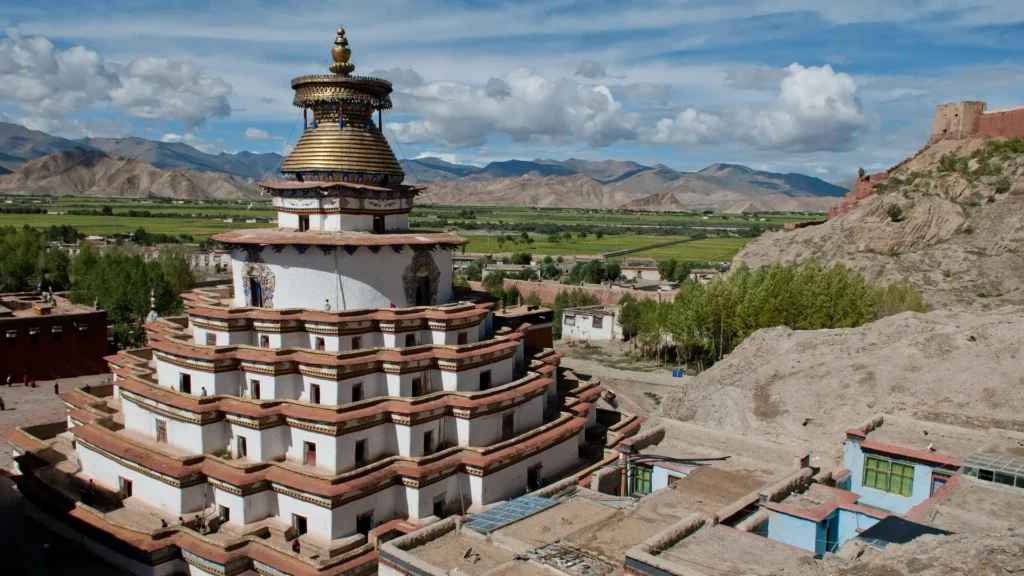
Shigatse and Tashilhunpo
One of the most important monasteries in Tibet, the historic seat of the Panchen Lamas. It is visited calmly and with a guide.
Where to eat nearby: a meal at a family home, with momos and tea.

Everest Base Camp
Views of the north face of Everest from more than 16,400 feet, with clean skies in spring and fall. It requires acclimatization and good preparation.
Visa and Paperwork Before Your Trip to Tibet
U.S. citizens need a Chinese visa and a Tibet travel permit. Both are processed ahead of time.
| Procedure | What to know | When |
|---|---|---|
| China visa | U.S. citizens need a tourist visa (L), which is processed before traveling at a Chinese consulate or visa center. It takes between 4 and 10 business days. Confirm the current visa rules and fees for U.S. citizens, because China has been adjusting them. The 240-hour visa-free transit policy applies to those passing through China to a third country, but it does not cover a trip to Tibet. | 8 weeks ahead |
| Tibet travel permit | It is mandatory and only handled by an authorized agency, with your passport and your China visa. It has no cost in itself and takes about 20 business days. | 6 to 8 weeks ahead |
| Passport | It should be valid for at least 6 months from your arrival and have 2 blank pages. | Before buying the ticket |
| Group visa from Nepal | If you enter from Kathmandu, a group visa is required, processed by the agency at the Chinese embassy in Nepal. | 4 weeks ahead |
| Altitude | Above 8,200 feet (2,500 meters) there is a risk of altitude sickness. Ask your doctor and plan acclimatization. | 4 to 6 weeks ahead |
| Guide and vehicle | They are mandatory throughout the trip and are included in the itinerary. | Included |
| Minors | Each child needs their own passport and, if traveling with only one parent or with third parties, a notarized consent letter. | Before traveling |
| Travel insurance | Get one with international medical coverage and evacuation at altitude. | Before traveling |
How to Get Your Entry Step by Step
- Confirm the dates and the itinerary with your advisor.
- Apply for the China visa at the consulate or visa center, with your valid passport.
- Give the agency a copy of your passport and your visa to request the Tibet permit.
- Book the flights or train to Lhasa, and the Potala ticket.
- Receive the permit and carry it printed with your passport.
- Talk to your doctor about altitude and prophylaxis.
Immigration rules can change at short notice. That is why I prepare each procedure with my clients and review the conditions close to the travel date.
Beyond the Postcard: Reads That Reveal the Soul of Tibet
Before your feet touch its soil, let your mind travel. Here are my literary recommendations so you can soak up the essence of Tibet and experience every corner from another perspective.


Frequently asked questions about traveling to Tibet
Do I need a visa to travel to Tibet from the U.S.?
Yes. U.S. citizens need a Chinese tourist visa and a Tibet travel permit, which is handled by an authorized agency. The visa takes 4 to 10 business days and the permit about 20 business days.
Can you travel to Tibet on your own?
No. Foreigners must travel with an authorized agency, with a guide and private vehicle throughout the trip. With a good operator, the trip is custom: you choose the pace and the experiences.
What is the best time to travel to Tibet?
From April to May and from September to October. These are the seasons with the best Himalayan views and the mildest weather. Winter is very cold, and summer brings rain.
How many days do I need for a trip to Tibet?
Between 8 and 10 days lets you see Lhasa, Gyantse, Shigatse and Everest base camp, with acclimatization. With less time, adaptation to the altitude is lost.
What is altitude sickness and how is it avoided?
It is a reaction of the body to altitude, which appears above 8,200 feet (2,500 meters). It is avoided by ascending slowly, drinking water, avoiding alcohol and resting. Talk to your doctor before traveling.
Is it safe to travel to Tibet?
Yes, with precautions. It is a safe destination for tourism, but there are checkpoints and restricted areas. The main concerns are altitude, insurance with evacuation and always following the guide. Check the current U.S. State Department advisory for China.
Do you tip in Tibet?
Yes. You tip the guide and the driver separately, in yuan. Amounts vary by service, and your operator will give you a reference.
Can I combine Tibet with other destinations?
Yes. Tibet combines very well with Nepal, Bhutan, India or Thailand. Check the requirements of each destination.
How much does a trip to Tibet cost?
It depends on the level and the activities. As a reference, an 8 to 10 day trip with flights from the U.S. costs $5,000 to $7,800 per person at an essential level, $6,600 to $10,500 at an intermediate one and from $10,300 at a premium one, with trip design and management included, without the Chinese visa. These are estimates from November 2026.
Let's Design Your Trip to Tibet Together
Tibet is enjoyed far more when the permits, the flights, the hotels and the acclimatization are planned as a single trip. Tell me what you are looking for, whether spirituality, landscape or adventure, and we will design it around you.
Combine Tibet With Other Destinations
If you are traveling as a couple, discover my honeymoon trips. If you prefer to share the experience, explore the group trips.

Ari Garduno
Passionate traveler of the authentic, the unexpected and what leaves a mark.


Leave a comment