



Ethiopia is the country where history can be touched. Churches carved from rock 800 years ago, the castles of the kings in Gondar, mountains where gelada baboons live, a volcano with a lava lake and a calendar of its own that follows another rhythm. It is a country that was never colonized, and it shows.
A custom trip to Ethiopia is designed with great care. Distances are long, some regions carry travel warnings, festivals move the dates and internal flights rule. Those who plan it well live one of the deepest cultural journeys in Africa. Those who don’t miss the best or take risks they didn’t have to take.
This guide goes beyond the postcard. Besides the regions, the hotels and the activities, I tell you what almost nobody explains: what it really costs, what paperwork you need as a U.S. traveler, what is rude, what is illegal and what to expect from a destination with complex realities.


Ethiopia is the country where history can be touched. Churches carved from rock 800 years ago, the castles of the kings in Gondar, mountains where gelada baboons live, a volcano with a lava lake and a calendar of its own that follows another rhythm. It is a country that was never colonized, and it shows.
A custom trip to Ethiopia is designed with great care. Distances are long, some regions carry travel warnings, festivals move the dates and internal flights rule. Those who plan it well live one of the deepest cultural journeys in Africa. Those who don’t miss the best or take risks they didn’t have to take.


This guide goes beyond the postcard. Besides the regions, the hotels and the activities, I tell you what almost nobody explains: what it really costs, what paperwork you need as a U.S. traveler, what is rude, what is illegal and what to expect from a destination with complex realities.
Why Ethiopia Is Unlike Any Other Destination
Ethiopia is one of the few places in the world where you can:
- Enter the monolithic churches of Lalibela, carved by hand into the rock, where people still pray every day.
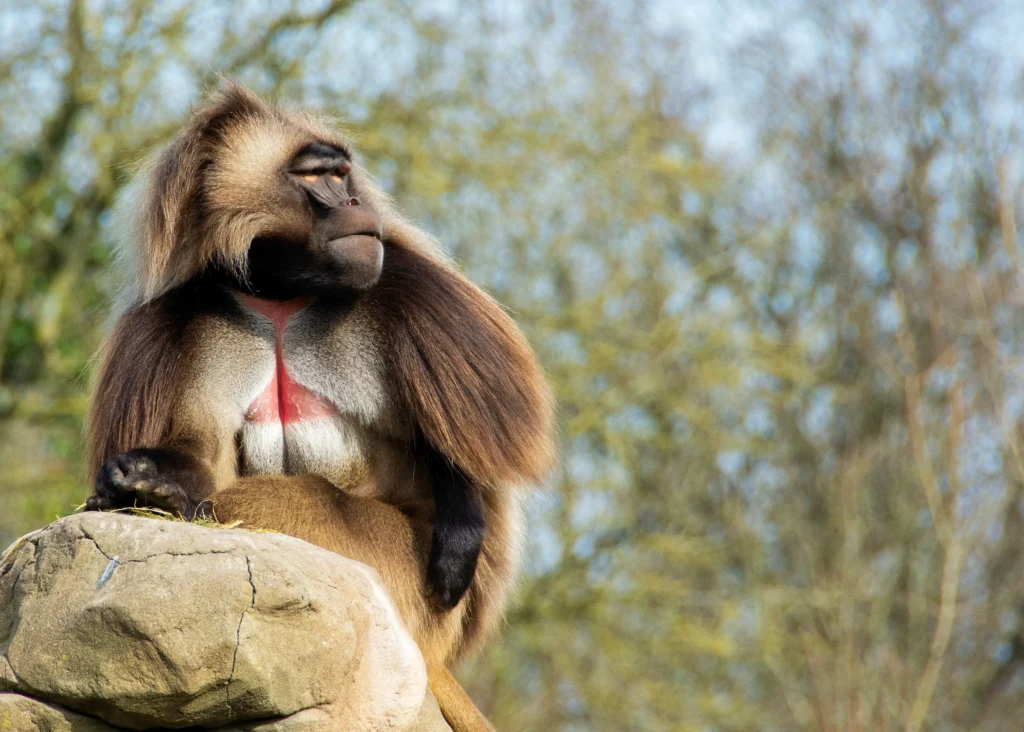
- Walk among gelada baboons and cliff landscapes in the Simien Mountains.
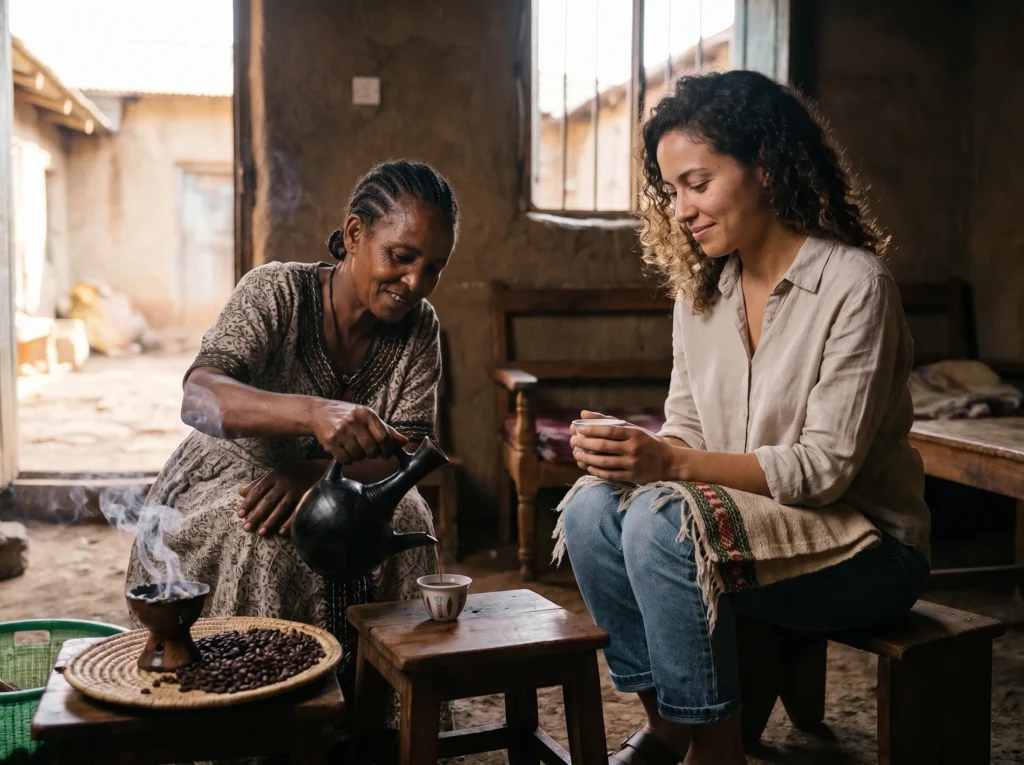
- Live the coffee ritual in its place of origin, with the traditional ceremony.
- Discover the cultures of the Omo Valley, with respect and with responsible guides.
What makes it unique is the continuity. Here, Orthodox Christianity, Islam and ancestral traditions have lived side by side for centuries, and it is lived in festivals, fasts and pilgrimages. It is a country of proud people, unforgettable cuisine and extreme landscapes.
It is also a destination that asks for good information. There are regions where travel is not recommended, and conditions change. That is why below you will find sections on budget, etiquette, laws, customs and visa.

Be a traveler. Not a Tourist.
Ready to design your next adventure?
Best Time to Visit Ethiopia

Ethiopia has a dry season and a rainy one. The best time depends on what you want to see, and on the festivals.
| Season | Months | The best | Keep in mind |
|---|---|---|---|
| Dry season | October to January | Clear skies, green landscapes after the rains and festivals such as Timkat (January), in Lalibela and Gondar. | It is high season. Hotels are booked months ahead. |
| Late dry season | February to May | Good weather for culture and trekking, with fewer visitors. A very good time for the Omo Valley and Danakil, under the right conditions. | It gets hotter, especially in Danakil. |
| Rains | June to September | Very green landscapes and good rates. Meskel is celebrated in late September. | Heavy rain, difficult roads and clouds on the mountains. |
| Transition | September to October | The landscapes are green and the rain eases. A very good time for photography. | Some roads are still in poor condition. |
If you want culture and trekking with good weather, travel from October to January. If a festival appeals to you, such as Timkat in January or Meskel in September, book far ahead.


Real Budget: How Much Does a Trip to Ethiopia Cost?
I’ll be straight with you: Ethiopia offers a lot of cultural value, with excellent hotels and guides at reasonable prices. International and internal flights add up. These figures are market estimates from November 2026, per person and in U.S. dollars.
Flights from the U.S.
There are nonstop flights from the U.S. to Addis Ababa from some cities (for example, from Washington D.C. on Ethiopian Airlines), and one connection from others, in Europe or the Middle East. The ticket typically costs about $1,100 to $2,200 per person in economy, depending on your departure city and the season. On top of that come the internal flights to Lalibela, Gondar and other cities.
Lodging per Night
| Level | Per person per night | What to expect |
|---|---|---|
| Essential | $60 to $130 | Small hotels and simple lodges, often with breakfast included. |
| Intermediate | $130 to $300 | Boutique hotels and lodges with views, good cuisine and guides. |
| Premium | $300 to $700 | Design lodges with cliff views, personalized service and spa. |
| Ultra-luxury | $700 to $1,500 or more | The most exclusive properties, with private service and custom experiences. |
Nightly rates usually include lodging and breakfast. Meals, excursions and transfers are usually added on top. On festival dates, prices go up considerably.
Internal Flights and Guides
In Ethiopia, internal flights are part of the trip: they save days and avoid road journeys through complex regions. Private guides and park permits also add up, and are a significant item.
Estimated Total Budget (per person, 10 to 12 days, with Addis Ababa, Lalibela, Gondar and Simien)
| Level | Estimated total, with flights from the U.S. | What the trip looks like |
|---|---|---|
| Essential | $5,300 to $8,200 | Small hotels, cultural guides and internal flights on the historic route. |
| Intermediate | $7,200 to $11,100 | Boutique hotels, lodges with views, private guides and Simien. |
| Premium | From $11,000, and over $18,000 at the very top | Luxury lodges, private guides, private flights when it makes sense and custom experiences. |
These ranges include flights, lodging, transfers, guides and the main activities. They include the design and full management of the trip: bookings, transfers, guides and support. They do not include all meals, tips, personal shopping or travel insurance. The nightly rates are market reference rates. The investment is protected by designing the trip well: I help you decide where it is worth spending and where not.
Where to Stay in Ethiopia
In Ethiopia, lodging is part of the experience. The usual approach is to combine hotels in different regions, each with its own style.
Addis Ababa
City hotels with good cuisine and views of the Entoto hills. It is the entry and exit point, and a city with museums, markets and nightlife.

Lalibela
Hotels and lodges with valley views, minutes from the stone churches. It is the spiritual heart of the country.
Gondar
Quiet hotels near the Fasil Ghebbi royal compound, with views of the city and the hills.
Simien Mountains
Mountain lodges on the edge of the cliffs, with hikes and gelada baboons at the door.
Omo Valley and the South
Simple camps and lodges in local communities, always with responsible guides and absolute respect for the communities.
What to Expect on Your Trip Through Ethiopia
Language. Amharic and many other languages are spoken. English is understood in tourism. A few words open smiles: selam (hello) and ameseginalehu (thank you).
Currency and cash. The currency is the Ethiopian birr (ETB). Cards are accepted at large hotels and ATMs are limited. Bring cash in dollars to exchange, and birr for markets, tips and excursions.
Getting there. Total travel time from the U.S. usually exceeds 20 hours, with a connection on most routes. Ethiopia is 7 to 11 hours ahead of the U.S., depending on the coast and the season.
Transportation. You fly with Ethiopian Airlines between Addis Ababa, Lalibela and Gondar. Between other points you travel with a private driver, on slow roads. Distances are long.
Connectivity and adapters. Outlets are type C, E, F and L, at 220 V. Bring a universal adapter. The connection can be interrupted at times; it is best to bring downloaded maps and bookings.

Weather and clothing. Travel in layers. The highlands are cool, with cold nights, and the lowlands are warm. Bring a jacket, light clothing, hiking boots, a hat and sunscreen. For churches, clothing that covers shoulders and knees.
Health. Addis Ababa is at about 7,900 feet (2,400 m) and Lalibela at over 8,500 feet (2,600 m), so mild altitude sickness is possible. There is malaria in the lowlands. Talk to your doctor about vaccines and prophylaxis. Drink bottled water and be careful with what you eat. Get travel insurance with medical and evacuation coverage.
Safety. This matters. The governments of several countries, including the U.S. State Department, maintain travel advisories for Ethiopia, with a recommendation not to travel to Tigray and to parts of Amhara, Afar and Oromia. The classic historic route is designed with internal flights, trusted local operators and a check of conditions before confirming. I review it with you when quoting, and you should check the current U.S. advisory yourself.
Culture. Ethiopia is one of the oldest civilizations in the world and Orthodox Christianity is lived daily, with fasts, pilgrimages and festivals. It has its own calendar, with 13 months, which runs seven to eight years behind the Gregorian. It is a country of more than 80 ethnic groups.
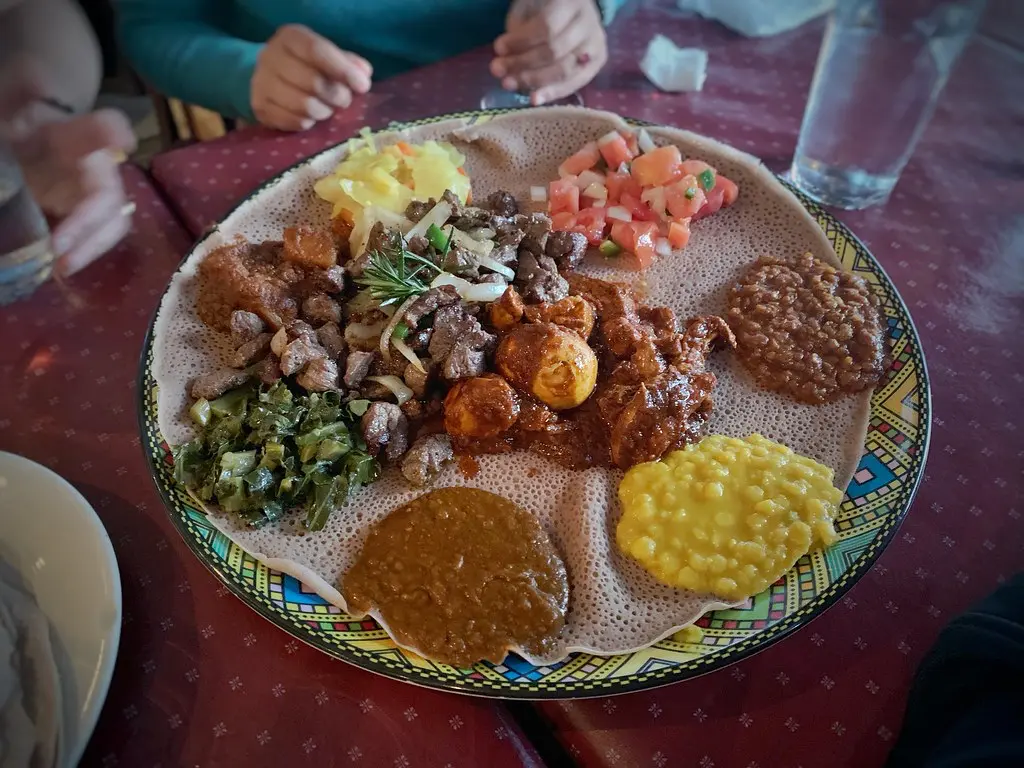
Food. Try injera (spongy teff bread) with doro wat (spicy chicken stew), shiro, tibs, kitfo and the coffee ceremony, where coffee is roasted, ground and served in three rounds. On Wednesday and Friday fasting days, the food is vegan and excellent.
My basic guide for any trip
Ethiopia: The Reality Behind the Magic
A complex country is traveled with humility.
There are regions where travel is not recommended, and conditions can change at short notice. Internal flights are delayed, connectivity fails, and comforts are simpler than in other African destinations. In the Omo Valley, some community visits can feel like a spectacle if they are not done carefully.
That is why I design the trip with trusted local operators, internal flights, buffer days and routes I review before confirming. I recommend getting insurance with evacuation, and I explain which areas are best avoided.
The key is current information, realistic expectations and a good guide.
Etiquette: Dos and Don'ts in Ethiopia
Ethiopians are hospitable and very attentive to respect. These customs help you travel respectfully and avoid misunderstandings.
| Topic | Avoid | Instead |
|---|---|---|
| Greetings | Jumping into a conversation without greeting. | Greet with a gentle handshake and a "selam", and ask how the person is. |
| Churches | Entering with shoes on, or in short or tight clothing. | Take off your shoes, cover shoulders and knees, and follow your guide's instructions. |
| Fasting | Offering meat or dairy on fasting days. | Respect Wednesdays, Fridays and Lent, and try the vegan food. |
| Eating | Eating with the left hand. | Use the right hand and share the plate. |
| Photography | Photographing people, priests, ceremonies or children without permission. | Ask first. Omo communities usually ask for a payment per photo; arrange it with your guide. |
| Coffee | Declining the coffee ceremony. | Accept the three rounds, even if it is just one cup. |
| Tipping | Tipping everyone as in other countries. | Tip the guide, the driver and the hotel staff separately, in birr or dollars. Ask your operator for a reference. |
| Gifts to children | Giving candy or money to children on the street. | Support local projects through your operator. |
At small hotels, the staff become familiar. Greeting someone by name and a sincere “ameseginalehu” are remembered more than any grand gesture.
Laws to Know Before Traveling to Ethiopia
Not knowing the law is no defense in any country. These are the rules that surprise travelers most in Ethiopia.
| Topic | What the rule says | Consequence |
|---|---|---|
| Drugs | Possession, use and trafficking are serious crimes. Khat is legal in the country, but its use by tourists is frowned upon. | Detention and prison sentences. Don't bring or take any. |
| Drones | They require authorization and are banned at most sites. | Fines and confiscation. Don't bring them without a permit. |
| Photography | Photographing military installations, airports and government buildings is prohibited. | Detention and confiscation of equipment. Ask first. |
| Same-sex relationships | They are illegal and penalized. | There is a real risk of penalties. Keep discretion. |
| Antiquities | Taking out ancient pieces, crosses or manuscripts requires a permit. | Criminal charges. Buy only replicas with a receipt. |
| Currency | Taking birr out of the country is restricted. | Exchange only what you need and keep the receipts. |
| Restricted areas | There are regions where permits or escorts are required. | Follow your operator's instructions, who handles the permits. |
Customs: What You Can and Can't Bring Into Ethiopia
Ethiopia is relatively straightforward at customs, but it helps to have these rules clear before packing.
| Item | Rule | Notes |
|---|---|---|
| Cash | Large amounts of cash are declared when entering or leaving. | Check the current limit with your operator before traveling. |
| Medications | Allowed in original packaging with a doctor's letter. | Keep your prescriptions. |
| Drugs and narcotics | Banned. | They can lead to detention. |
| Antiquities and religious art | Taking out ancient objects requires a permit. | Buy only replicas with a receipt. |
| Professional equipment | Professional-use and film cameras may require a permit. | If you work with them, tell me beforehand. |
| Drones | They require a permit. | They can be confiscated at customs. |
| Coffee and spices | Reasonable quantities for personal use may be taken. | Check U.S. customs rules for bringing food products home. |
Activities That Define the Ethiopian Experience (and Where to Eat Nearby)
In Ethiopia, the table and the culture go together: every region has its own flavors. That is why each activity comes with what is worth eating nearby.
Churches of Lalibela
Eleven churches carved from rock in the 12th century, connected by tunnels and trenches. They are visited with a guide, barefoot and with respect. It is a place of living pilgrimage.
Where to eat nearby: injera with shiro and tibs at a restaurant overlooking the valley.

Gondar and Fasil Ghebbi
17th-century stone castles, royal baths and a church with a ceiling covered in painted angels.
Where to eat nearby: Ethiopian coffee and pastries in the main square.
Simien Mountains
Cliffs of over 3,300 feet (1,000 m), peaks and gelada baboons. It is explored on short hikes with a guide, and the views take your breath away.
Where to eat nearby: a country lunch with bread and hot stew.
Addis Ababa
Museums such as the one housing Lucy, markets such as the Merkato, art galleries and nightlife. The coffee ceremony here is a ritual.
Where to eat nearby: kitfo and tibs at a traditional restaurant with live music.

Omo Valley, With a Responsible Guide
Communities such as the Hamer, the Mursi and the Karo keep their own traditions. The visit must be made with ethical operators and with absolute respect.
Where to eat nearby: local food prepared by the community, coordinated with your guide.
Danakil and Erta Ale, When Conditions Allow
A volcano with a lava lake and the Dallol depression, one of the hottest and strangest places on Earth. Only with specialized operators and a prior security check.
Visa and Paperwork Before Your Trip to Ethiopia
U.S. citizens need a visa for Ethiopia. The safest way is to apply for it online before traveling.
| Procedure | What to know | When |
|---|---|---|
| Tourist visa (e-visa) | Apply online at evisa.gov.et before traveling. The 30-day fee is reported anywhere from about $50 to $82 depending on the source and changes often, so we confirm it when quoting; there is also a 90-day option. Visa on arrival at Addis Ababa airport is mainly reserved for citizens of African countries, and sources conflict on whether it is available to U.S. citizens. | Before traveling |
| Passport | It should be valid for at least 6 months from your arrival and have blank pages. If you hold another nationality, check its requirements, because they vary. | Before buying the ticket |
| Onward ticket | A return or onward ticket is requested. | At boarding and on arrival |
| Hotel reservation | It is a good idea to carry the booking for your first night and your itinerary. | On arrival |
| Yellow fever | The certificate is requested if you arrive from a country with risk. Talk to your doctor about vaccines and prophylaxis. | 4 to 6 weeks ahead |
| Malaria and altitude | There is malaria risk in the lowlands and mild altitude sickness above 8,200 feet (2,500 m). | 4 to 6 weeks ahead |
| Minors | Each child needs their own passport and, if traveling with only one parent or with third parties, a notarized consent letter. | Before traveling |
| Travel insurance | Get one with international medical and evacuation coverage. | Before traveling |
How to Get Your Entry Step by Step
- Go to the official portal, evisa.gov.et, and beware of intermediaries who charge extra.
- Fill in the online form with your valid passport.
- Upload a recent photo and your itinerary.
- Pay the fee according to your days of stay.
- Save the approval on your phone and carry a printed copy.
- Review the travel advisories with your advisor before confirming the itinerary.
Immigration rules can change at short notice. That is why I prepare each procedure with my clients and review the conditions close to the travel date.
Beyond the Postcard: Reads That Reveal the Soul of Ethiopia
Before your feet touch its soil, let your mind travel. Here are my literary recommendations so you can soak up the essence of Ethiopia and experience every corner from another perspective.


Frequently asked questions about traveling to Ethiopia
Do I need a visa to travel to Ethiopia from the U.S.?
Yes. U.S. citizens should apply for the e-visa online at evisa.gov.et before traveling. The 30-day fee is reported between about $50 and $82 depending on the source, so confirm it on the official portal. Your passport should be valid for at least 6 months.
What is the best time to travel to Ethiopia?
From October to January, in the dry season. It is the best time for culture and trekking, and Timkat is celebrated in January. From June to September there are rains.
How many days do I need for a trip to Ethiopia?
Between 10 and 14 days lets you combine Addis Ababa, Lalibela, Gondar and Simien. To add the south or Danakil, more days are needed.
Is it safe to travel to Ethiopia?
It depends on the region. Several governments, including the U.S., recommend not traveling to Tigray or to parts of Amhara, Afar and Oromia. The historic route is designed with internal flights, trusted operators and a prior check of conditions. Check the current U.S. advisory before booking.
What can you see in Lalibela?
Eleven churches carved from rock in the 12th century, a World Heritage Site. They are still places of worship, so they are visited barefoot, with clothing that covers shoulders and knees, and with a local guide.
Do you tip in Ethiopia?
Yes. You tip the guide, the driver and the hotel staff separately, in birr or dollars. Amounts vary by service, and your operator will give you a reference.
What is the Ethiopian calendar?
It is a 13-month calendar that runs seven to eight years behind the Gregorian. The new year, or Enkutatash, falls in September. Festivals such as Timkat and Meskel follow this calendar.
Can I combine Ethiopia with other destinations?
Yes. Ethiopia combines well with Kenya, Tanzania, Uganda or Egypt, with connections in Addis Ababa. Check the requirements of each destination.
How much does a trip to Ethiopia cost?
It depends on the level and the activities. As a reference, a 10 to 12 day trip with flights from the U.S. costs $5,300 to $8,200 per person at an essential level, $7,200 to $11,100 at an intermediate one and from $11,000 at a premium one, with trip design and management included. These are estimates from November 2026.
Let's Design Your Trip to Ethiopia Together
Ethiopia is enjoyed far more when the regions, the flights, the hotels and the guides are planned as a single trip. Tell me what you are looking for, whether history, mountains or living cultures, and we will design it around you.

Combine Ethiopia With Other Destinations
If you are traveling as a couple, discover my honeymoon trips. If you prefer to share the experience, explore the group trips.

Ari Garduno
Passionate traveler of the authentic, the unexpected and what leaves a mark.


Leave a comment