

I
n my years exploring the most remote corners of the planet, I’ve witnessed spectacles that defy imagination: volcanoes painting the sky red, ancient cities emerging from the mist, the Northern Lights dancing across the polar night. But few things have struck me as as surreal, enchanting, and profoundly revealing as the story I uncovered in the heart of Zambia. A story not about landscapes, but about fashion, legacy, and audacious self-expression.
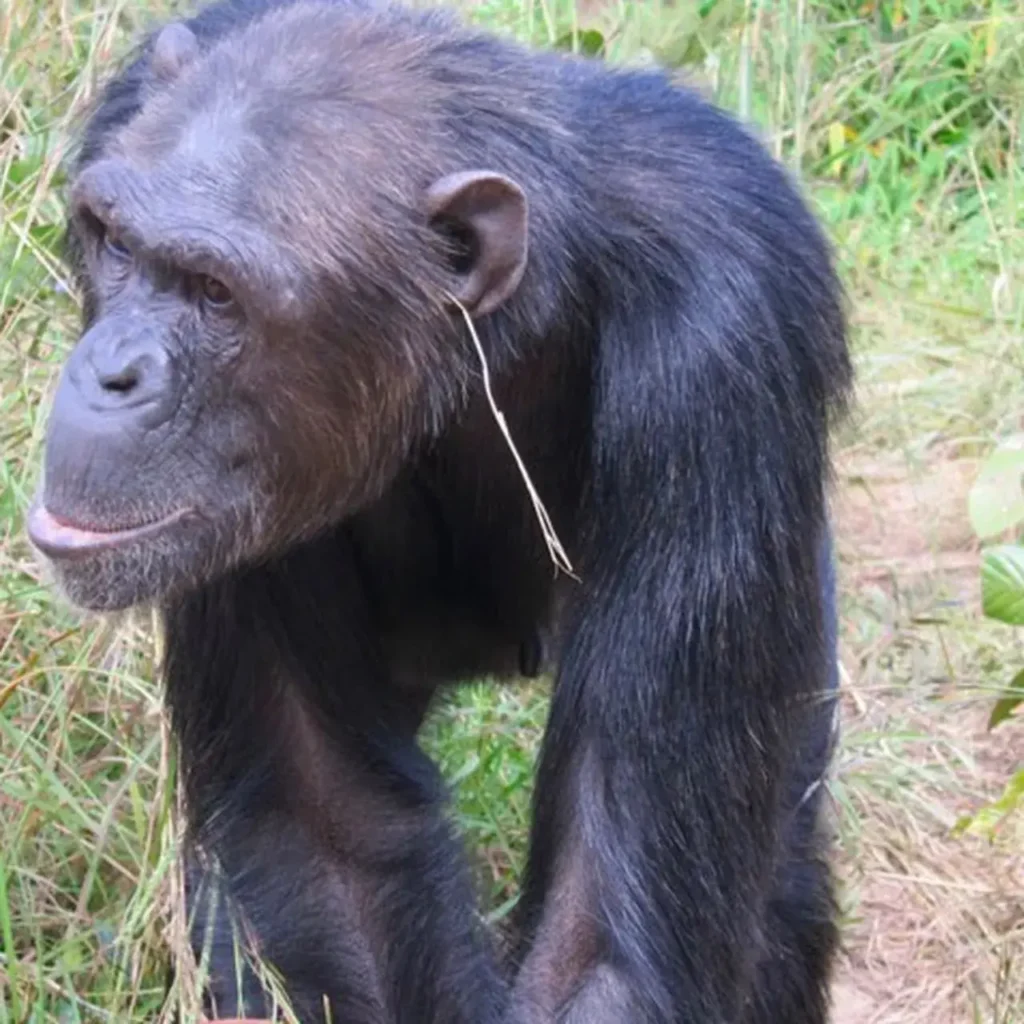
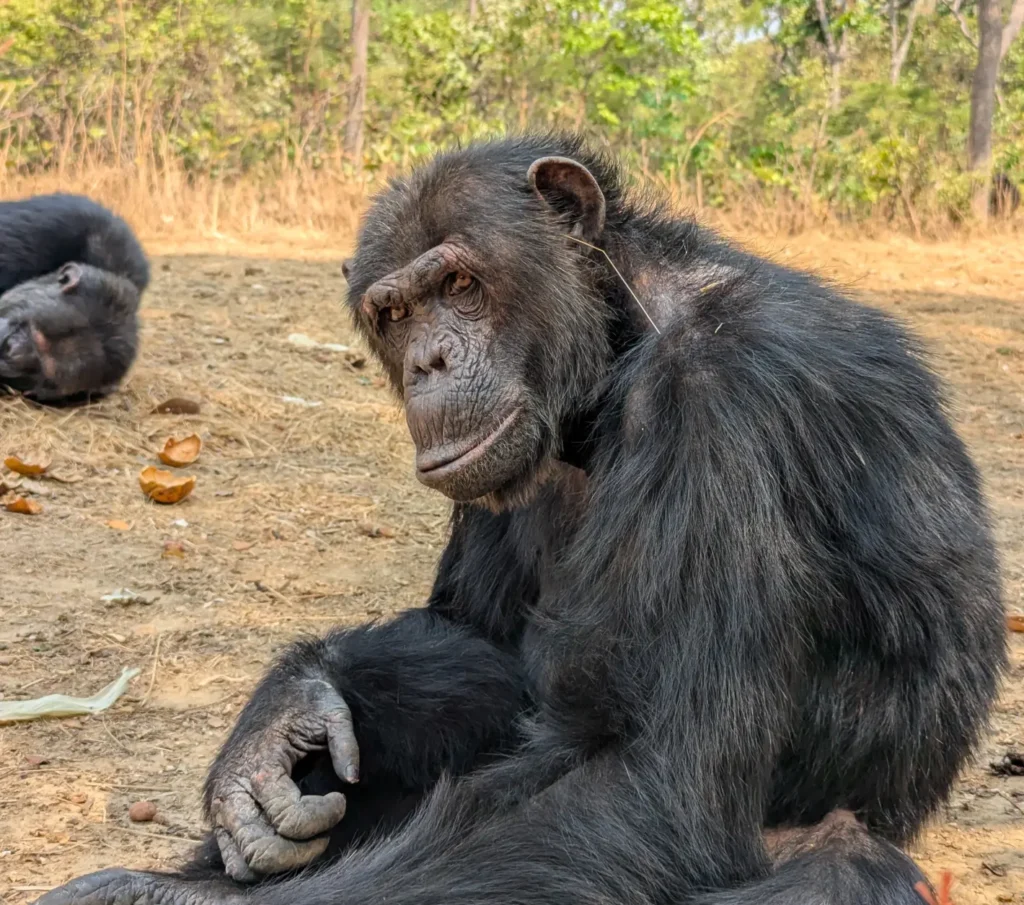
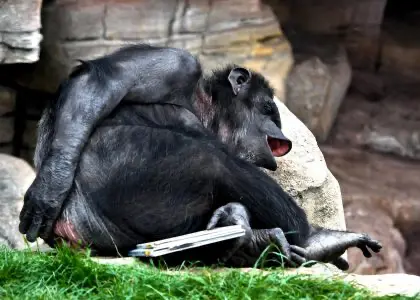
Let me tell you in more detail, because this story is worthy of a campfire on the open savanna. It all happened in a place with a name that already sounds like adventure: the Chimfunshi Wildlife Sanctuary. It was there, more than a decade ago, that a chimpanzee named Julie, the undisputed matriarch of her group, had a moment of inspiration. She plucked a single blade of grass, stiff and green, and in a gesture that baffled observers, delicately placed it behind her ear. It had no practical purpose; it wasn’t for cleaning herself or swatting insects. It was, in essence, an accessory. A pure act of aesthetics.
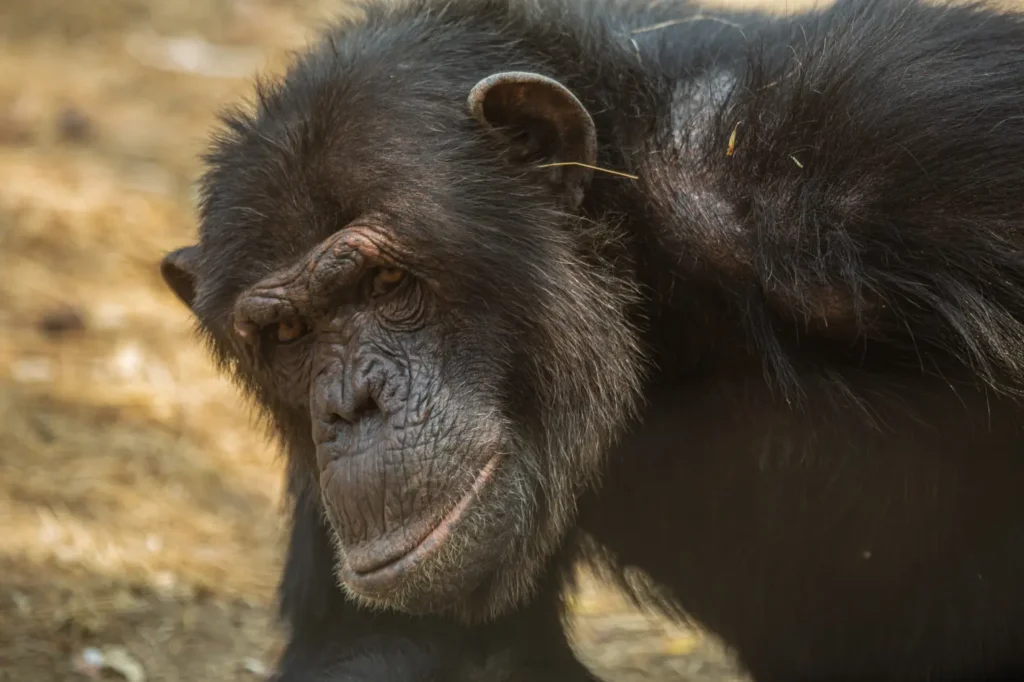
What could have been a passing fad became a social phenomenon. Like a haute couture designer unveiling a new silhouette on the runway, Julie’s style went viral. Soon, the other members of her troop, fascinated, began to imitate her through social learning . The “grass-in-the-ear fashion” had become an arbitrary tradition specific to their group . And this is where the story becomes even more poignant: this tradition had a surprising longevity, enduring even after Julie’s death. Her own son, Jack, continued to wear the adornment, perhaps, as we can’t help but imagine, in a tender tribute to his mother.
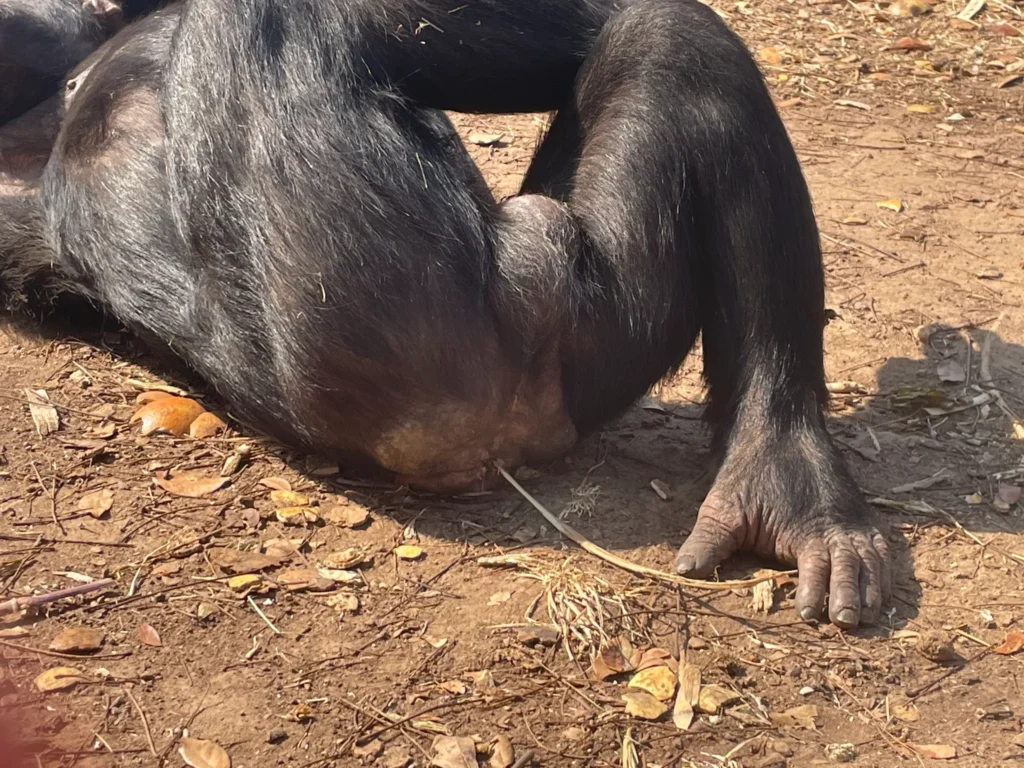
But as with any great fashion house, innovation is key to staying relevant. Years later, in another group of chimpanzees with no contact whatsoever with Julie’s followers, a young and charismatic male named Juma decided it was time for a stylistic revolution. Grass in the ear? A classic, yes, a tribute to the pioneers. But what if the true canvas for avant-garde self-expression was… the rear end?
That’s right. With a boldness that would make any avant-garde designer blush, Juma began adorning his rear end with leaves and twigs. The primatologists observing him were, in their own words, “quite confused.” One would think that seeing a fellow chimpanzee with a twig sticking out where the sun doesn’t shine would provoke rejection or ridicule. But the opposite happened. Juma wasn’t driven by a medical need; he simply seemed to think his rear end looked fabulous. And his confidence was contagious. Juma wasn’t just any chimpanzee; his high social standing gave him undeniable influence, something like the influencer of his troop. Soon, his best friend, Commando, adopted the trend, and through him it spread to other members of the group.
Scientists concluded that this behavior, both Julie’s and Juma’s, is one of the clearest demonstrations of ‘culture’ and the emergence of social traditions in the animal world. Because the chimpanzees at the sanctuary are well-fed and protected, they don’t dedicate every minute of their day to survival. They have free time, time to socialize, to play, to… create. They have the luxury of being able to invent. And like humans, they seem willing to “suffer for fashion,” since it was observed that at first the adornments were uncomfortable for them.
This small, wonderful madness is, for me, the perfect metaphor for what Zambia is: a raw, untamed place full of surprises that await you when you dare to look more closely. A destination where wildlife is not just a passive spectacle, but a complex society of beings with personalities, legacies, and, yes, even fashion trends.
Zambia: The Wild Heart of Africa
When my travelers ask me for a safari that feels authentic, exclusive, and away from the crowds, my mind immediately goes to Zambia. This isn’t just another safari destination; it’s a total immersion in the purest Africa.
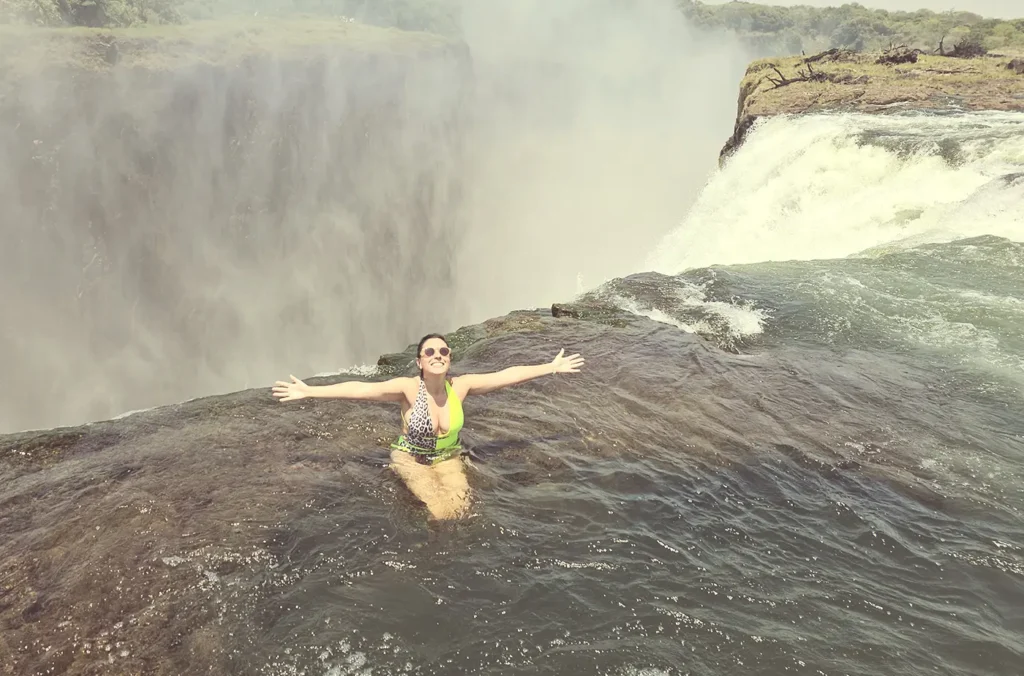
- Victoria Falls, “Mosi-oa-Tunya”: Forget the postcards. Standing before the “Smoke That Thunders” is a visceral experience. Feeling the spray on your face as the roar of millions of liters of water cascading into the abyss surrounds you is something that reconnects you with the power of the planet. My luxury recommendation? A helicopter flight at sunrise over the falls or afternoon tea at a lodge with a direct view of the rising mist.
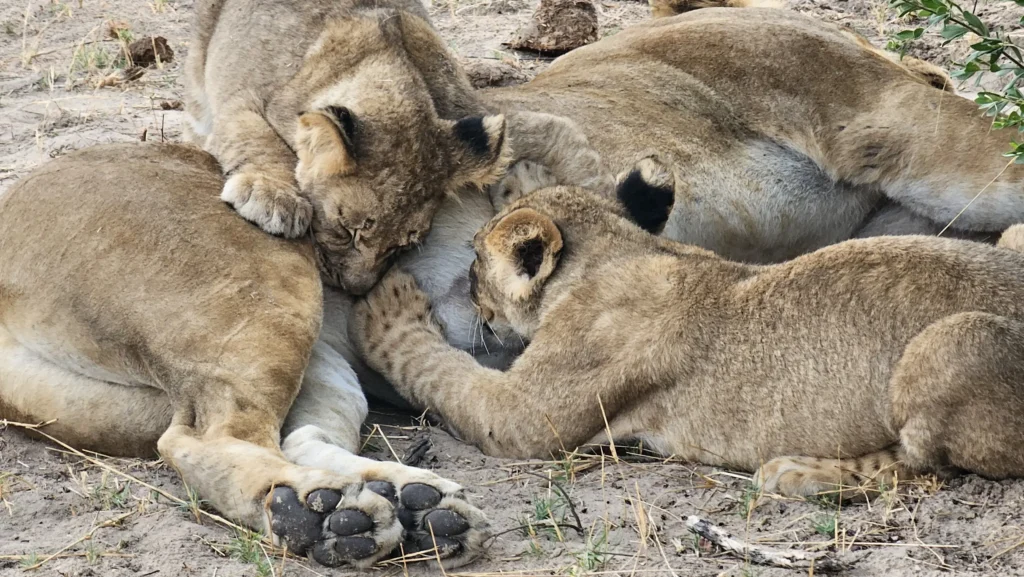
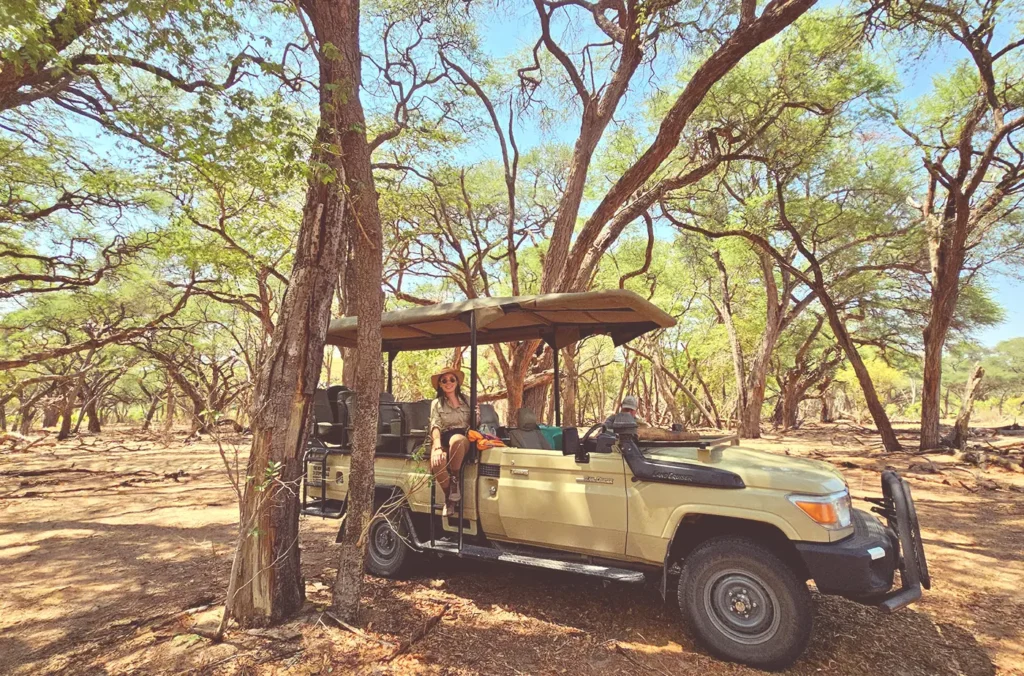
- South Luangwa, the Birthplace of the Walking Safari: If you truly want to feel Africa beneath your feet, this is the place for you. Accompanied by expert guides, walking across the savanna following the tracks of lions and elephants is an experience that quickens your pulse and sharpens your senses in a way that no vehicle can match. As night falls, returning to a luxury camp under a blanket of stars is simply magical.
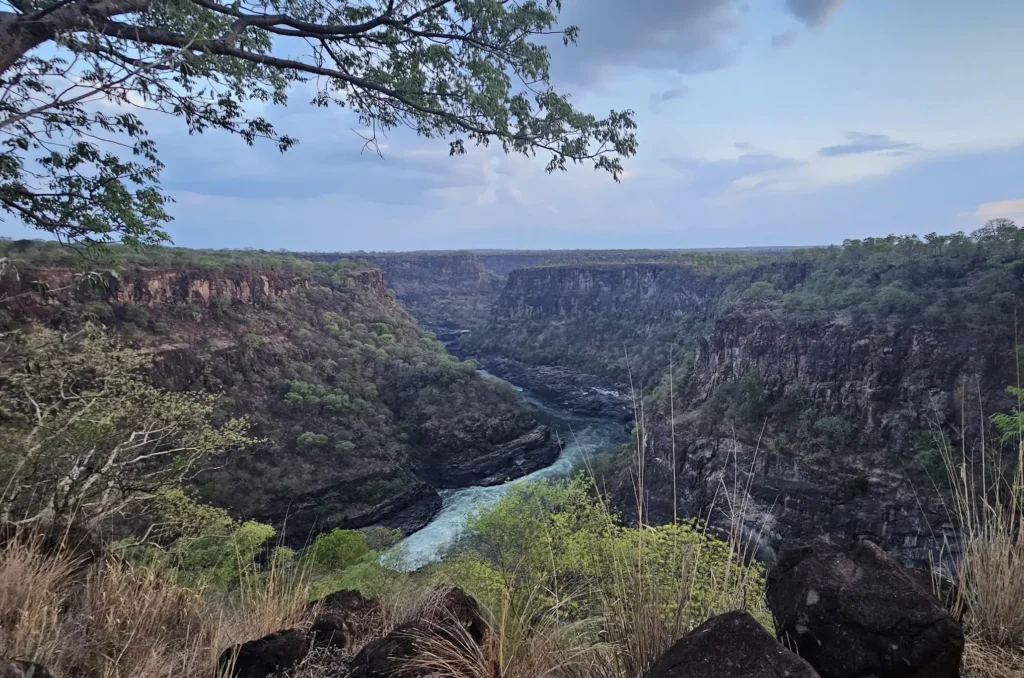
- Lower Zambezi and the Art of Water Safari: Imagine gliding in a canoe down the majestic Zambezi River while herds of elephants drink on the banks and hippos watch you from a distance. It’s a quiet, intimate safari with a completely different perspective. Here, the rhythm is set by the river, not the engine of a 4×4.
The Perfect Season and Dream Combinations
One of the most frequent questions I receive is, “Ari, when is the best time to go?” To experience safaris at their best in Zambia, I recommend the dry season, which runs from June to October . During these months, the vegetation is less dense, and the animals congregate around water sources, making for spectacular sightings.
Furthermore, the beauty of Zambia is that it serves as a perfect hub for creating unforgettable multi-destination trips.
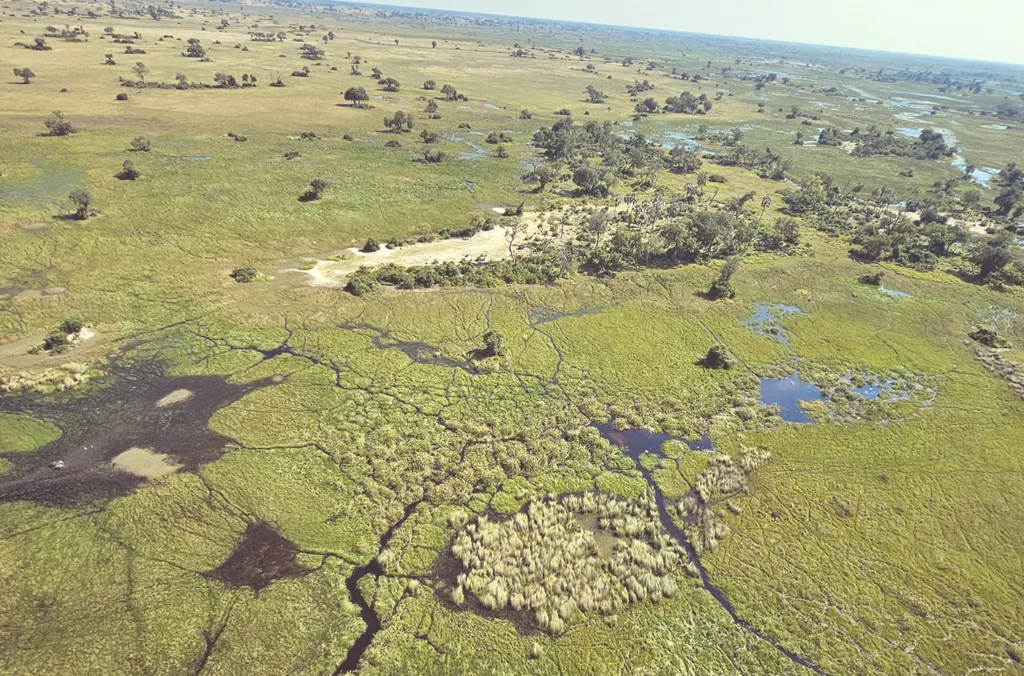
Zambia + Botswana : This is the ultimate luxury safari combination. We can begin with the rugged adventure of South Luangwa in Zambia and then fly to the Okavango Delta in Botswana for a unique water experience in mokoros (traditional canoes) and explore its wildlife-filled islands. It’s a journey of contrasts and unparalleled exclusivity.
Julie and Juma’s story teaches us that even in the wildest places, there is room for individuality, culture, and unexpected beauty. Zambia is exactly that: a blank canvas for your own adventure, a place where every day brings a surprise and every sunset seems painted just for you.
Can you imagine discovering the next great wonder of nature? Stop imagining it. Contact me and together we’ll design that African experience that you won’t just see with your eyes, but feel in your soul.
With love from one traveler to another,
Ari Garduño Experience Designer


Deja un comentario