

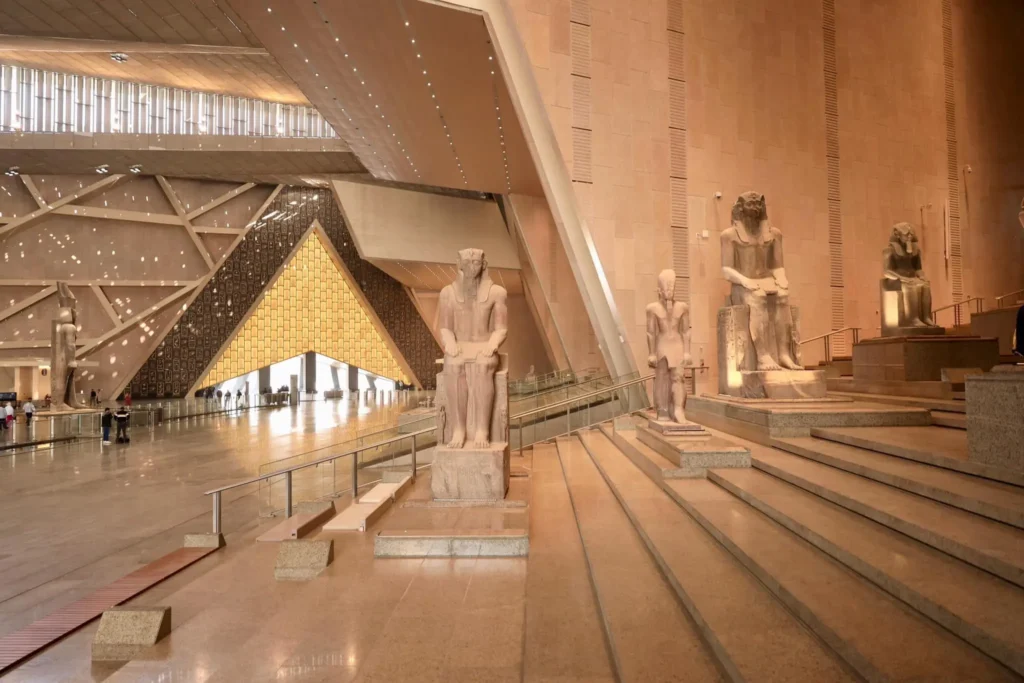
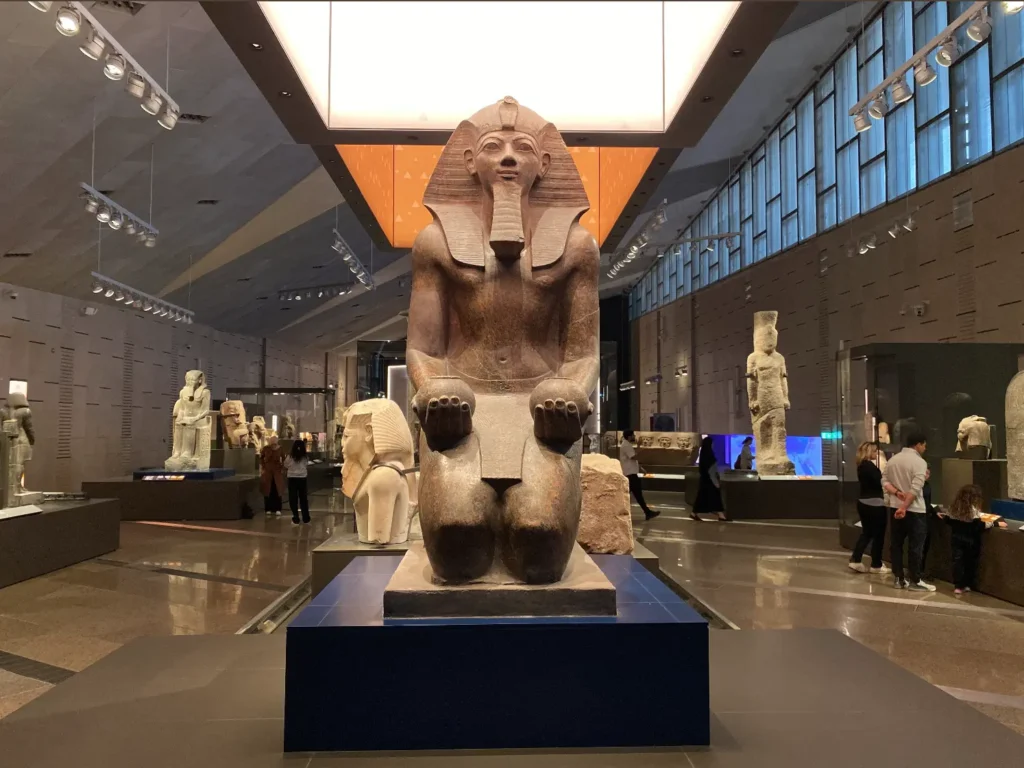
I remember the first time I saw the Egyptian desert from the air: a golden, motionless ocean that seemed to silently hold the secrets of the world. Years later, on November 1st, I crossed the threshold of the Grand Egyptian Museum and felt the same vibration: that ancient murmur that doesn’t sound, but pierces you. I walked slowly, like someone entering a cathedral that still smells of newly carved stone. Before me, the Grand Staircase displayed colossal guardians from another era. And I, who have traveled the five continents in search of beauty, knew immediately that I stood before the new sanctuary of human history.
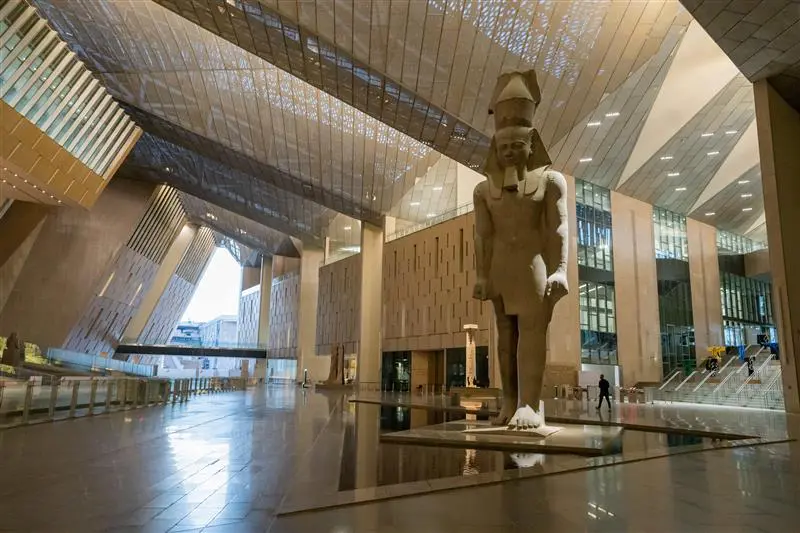
What makes the Grand Egyptian Museum unique?
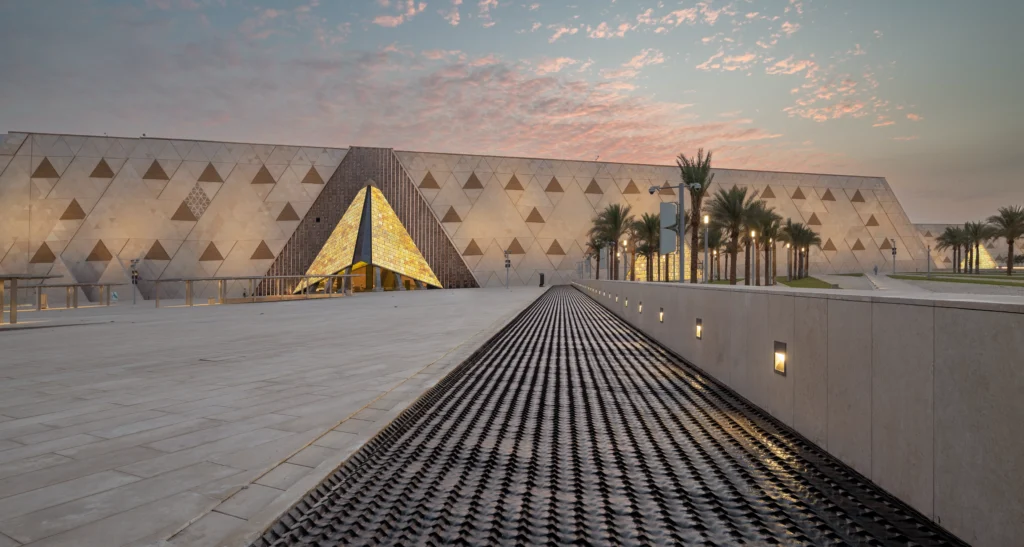
It’s not just its scale—the world’s largest cultural complex dedicated to a single civilization—nor its architecture framed by the perfect view of the Pyramids of Giza. What makes it truly unique is the curation: a contemporary way of telling, without filters or folklore, a story that for millennia has been whispered. Here, Egypt is presented with the understated elegance of a well-appointed home: natural light caressing reliefs, pieces restored with almost surgical precision, and a narrative that guides without imposing.
In my experience, the Grand Egyptian Museum isn’t just visited: it’s inhabited. It’s a space that slows you down. It invites you to listen. Sometimes, to be silent.
Tutankhamun: the boy king and the paradox of fame
There’s an undeniable magnetism surrounding Tutankhamun. His name resonates with that blend of myth and chance that characterizes great legends. And yet, when you approach his story calmly—as the museum suggests—you perceive the irony that has haunted me for years: Tutankhamun lived a short life, reigned even shorter, and probably died without anyone imagining he would be remembered. Nothing was destined for eternity… and yet, here we are.
The mystery of his mask: a treasure made for another?
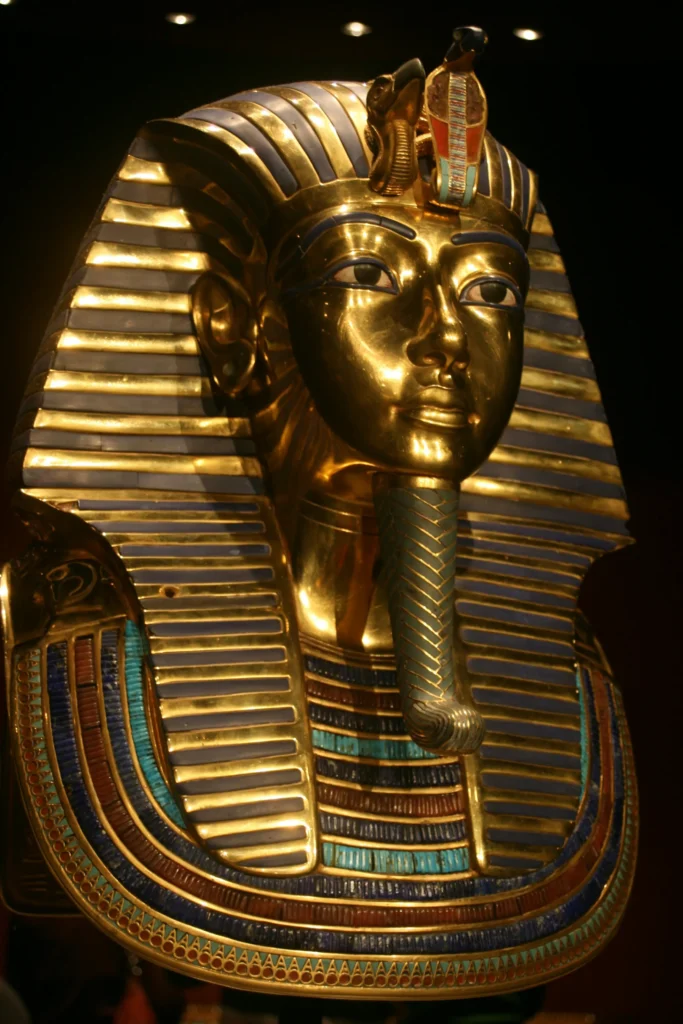
I stood for long minutes before the pieces of his funerary regalia. A question that haunts even the most serious Egyptologists resurfaces with force: what if the celebrated funerary mask—that masterpiece in gold and lapis lazuli—wasn’t originally his? There are subtle clues, such as the possibility that some elements were repurposed and that his regalia included artifacts not intended for him. My opinion, after listening to conservators and studying restorations: this “intermittent” inclusion of belongings doesn’t diminish his grandeur; it enhances it. It’s a reminder of the fleeting nature of life (and death) at court, and of how capricious time decides what becomes eternal.
The final paradox is beautiful: Tutankhamun may not have been destined to be remembered. And yet, he is the most famous pharaoh in the world. The Grand Egyptian Museum rescues him from caricature and returns him to his human context.
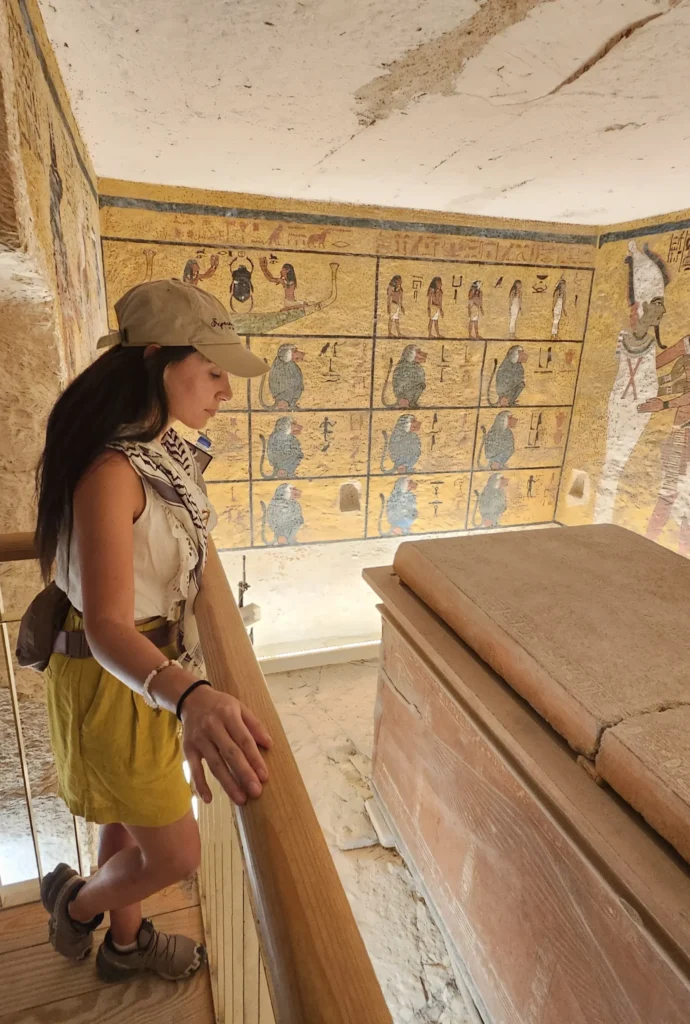
How to experience the Grand Egyptian Museum like a high-end traveler
In my work with discerning travelers, I always say that the difference lies in the pace and the access. This museum rewards those who don’t rush.
My “insider” recommendations
- Book your ticket with a specific time slot and arrive early. The desert light enters at an angle, creating a unique atmosphere in the first few rooms.
- Avoid linear routes. The magic happens when you alternate masterpieces with intimate corners. My favorite route: Grand Staircase → everyday life arts → Tutankhamun’s rooms → sunset views of the Pyramids.
- Request a curator/guide who is an expert in Egyptian art history, not a generalist guide. The difference in narrative is enormous.
- Private dinner with a view of Giza. I can arrange private dining experiences within the cultural complex or on secluded terraces with chefs who reinterpret ancient recipes using contemporary techniques.
- Silent time. Give yourself 20 minutes without a camera or phone, in front of a single piece of art (my choice: a limestone portrait with the line of the mouth barely suggested). That is true luxury: mindfulness.
- Combine with off-the-beaten-path experiences : restoration workshops (under observation), visit to a goldsmithing workshop in Islamic Cairo, sunset sailing on the Nile in a private felucca with Egyptian tea tasting.
Practical advice from an expert
- Best time to visit: November to March. Pleasant temperatures and clear skies. Avoid the middle of the day.
- Ticketing and logistics: Purchase tickets in advance and allow a minimum of 3–4 hours. If you appreciate the finer details, plan for a full day with a gourmet break.
- What to wear: Layered linen or cotton, comfortable and understated shoes. Bring a light shawl; the rooms may be cool due to air conditioning.
- Photography: prioritize fast lenses and respect restrictions. My advice: some moments deserve to remain only in your eyes.
Beyond the museum: the Egypt that doesn’t appear in the guidebooks
My approach to designing trips always creates contrasts: after the perfection of museums, I seek the pulse of the city. A walk through Islamic Cairo at dawn, a strong coffee shared with an antique dealer who has inherited stories, the smell of freshly baked bread in a nameless alley. And then, the silence of the desert: a night in a tiny lodge, with velvet skies and an astronomer who teaches you to “read” stars like the navigators of the Nile.
The Grand Egyptian Museum is the entrance. The real experience is the full symphony that Egypt composes when you let it breathe into you.
Questions my travelers ask me (and my answers)
What is the best time to visit the Grand Egyptian Museum?
November to March. Mild weather, perfect light for photography, and cooler commutes. If you’re looking for privacy, book the first available time slot.
How much time do I need?
For a purposeful visit: 4–6 hours. For a curated experience with breaks, tastings, and observation in technical rooms: a full day.
What should I combine with the visit?
- A sunset at the Pyramids with special access to less crowded areas.
- An intimate oud concert in a historic house in Cairo.
- A private Nile cruise with a pairing of spices and wines.
Is it suitable for children?
Yes, if the right rhythm is designed: treasure maps, museum-approved tactile pieces, and stories that turn history into adventure.
Why this museum redefines cultural luxury
Luxury isn’t excess; it’s meaning. It’s time, access, and a narrative that transforms you from within. The Grand Egyptian Museum achieves the improbable: it makes a millennia-old civilization contemporary without trivializing it. It allows you to understand that, behind the gold and stone, there were hands, haste, doubts, and decisions. And within that humanity, Tutankhamun ceases to be myth and becomes history once more… and then, once again, myth.
My invitation
If, while reading this, you pictured yourself silently walking up the Grand Staircase, if you imagined the soft gleam of gold on a mask perhaps not meant for its owner, if you felt the subtle pull of the Pyramids calling your name, stop imagining it. Let’s talk. Allow me to create for you not a journey, but a vital curation: intimate access, perfect timing, encounters not found online, and a narrative tailored to you.
With love from one traveler to another,
Ari Garduño


Deja un comentario