

If you’re planning a trip to Iceland, at some point you’re going to fall into the rabbit hole of “which lagoon is actually worth it?” And you’re going to find a thousand different opinions in forums, blogs, and YouTube videos that leave you just as confused as when you started.
I’ve been to both. And I’m going to tell you exactly what to expect from each one, without the typical “both are amazing in their own way” answer that helps nobody.
The short answer: do both if you can. But if you have to choose, or if you want to know how to work them into your itinerary strategically, keep reading.
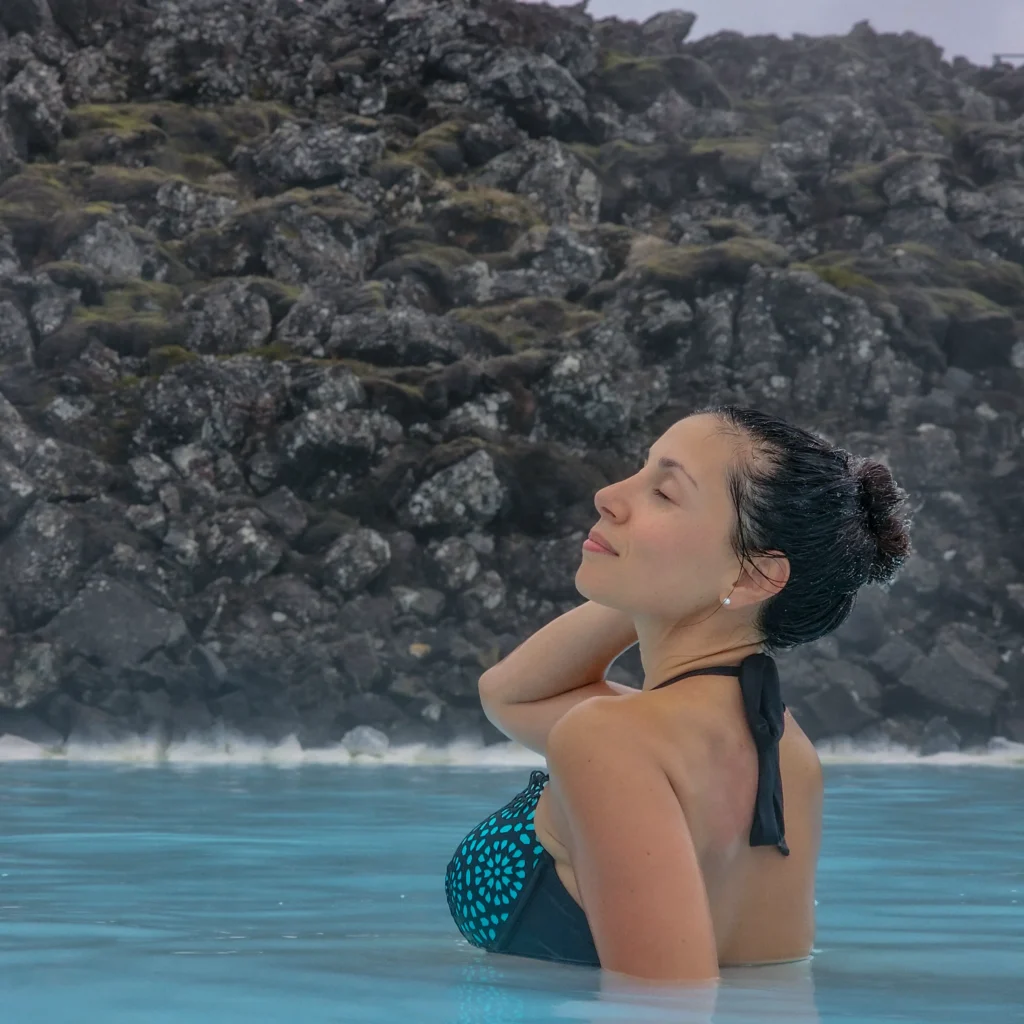
The Fundamental Difference: Tourist Icon vs Premium Local Experience
Before getting into the details, you need to understand that these two lagoons aren’t competing with each other. They’re philosophically different experiences.
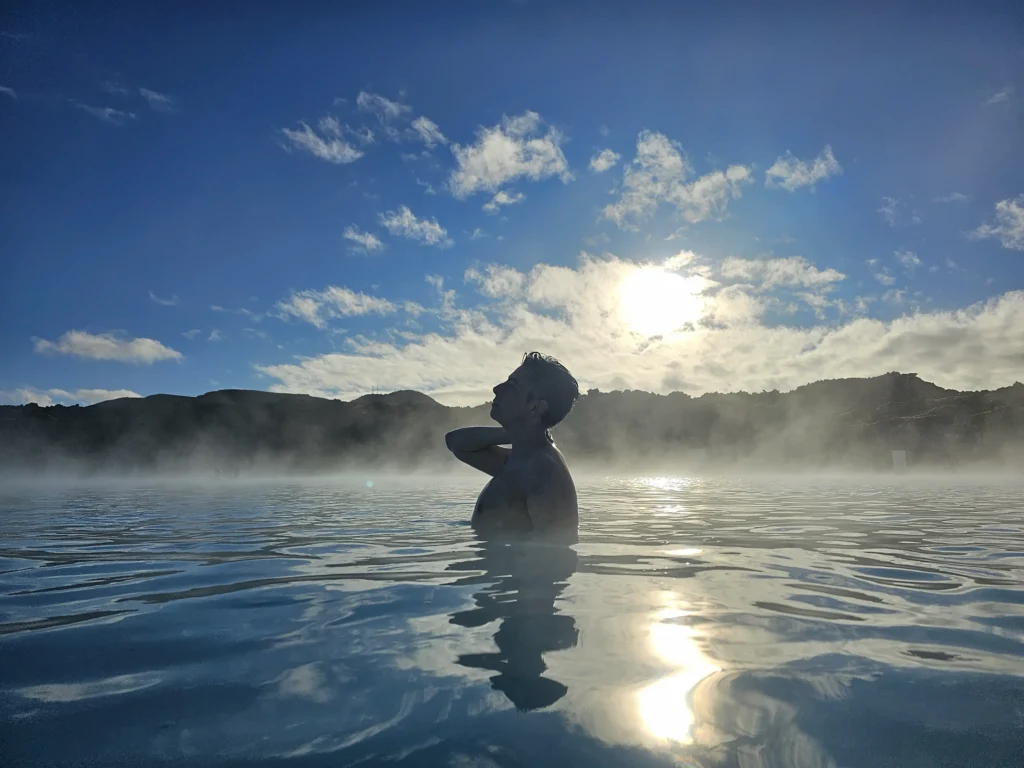
Blue Lagoon is THE attraction in Iceland. It’s the photo you’ve seen on Instagram a thousand times: milky blue water, black volcanic rocks, people with white silica masks on their faces, steam rising over a lunar landscape. It’s a cultural icon, a tourist phenomenon, and honestly, one of the most unique photo opportunities on the planet.
Is it touristy? Yes, absolutely. Is it still worth it? Also yes. Part of traveling is living those moments that define a destination. Blue Lagoon is to Iceland what the Eiffel Tower is to Paris: you can argue it’s too crowded, but you’d also be missing something that simply doesn’t exist anywhere else on earth.
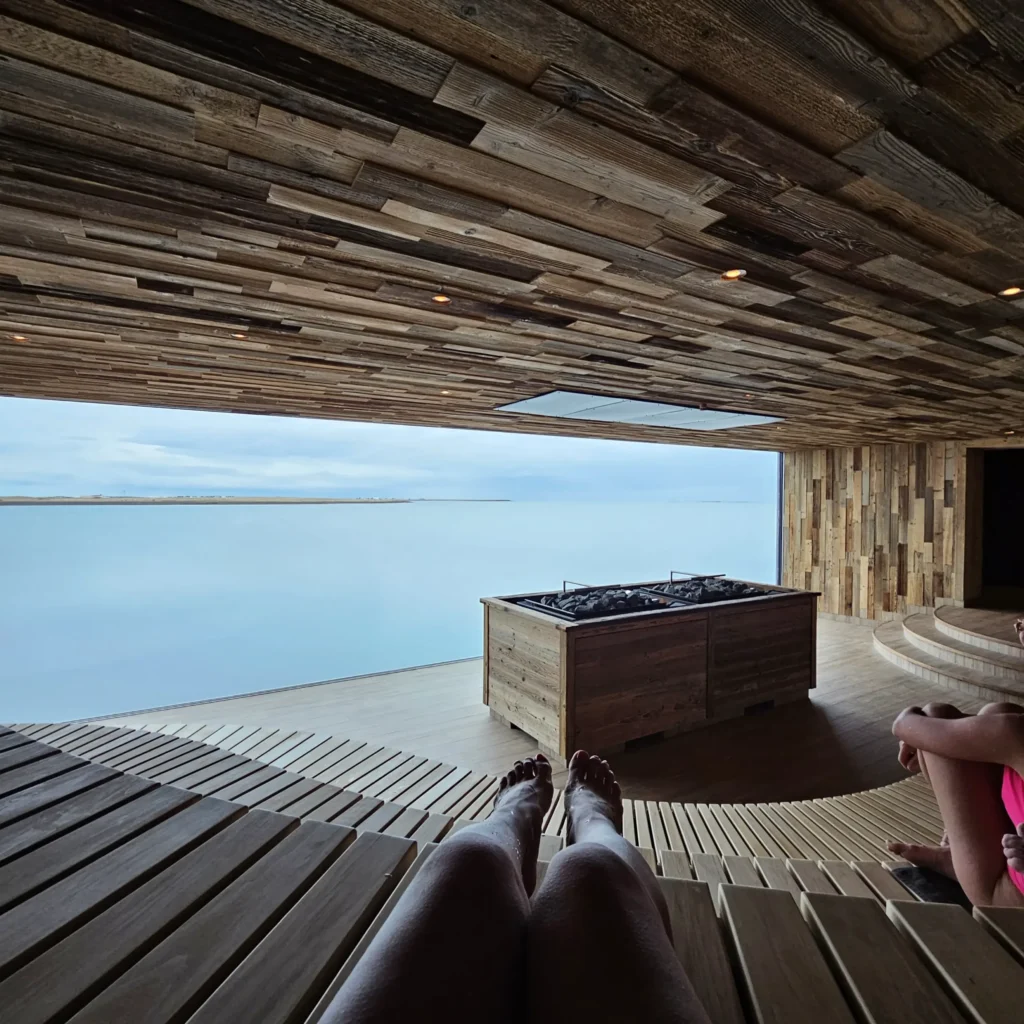
Sky Lagoon is something else entirely. It’s my favorite, by a long shot. It opened in 2021, it’s 15 minutes from downtown Reykjavik, and it was designed to offer something Blue Lagoon doesn’t have: an intimate experience, with a 7-step wellness ritual inspired by Icelandic traditions, and a view of the Atlantic Ocean that will literally leave you speechless. You won’t get the Instagram-worthy photos, but you’ll have an afternoon you won’t forget.
If Blue Lagoon is the spectacle, Sky Lagoon is the experience.
The Water: Where It Comes From and What's in It
Both are geothermal, but they have different origins and compositions. And this matters because it completely changes how the water feels on your skin.
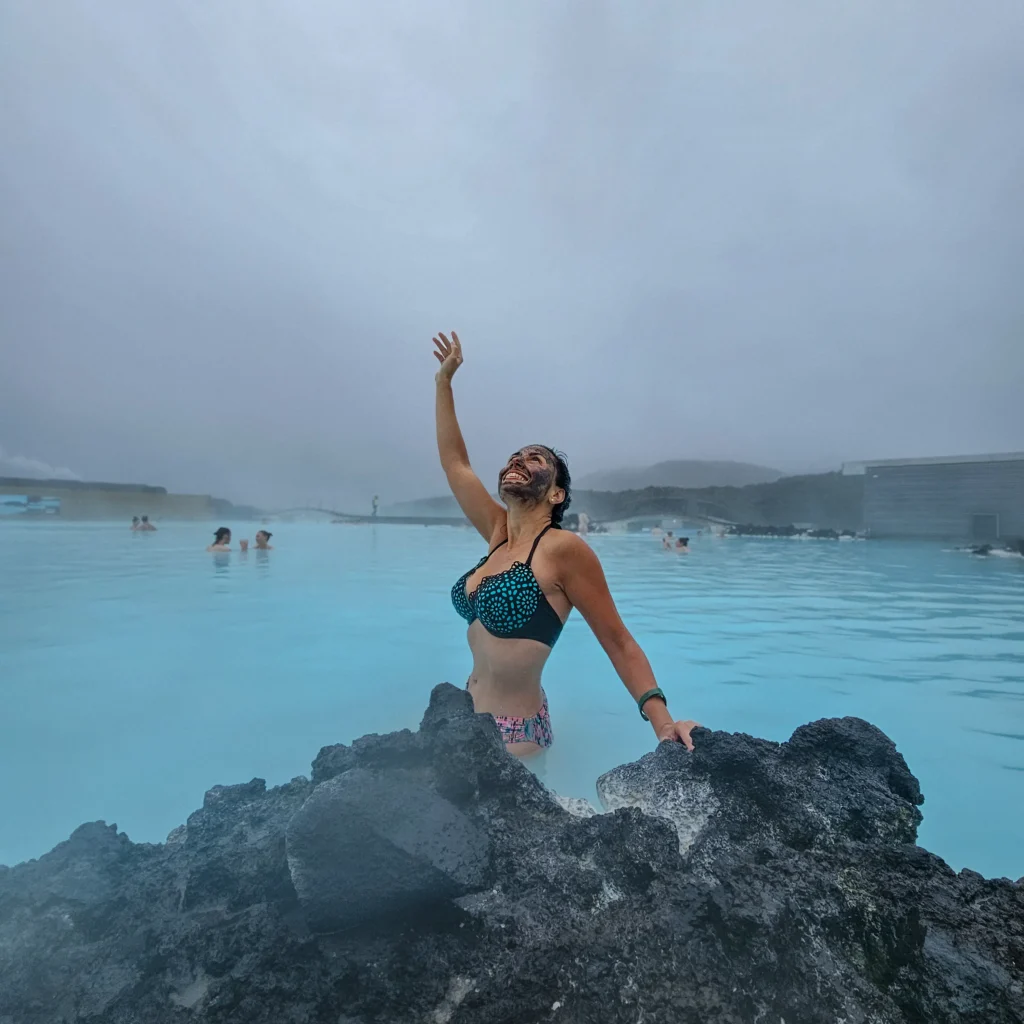
Blue Lagoon: The World's Most Famous Accidental Byproduct
Blue Lagoon is not a natural phenomenon. It is, literally, a byproduct of the Svartsengi geothermal power plant. And this is fascinating.
The plant drills between 1,000 and 2,000 meters underground to reach seawater reservoirs heated by volcanic activity. This water reaches temperatures of 240°C under subterranean pressure. When pumped to the surface, it’s used to generate electricity. The water that has already passed through the turbines, at around 37-39°C, contains a unique mix of minerals it collected on its underground journey: silica, blue-green algae, and mineral salts. Instead of disposing of it, they channel it into a porous lava field where it forms the Blue Lagoon.
The minerals that make the difference:
- Silica: Gives it that characteristic milky blue color and is the base of the famous white mask. Excellent for skin, especially for conditions like psoriasis and eczema.
- Algae (Chlorella): Give it antioxidant properties and make the water feel silky.
- Mineral salts: Magnesium, calcium, and other minerals that relax muscles.
Fun fact: In the 1970s, workers with psoriasis noticed that bathing in the plant’s wastewater dramatically improved their skin. This led to medical studies, and eventually, to the tourist center we know today.
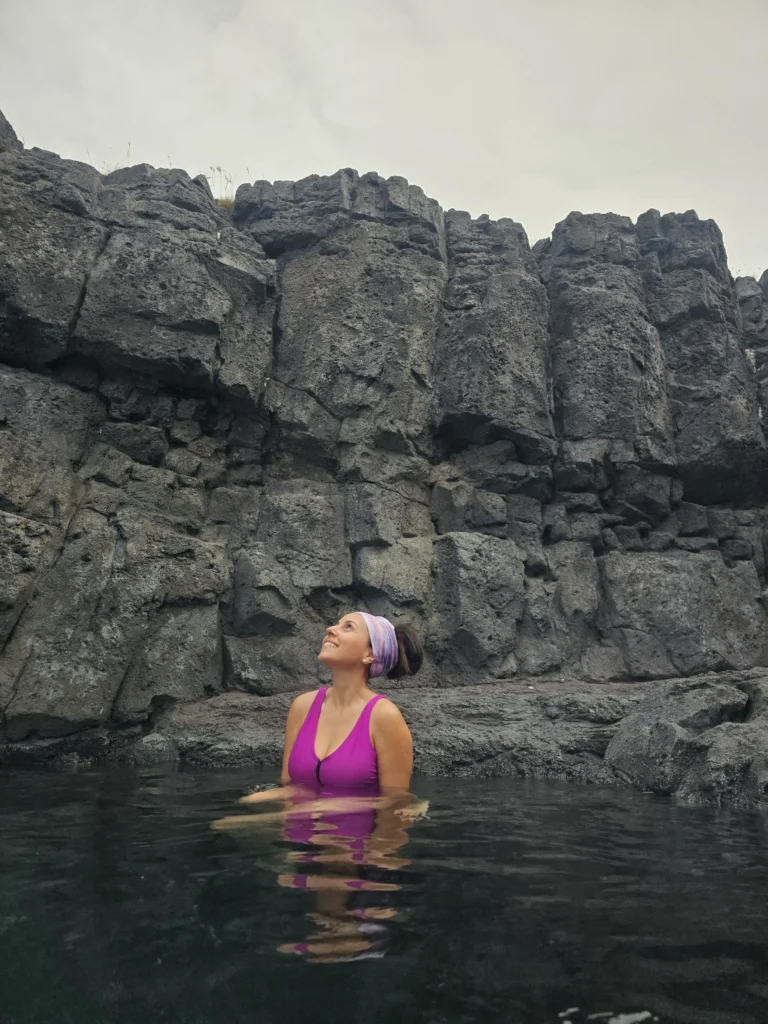
Sky Lagoon: Geothermal Seawater with a View of the Atlantic
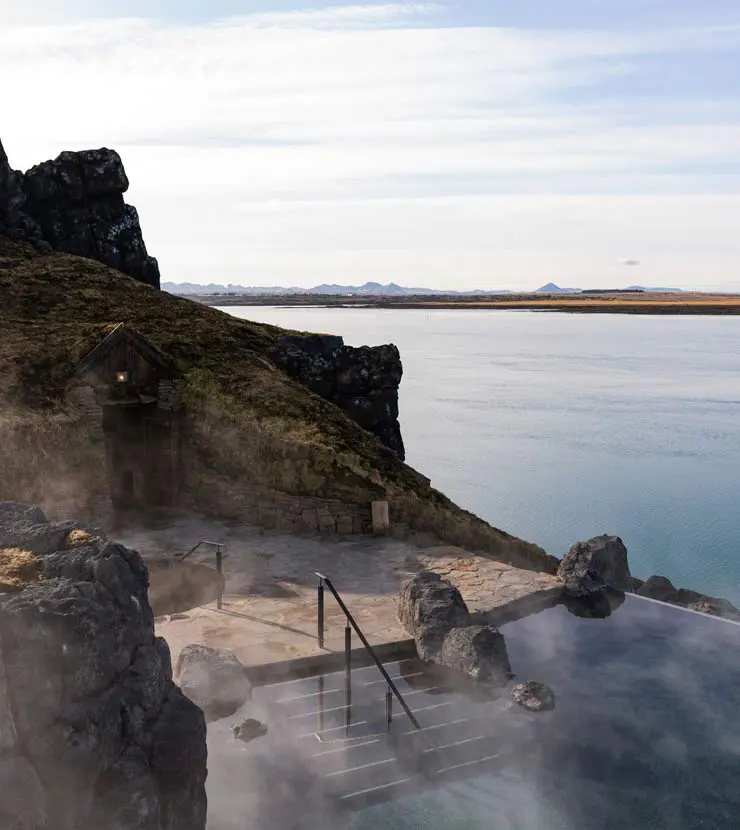
Sky Lagoon combines pure geothermal water from underground with fresh water from the North Atlantic Ocean right next to it. This gives it a higher salinity and a different feel on the skin: saltier, less silky than Blue Lagoon.
The temperature stays between 38-40°C and the water is completely renewed every 40 hours. The infinity edge creates the illusion that the water merges with the ocean. When the sun sets over the sea, especially in summer, the view is hypnotic. It’s the kind of sunset that can’t be photographed well because no camera captures the scale of what you have in front of you.
Blue Lagoon: The Full Experience
The Photo That Defines Your Iceland Album
Part of the value of Blue Lagoon is photographic, and there’s nothing wrong with admitting it. The contrast of the milky blue water against the black volcanic rocks, the steam, the lava field… it’s the postcard of Iceland. Sky Lagoon is beautiful, but it doesn’t have the same visual impact in photos.
Photography tip: Go early (first entry) or at sunset for better light and fewer people. Bring a waterproof bag for your phone because you’ll want photos inside the water.
The Logistical Strategy Most People Don’t Use
Here’s the genius of Blue Lagoon that turns a potential hassle into one of the best moments of your trip: it’s located between Keflavík International Airport and Reykjavik, just 15 minutes from the airport and 50 minutes from the city.
Most transatlantic flights arrive in Iceland between 6:00 and 9:00 AM. Hotel check-in in Reykjavik is usually not until 3:00 PM. What do you do with 6 hours of jet lag, luggage, and no room?
Book Blue Lagoon for the morning of your arrival. Get off the plane, take the direct bus to Blue Lagoon (runs every hour, costs approximately $25 USD), store your luggage for free with your entry ticket, spend 2-3 hours in the warm water, eat at the restaurant, and arrive in Reykjavik just in time for check-in. You turn dead time into an experience. No jet lag, no dragging suitcases around the city waiting for your room to open, and you start your trip the best way possible.
The same works in reverse: if your departing flight is late afternoon, check out of your hotel in the morning, go to Blue Lagoon, store your luggage there, and head straight to the airport from the lagoon.
The Day I Learned Iceland Is the Safest Country in the World
This happened on my first visit and I’ll never forget it.
When I entered Blue Lagoon I had my phone with me, obviously, I wanted photos and videos of everything. But there’s a section of the area where you’re not allowed to bring your phone or talk. Problem: where was I supposed to leave it?
I asked one of the security guards what I could do and he told me, completely seriously, to leave it on the rocks or on the bridge above the area.
Excuse me?
I’m from Mexico. There’s no way I’m leaving my phone out in the open and walking away calmly. But before I could respond, the guard said something that changed my perspective:
You’re in the safest country in the world. If someone stole your phone it would be a national scandal. Everyone leaves them there and they’ve never been taken.”
The first time I didn’t enjoy that area as much because the anxiety of leaving my phone got to me. But it was right there, exactly where I left it, when I came out.
That’s when I learned that kind of safety isn’t something you find everywhere. If you’re going into the restricted area, leave your phone on the rocks, truly disconnect, and don’t worry the way I did the first time. Your phone will be exactly where you left it.
Group Trip
Ready to explore Iceland with us?
Accommodations: For When You Want to Take It Up a Level
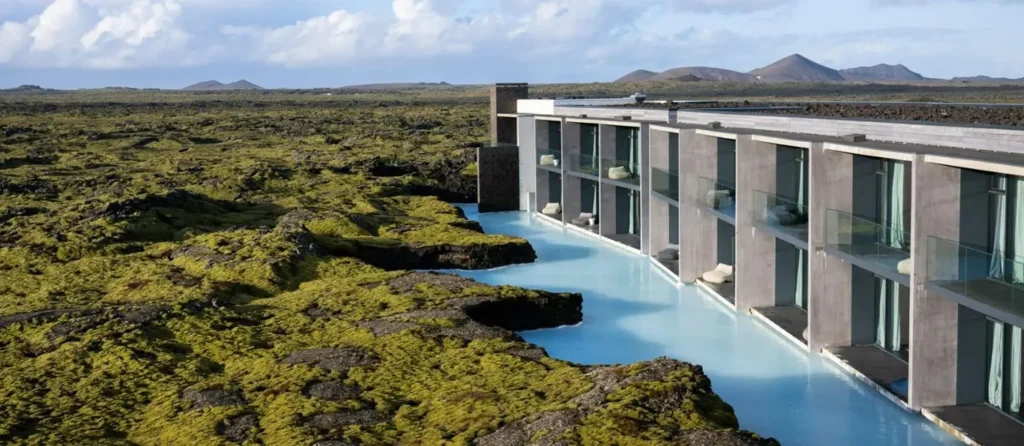
If the budget allows, staying at Blue Lagoon is a completely different world.
Retreat Hotel (the most luxurious):
- Private access to the Retreat Lagoon, separate from the main lagoon
- Michelin-quality restaurant
- Subterranean Spa with world-class treatments
- From $1,000+ USD per night
Silica Hotel (more intimate):
- Only 35 rooms
- Access to the hotel’s private lagoon
- Direct view of the lava field
- From $600+ USD per night
Is it worth it? If it’s your honeymoon, anniversary, or you simply want to treat yourself, yes. Bathing in the private lagoon at sunrise with no one else around, or under the northern lights in winter, is an experience you don’t forget. But if budget is a concern, the main lagoon is still incredible.
Ticket Levels
Blue Lagoon has three ticket levels and the difference does matter:
Comfort ($96 USD):
- Lagoon entry
- Unlimited use of steam bath, sauna, and cold lagoon
- Silica mud mask at the Mask Bar
- Towel, shampoo, conditioner, and moisturizer
- Private locker
Premium ($120 USD):
- Everything above
- Bathrobe included
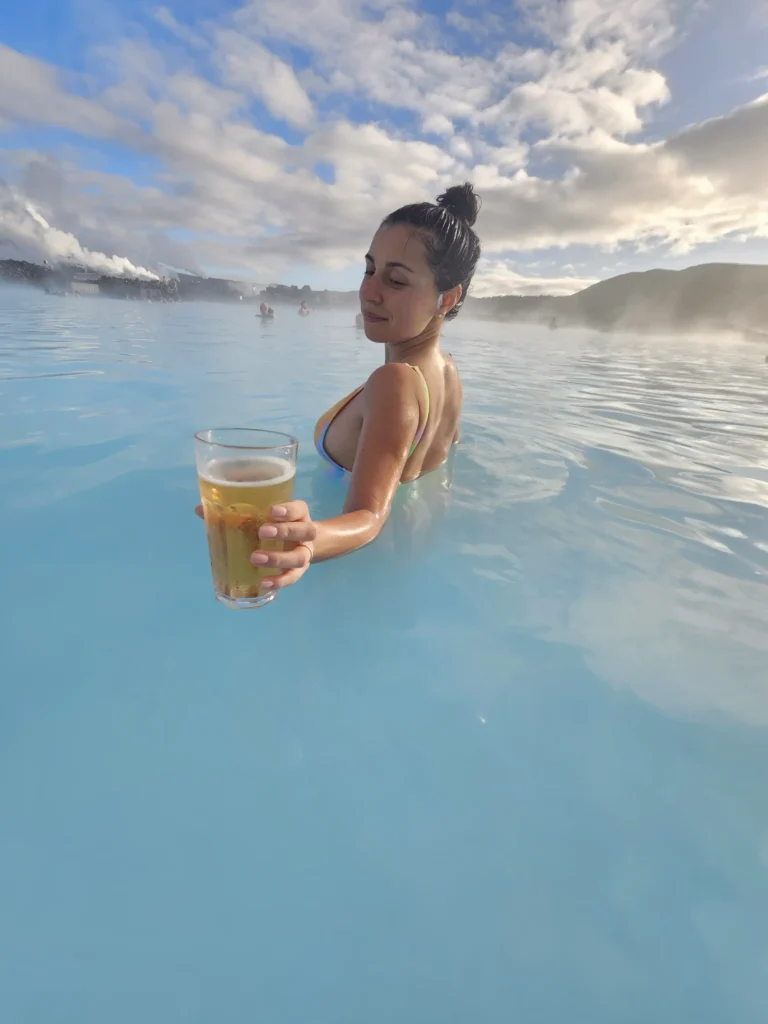
- Two drinks of your choice at the in-water bar
- Two additional masks of your choice at the Mask Bar
- A mask to take home
Signature ($148 USD):
- Everything above
- Blue Lagoon skincare products to take home valued at ISK 14,000
My recommendation: Premium is the sweet spot. The bathrobe makes all the difference for moving comfortably between warm and cold areas, and the two drinks and extra masks are worth the $24 USD difference over Comfort. Signature is worth it if you’re interested in Blue Lagoon’s skincare line, which is genuinely good and not easy to find outside of Iceland.
Sky Lagoon: The 7-Step Ritual
Sky Lagoon isn’t just getting into warm water. It’s an intentionally designed experience, and that’s exactly why it’s my favorite.
The Skjól Ritual
When you buy the Sér ticket, you get access to the private 7-step ritual:
Step 1: The Lagoon You start at the infinity edge at 38-40°C. Settle in, look at the ocean, and let the water do its work.
Step 2: Cold Plunge (Kaldá) Cold ocean water pool at 5-10°C. Just a few seconds. It’s brutal, but the endorphin rush is completely real. Icelanders have been alternating heat and cold for centuries, and your body thanks you more than you expect.
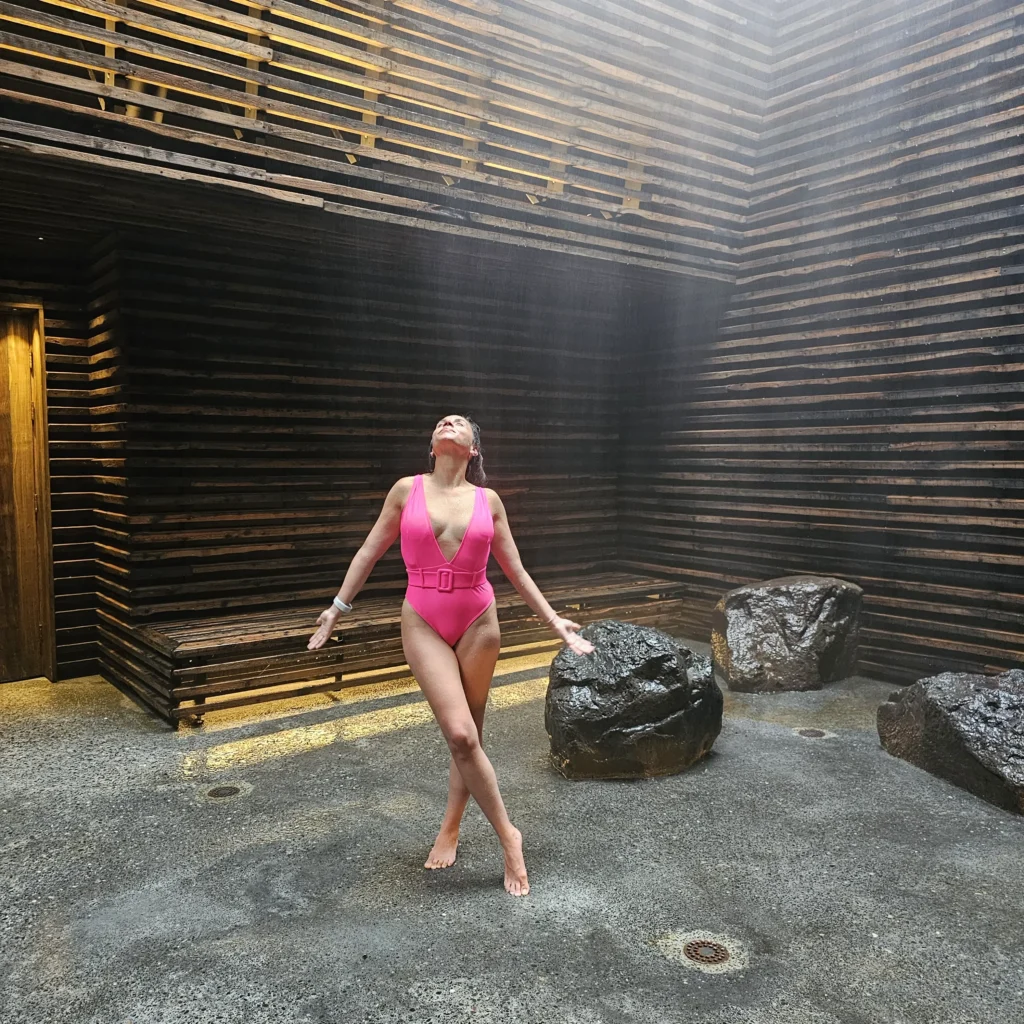
Step 3: Sauna Traditional Icelandic dry sauna. Wood, dry heat, soft scents of eucalyptus or birch. 10-15 minutes to sweat and disconnect from everything.
Step 4: Cold Mist (Kaldi Misting) Cold mist shower post-sauna. Refreshes the skin without the shock of the cold plunge.
Step 5: Body Scrub They give you an Icelandic sea salt scrub to apply all over your body. Your skin genuinely feels like new.
Step 6: Steam Bath (Sjavargufan) Steam room with ocean scents. Perfect after the scrub.
Step 7: Back to the Lagoon You return to the warm water to close the cycle. Order your included drink, settle into the infinity edge, and just exist. Especially magical at sunset.
The full ritual takes 1.5 to 2 hours if you take your time, which is exactly how it should be done.
Tickets
Sky Pass (~$70-85 USD):
- Lagoon access and towel
- 7-step ritual in the public area
Sér Pass (~$115-130 USD):
- Everything above in a private area with fewer people
- Private changing area
- Drink of your choice included
My recommendation: If you’re going to Sky Lagoon, do the Sér. The difference gives you privacy and the full experience as it was designed. The regular Sky Pass can fill up with large groups that completely break the atmosphere.
Location: The Advantage That Matters Most
Sky Lagoon is 10-15 minutes from downtown Reykjavik. There’s a free shuttle from specific points in the city, or a taxi for about $25 USD. If your itinerary includes several days based in Reykjavik, Sky Lagoon is infinitely easier to integrate. You can arrive at 5:00 or 6:00 PM, complete the full ritual, and be back at your hotel by 9:00 PM.
Blue Lagoon from Reykjavik takes almost half a day: 50 minutes each way plus 2-3 hours there equals 4-5 hours total that need to be planned carefully.
When to Do Each One:
The Formula That Works
If you have 5-7 days in Iceland: Do both
Day 1 (arrival): Blue Lagoon at 9:00 or 10:00 AM. Use the luggage storage, arrive in Reykjavik for check-in at 3:00 PM.
Days 2-5: Ring Road, waterfalls, glaciers, Golden Circle, whatever you’ve planned.
Last full day: Sky Lagoon at sunset, between 5:00 and 6:00 PM. Full ritual, reflect on everything you experienced, and mentally prepare to go home.
Why it works: Blue Lagoon welcomes you to Iceland and resets your jet lag. Sky Lagoon says goodbye with a moment of silence and gratitude. Each one serves a different purpose in the arc of your trip.
If you have 3-4 days: Choose based on your style
Choose Blue Lagoon if:
- It’s your first time in Iceland
- Iconic photos matter to you
- You arrive on an early flight and need to kill time before check-in
- You want the experience that defines the destination
Choose Sky Lagoon if:
- You’ve already been to Blue Lagoon on a previous trip
- You prefer local experiences over tourist attractions
- You value ritual and tranquility over visual spectacle
- You want something easy to integrate without losing half a day
If you only have 1-2 days on a stopover
Blue Lagoon, without question. Take advantage of the location between the airport and the city, and make sure you experience at least one thing that is uniquely Icelandic.
Prices, Reservations, and What Nobody Tells You
Both lagoons require advance reservations. You can’t just show up. In high season (June-August) they fill up weeks in advance, especially prime time slots.
Book as soon as you have confirmed dates. Both have flexible cancellation generally up to 24-48 hours before, so there’s no risk in securing your spot early.
| Aspect | Blue Lagoon (Premium) | Sky Lagoon (Sér) |
|---|---|---|
| Entrance Fee | $120 USD | ~$115–130 USD |
| Transport from Reykjavik | ~$50 USD (round-trip bus) | Free shuttle or ~$25 USD taxi |
| On-site Food | $20–60 USD | $15–40 USD |
| Approximate Total | $170–230 USD | $130–170 USD |
Yes, it’s expensive. Iceland in general is expensive. But these experiences are an integral part of the trip, not optional extras.
What to Bring and What NOT to Bring
After sending many travelers to both lagoons, these are the most common mistakes:
Do bring:
- Swimsuit
- Waterproof bag for your phone if you want photos inside the water
- Contact lenses instead of glasses (the steam makes it impossible to see)
- Hair conditioner: geothermal water is rough on hair
Don’t bring:
- Silver jewelry: the minerals in the water will stain them permanently
- Expectations of absolute privacy in changing rooms: they’re communal and it’s customary to shower without a swimsuit before entering the lagoons
- Your own towels: they’re included and outside towels are prohibited for sanitary reasons
Hair tip: If you have long or color-treated hair, wet it completely with regular water before entering and apply conditioner. Wet hair absorbs fewer minerals. If you don’t, prepare for several days of dry, rough hair.
Group Trip
Ready to explore Iceland with us?
The Experience Changes Completely by Season
Winter (November-March): Northern Lights
Being in 39°C water while the air is -5°C and the northern lights dance above you is one of the most surreal experiences you can have. It’s one of those things that can’t be described well with words.
For northern lights, Sky Lagoon has less light pollution, making it slightly better for this. But if the lights are strong, you’ll see them from either one.
Tip: Go on a moonless night, check the forecast on the Icelandic Meteorological Office app, and book the 8:00-9:00 PM entry.
Summer (June-August): Midnight Sun
The sun never fully sets in the Icelandic summer. Sky Lagoon at the endless sunset, between 10:00 and 11:00 PM, is pure meditation. The sun drags along the horizon for hours, the sky goes through every shade of orange and pink, and you have the infinity pool practically to yourself because most tourists have already left.
My Final Verdict
My heart says Sky Lagoon. The view of the ocean, the 7-step ritual, the intimate atmosphere, and the unique style it has aren’t found anywhere else. It’s the experience I recommend to anyone who wants to live Iceland beyond the Instagram photos.
But my head says Blue Lagoon when it comes to logistics. The location between the airport and the city makes it the perfect solution for those dead hours between landing and hotel check-in, and visually it’s still one of the most unique experiences on the planet.
The best strategy if budget and time allow: Blue Lagoon when you arrive, Sky Lagoon when you say goodbye. One welcomes you to Iceland. The other helps you process everything you experienced before going home.
How I Can Help You Design Your Iceland Trip
Iceland is not just geothermal lagoons. It’s glaciers, waterfalls, northern lights, whales, Icelandic horses, and landscapes that look like another planet.
Designing an itinerary that flows well, makes the most of every day without feeling rushed, includes the right experiences in the right order, and optimizes your budget is exactly what I do. I’m not going to give you the same “10 days on the Ring Road” you find on every other blog. I design something tailored to your travel style, your real budget, and your priorities.
And yes, that includes booking Sky Lagoon and Blue Lagoon for you at the best time slots before they sell out.
The difference between a good trip to Iceland and one that changes your perspective is in the details. And details are my specialty.
ANY QUESTIONS?
Frequently Asked Questions
How much time should I spend at each lagoon?
Blue Lagoon: 2-3 hours is perfect. Sky Lagoon: 1.5-2 hours to complete the full ritual at a relaxed pace.
Can I go to both on the same day?
Technically yes, but I don’t recommend it. Too much time in geothermal water dehydrates and exhausts you. Space them at least one day apart.
Are they safe for children?
Blue Lagoon allows children of all ages. Sky Lagoon does not allow children under 12 in the Sér area, and the ritual is not appropriate for young children due to the cold plunge and sauna.
Do I need to know how to swim?
Not necessarily. Both have areas of different depths with sections where you can touch the bottom.
Can you drink alcohol at the lagoons?
Yes at both. Premium and Sér tickets include an alcoholic drink and you can buy more at the in-water bars.
Which has better food?
Blue Lagoon. The LAVA restaurant is genuinely good, not just “good for a tourist spot.” Sky Lagoon has more casual café options.





Deja un comentario